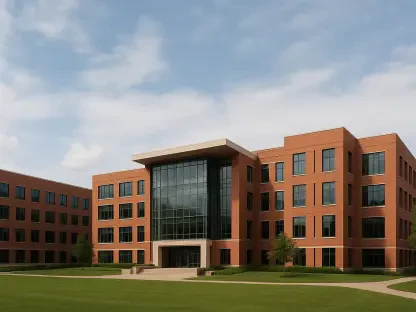

The successful deployment of this high-tech vision depends heavily on the state’s ability to recruit technical experts and provide intensive training for existing teaching staff. This ambitious initiative represents a seismic shift in how public education is delivered in Bihar, aiming to elevate select government schools into flagship institutions known as Centres of Excellence. By targeting the state’s 38 districts, the Education Department is attempting to dismantle the disparity between rural public schooling and the high-standard private education available in urban hubs. This roadmap involves a fundamental restructuring of the learning environment, moving beyond dilapidated classrooms toward modern spaces that facilitate global competitiveness. The transformation seeks to ensure that a student’s economic background does not dictate their access to advanced academic tools, effectively bridging the gap between historical models and the demands of the labor market.
Integrating Frontier Technology into the Curriculum
One of the most defining characteristics of these newly established centers is the aggressive introduction of emerging technologies such as Artificial Intelligence, coding, and robotics. Following the framework of the Atal Tinkering Labs, the state is building specialized innovation hubs that allow students to engage in experiential learning. These labs are not merely about theoretical exposure but involve hands-on interaction with astronomy kits, drone technology, and programming modules. This shift aims to demystify complex technical fields for students who might otherwise never have encountered them until university. By embedding these subjects into the secondary school curriculum, the government is preparing a workforce capable of participating in high-growth sectors like data engineering. This strategic focus ensures that students from public institutions are just as prepared for the tech-heavy job market as their peers from private schools.
While digital literacy is a major priority, the revitalization of traditional scientific disciplines remains a cornerstone of the modernization strategy. The Bihar Education Department has committed significant resources to upgrading laboratories dedicated to physics, chemistry, biology, and mathematics. These facilities are being outfitted with precision instruments and modern equipment that move the pedagogical focus away from rote memorization toward inquiry-based learning. Furthermore, the inclusion of dedicated on-campus study rooms addresses a vital social need, providing a quiet and structured environment for students who may lack such spaces in their homes. By offering these refined academic resources, the centers aim to bolster student confidence and improve overall performance in rigorous national-level competitive examinations. This comprehensive upgrade ensures that the foundation of scientific inquiry is strong enough to support the advanced technological training provided.
Fostering Well-Being and Professional Readiness
The vision for the Centres of Excellence transcends classroom walls to encompass the total development of the student through enhanced sports and cultural infrastructure. Modern playgrounds for football and cricket, alongside specialized courts for basketball and tennis, are being integrated into school campuses to encourage physical activity and competitive spirit. Some flagship locations are even being equipped with swimming pools and indoor gymnasiums, providing facilities that were once the exclusive domain of luxury institutions. Beyond physical fitness, the establishment of yoga and wellness centers aims to cultivate mental discipline and emotional resilience among the youth. Regular cultural events, debates, and inter-school competitions are designed to build a sense of community and teamwork. This multifaceted approach recognizes that academic success is more sustainable when paired with physical health, creating a well-rounded educational experience for all students.
Central to the success of this initiative is a renewed focus on student welfare, particularly concerning safety, inclusivity, and the development of professional soft skills. For female students, the roadmap includes the construction of hygienic sanitation facilities and the implementation of robust campus security measures to ensure a safe learning environment. These improvements are vital for increasing the retention and participation rates of girls in higher secondary education. Complementing these infrastructure upgrades is a curriculum enriched with leadership workshops and communication training sessions. The goal is to produce graduates who are not only technically proficient but also articulate and confident in professional settings. By addressing both the physical environment and the interpersonal skills required in the modern workplace, the state is attempting to foster a generation of leaders. This dual emphasis on safety and soft skill development ensures that the education provided is truly transformative.
Addressing Systemic Challenges and Implementation Roadmaps
Despite the ambitious nature of the plan, the transition to this high-tech model faces significant hurdles rooted in the state’s existing infrastructure deficit. Currently, computer accessibility remains limited in many rural schools, and although internet connectivity has reached a large percentage of institutions, the reliability of these services varies greatly. To mitigate this, the government is focusing on the rapid deployment of smart classrooms and digital libraries that provide expansive electronic resources alongside traditional texts. This hybrid approach allows students to access a wealth of global information even when physical textbook supplies are constrained. The logistical complexity of retrofitting older school buildings with modern labs and sports complexes also presents a spatial challenge that requires creative architectural solutions. Successfully navigating these physical constraints is essential for ensuring that the benefits of the Centres of Excellence are distributed equitably.
The initiative to modernize Bihar’s schools through specialized centers established a clear framework for long-term educational equity. Stakeholders recognized that the primary objective was not simply to update equipment but to foster an ecosystem where innovation and discipline thrived. To sustain this momentum, the government prioritized the creation of a permanent technical support wing to maintain the digital infrastructure and ensured that teacher training modules were updated annually to reflect technological advancements. Local communities were integrated into the school management process, fostering a sense of ownership that helped protect the new facilities. Future considerations focused on expanding these models to middle schools to create a continuous pipeline of tech-literate students. By treating these centers as dynamic laboratories for change, the state provided a viable path for social mobility. The lessons learned suggested that consistent funding and professional oversight were the most critical factors.