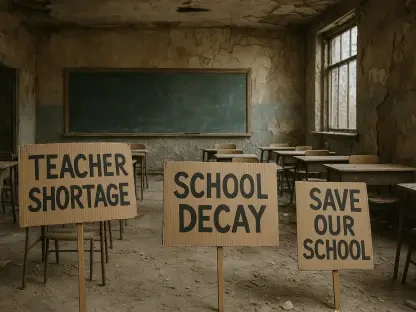

In the remote, fog-shrouded corridors of northern Humboldt County, the Orick Elementary School District operates as a high-stakes experiment in communal survival, supporting a student body that has dwindled to just nine individuals. This tiny institution serves as a powerful microcosm for a national debate regarding the fiscal justification of maintaining under-enrolled schools against the cultural and social necessity of keeping isolated towns on the map. At a time when economic shifts often dictate the fate of rural outposts, Orick faces a staggering financial reality where per-pupil costs have surged to approximately $118,000 annually, a figure that is more than five times the California state average. For the residents of this coastal enclave, the school is far more than a site of academic instruction; it represents the final, fragile barrier against total community dissolution and the literal disappearance of their town from the geographic record. The dilemma facing state policymakers is heart-wrenching, as they must weigh the objective efficiency of district consolidation against the subjective but vital preservation of a unique way of life that has persisted despite decades of industrial decline and geographic isolation.
The existential crisis in Orick is not merely a matter of spreadsheets and budget allocations but a reflection of a town’s identity being tied to its youngest generation. As enrollment numbers continue to plummet, the school has transitioned into the community’s most critical social and economic anchor, providing a sense of continuity and stability for families navigating extreme poverty. In a landscape where the traditional pillars of the local economy have largely vanished, the school remains one of the few places where residents can find reliable support and a connection to the broader world. This struggle highlights a fundamental question about the value of a public institution: should its worth be measured solely by the efficiency of its output, or by its ability to act as a lifeline for a population that has been largely overlooked by the modern economy? The answer to this question will determine whether Orick continues to exist as a living community or eventually becomes another footnote in the history of the California timber country.
A Legacy of Industry and Economic Decline
To fully grasp the current plight of Orick, one must look back at its history as a thriving industrial hub that once hummed with the energy of the Pacific Northwest logging boom. In the 1960s, the town was a bustling center of 3,000 residents, supported by the relentless activity of seven lumber mills that processed the massive redwoods defining the region. During this era, the school was a crowded institution with nearly 300 students, and the town center featured a movie theater, multiple grocery stores, and restaurants that catered to a stable middle class. However, the economic engine that fueled this prosperity eventually stalled as environmental regulations tightened and the logging industry underwent a structural collapse. The subsequent expansion of the National Park Service, while preserving the natural beauty of the area, effectively locked away much of the land that had previously driven the local economy, leading to a long-term exodus of families and resources that the town has never truly recovered from.
Today, the population has shrunk to roughly 300 people, and the physical landscape of Orick reflects decades of disinvestment and economic stagnation. Boarded-up buildings and dilapidated trailer parks serve as silent witnesses to the town’s former glory, while the average household income has dropped to a fraction of the state average. For the remaining residents, the school’s potential closure is viewed not just as a logistical inconvenience but as a terminal threat to the town’s very existence. Without the school, Orick would lose its last remaining source of stable, decent-paying employment and its primary institutional connection to the state government. The fear is that the removal of the school would trigger a final wave of migration, leaving behind a ghost town reclaimed by the same redwood forests that once provided its wealth. This economic backdrop is essential for understanding why the fight to keep a nine-student school open is pursued with such desperate intensity by the local board and community members.
The School as a Multidimensional Community Hub
The Orick school district has evolved far beyond its traditional educational mandate, transforming into a multidimensional “savior” that provides essential social services for a vulnerable and isolated population. In a town where many families lack basic modern amenities, the school serves as a critical distribution point for a food pantry and clothing drives, ensuring that children and their parents have access to the fundamental necessities of life. Remarkably, the school also provides a washer and dryer for residents who have no other access to laundry facilities, a service that underscores the deep level of poverty and the lack of basic infrastructure within the community. By filling these systemic gaps, the school district has become the primary provider of a social safety net that would otherwise be entirely absent in this remote corner of Humboldt County, making it the central hub of daily life for both students and adults.
Beyond its role as a provider of physical goods, the school functions as a rare and vital gathering space for a community that has lost almost all of its other social venues. It hosts toddler playgroups to foster early childhood development and provides a meeting place for support groups, such as Narcotics Anonymous, which are crucial in an area struggling with the impacts of intergenerational trauma and substance abuse. Superintendent Justin Wallace, who also serves as the principal, literacy coach, and special education director, emphasizes that the school offers the most consistent and safe environment for these children. For many students, the hours spent within the school walls are the only times they are guaranteed a warm meal and a structured, supportive atmosphere. This holistic approach to education and community care demonstrates that the school’s value cannot be quantified through test scores alone; it is the heartbeat of a town that has very little else to hold onto.
The High Cost of Rural Education
Financially, the Orick Elementary School District operates on the absolute edge of sustainability, relying heavily on specialized “necessary small school” grants from the state of California to remain operational. Last year, the district received over $700,000 in state and federal funding, a budget that is almost entirely consumed by the disproportionately high costs of personnel and the maintenance of aging historic infrastructure. Heating a large, drafty school building in the damp and chilly coastal climate can cost upwards of $1,100 a month, a massive burden for a district with such a small student body. Furthermore, the geographic isolation of the town makes simple logistical tasks, such as transporting students 30 miles for swim lessons or other extracurricular activities, an expensive and time-consuming endeavor. These operational expenses highlight the inherent challenges of providing an equitable education to students who live far from urban or suburban centers.
The administrative burden of running a school district with a minimal staff also creates unique pressures on leadership, as the superintendent must navigate a complex web of state regulations and reporting requirements without the support of a large central office. While critics of the current system might point to these high overhead costs as a clear argument for closure or consolidation, local officials argue that maintaining “local control” is the only way to ensure that the specific needs of Orick’s children are met. Because more than half of the students require special education services and all of them come from low-income households, the personalized attention they receive in this micro-environment is seen as a necessary investment. The high per-pupil spending is not a result of administrative bloat but a reflection of the intensive resources required to provide a stable educational foundation for children who face significant hurdles outside the classroom.
Resisting the Push for Consolidation
The most common solution proposed by state auditors and regional grand juries is the consolidation of Orick with neighboring districts, such as Big Lagoon Union Elementary, yet local leaders argue that such a move would be a hollow victory for the state budget. While merging districts might appear to save money on paper by eliminating duplicate administrative salaries, those savings would likely be quickly erased by the massive expense of busing students across treacherous terrain. The roads in this region are frequently blocked by floods or mudslides, and forcing young children into 80-minute daily commutes is viewed as both unrealistic and detrimental to their physical and emotional well-being. Furthermore, the loss of a local school often leads to a higher dropout rate among families who already feel alienated from government institutions, potentially creating a long-term social cost that far outweighs any immediate budgetary savings.
Instead of yielding to the pressure for consolidation, Orick has leaned into educational innovation, creating a specialized curriculum that larger, more centralized schools would find impossible to replicate. The district offers an exemplary outdoor education program that utilizes the surrounding environment, involving students in trout restoration, water quality testing in Redwood Creek, and wildlife observation. Additionally, the school has made a concerted effort to integrate Yurok cultural traditions into the classroom, acknowledging that about half of the student body identifies as Native American. Local volunteers teach traditional skills such as acorn processing and pine-bead making, providing a culturally relevant education that honors the heritage of the land. This localized approach allows the school to turn its small size into an advantage, offering a level of individualized instruction and community connection that serves as a powerful argument for the continued existence of small, independent districts.
Regional Identity and the Threat of Disappearance
The struggle in Orick is a poignant chapter in a broader regional narrative within Humboldt County, where the decline of the timber industry has led to the “vanishing town” phenomenon. Historical precedents serve as a somber warning for the residents of Orick; for instance, the nearby town of Falk, once a thriving logging community, was entirely reclaimed by the redwood forest after its mill closed and its institutional anchors were removed. Today, nothing remains of Falk but a few stray rose bushes and ivy, a fate that the people of Orick are determined to avoid. They recognize that the school is the only thing preventing their community from becoming nothing more than a memory or a name on a historical marker. The preservation of the school is therefore a preservation of regional identity, ensuring that the history and culture of the coastal redwood region are not lost to time and economic restructuring.
Ultimately, the value of Orick Elementary must be assessed through a lens that looks beyond mere fiscal efficiency and toward a vision of geographic equity. While the per-pupil spending is undeniably high, it represents a deliberate choice by the state of California to prioritize the survival of its most remote populations and to ensure that a child’s zip code does not entirely dictate their access to a safe and supportive learning environment. As long as the school remains open, there is a flicker of hope that the town of Orick can reinvent itself, perhaps by leveraging its proximity to the national parks to build a new economy based on sustainable tourism and conservation. For the nine students currently enrolled, the school is much more than an academic institution; it is a vital lifeline that ensures they are seen, fed, and educated in a world that might otherwise overlook their existence.
Future Considerations: Paths Toward Rural Sustainability
Moving forward, the survival of towns like Orick will depend on the development of new funding models that move away from strictly attendance-based formulas and toward a system that recognizes schools as essential rural infrastructure. State policymakers should consider formalizing the role of rural schools as “community service hubs,” providing dedicated funding for the social and medical services they already perform. By acknowledging that these schools are the primary points of contact for state health and human services in remote areas, California could justify the higher costs as a comprehensive investment in public health and welfare rather than just an educational expense. Such a shift would provide a more stable financial foundation for small districts, allowing them to focus on long-term planning rather than year-to-year survival.
Additionally, the Orick model of outdoor and culturally integrated education provides a blueprint for how other declining rural areas might revitalize their local schools by offering unique programs that attract interest from outside the immediate district. Expanding these specialized curricula could potentially draw in students from neighboring areas through inter-district transfers, slowly rebuilding the enrollment numbers needed for long-term viability. The integration of high-speed satellite internet and remote learning technology also offers a way for students in these tiny schools to connect with global resources while remaining rooted in their local communities. By embracing a hybrid model of traditional community values and modern technological tools, Orick and similar towns can chart a path that honors their industrial heritage while preparing their youth for a future that is no longer tied to the timber mill. The continued existence of Orick School serves as a reminder that the health of a state is not just measured by the prosperity of its cities, but by the resilience and inclusion of its most distant outposts.