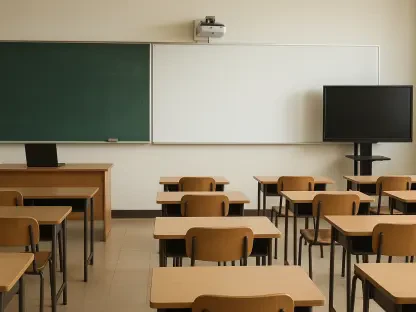
Moving specialized programs like the Two-Way Spanish/English immersion as entire cohorts is one strategy designed to mitigate the disruption of school closures. This specific logistical tactic is a central component of the Evanston/Skokie District 65 administration's broader effort to implement a

By transforming foundational phonemic recognition into interactive games, teachers ensure that students remain active participants in their own cognitive development. This shift at Mineral Springs Elementary represents a major departure from the traditional classroom model, where the boundary

The landscape of American education often feels like a battlefield of statistics, where the line between genuine achievement and political posturing becomes blurred under the weight of conflicting data. State officials attribute recent gains to sustained funding, yet the lack of consensus on how to
A conflict between Virginia's requirement for weekly reading support and a local ban on early childhood devices has forced school leaders to reconsider their instructional technology policies. This administrative friction in Fairfax County highlights a broader national debate over the role of

The creation of an early childhood education governance and outcomes task force would evaluate whether state programs are effectively preparing students for primary school success. This legislative push, spearheaded by State Representative Josh Williams through House Bill 1023, arrives at a

The Colorado School Finance Project reports that the budget stabilization factor resulted in over $800 million in lost revenue during the 2021-2022 school year alone. This staggering figure serves as a sobering reminder of the financial pressures that have squeezed Colorado districts for several
1 2 3 4 5 6 7 8 9 10 11 12 13 14 15 16 17 18 19 20 21 22 23 24 25 26 27 28 29 30 31 32 33 34 35 36