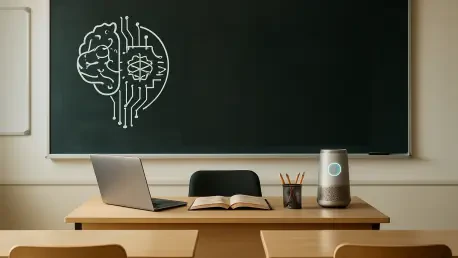

The rapid integration of artificial intelligence into classrooms across the globe has ignited a fervent discussion among parents, policymakers, and educators about the future of learning, moving far beyond theoretical debates into practical application. As digital tools and AI-powered platforms become increasingly sophisticated, the central question is no longer if technology will change education, but how it will reshape the very role of the teacher. In educational hubs like the UAE, a clear consensus is emerging among school principals and learning experts. They champion a strategic adoption of technology, not as a replacement for human instruction, but as a powerful accelerator for it. The prevailing philosophy is that innovation must be carefully balanced with the indispensable human connection that lies at the core of meaningful education. This approach leverages digital tools to forge personalized learning pathways, meticulously identifying each student’s unique strengths, preferred learning styles, and areas requiring additional support, allowing them to advance with greater purpose and confidence. The goal is to create a more responsive, engaging, and effective educational environment where technology serves the teacher, and the teacher, in turn, better serves the student.
The New Educational Paradigm
The intentional integration of artificial intelligence into educational frameworks is creating a new model for teaching and learning. This paradigm shift focuses on using technology to enhance instructional quality and student engagement, ensuring that the core of education—the dynamic relationship between teacher and student—is strengthened rather than diminished. Digital platforms are becoming instrumental in this transformation, providing the tools necessary to move away from a one-size-fits-all approach toward a more individualized and responsive system.
Personalizing the Learning Journey
For students, the most significant benefit of this technological integration is the advent of truly personalized learning experiences that adapt in real time to their individual needs. AI-driven platforms can analyze a student’s performance data with remarkable precision, identifying not only what they know but also how they learn best. This allows for the creation of customized learning paths where content, pacing, and difficulty are adjusted automatically. For example, a student excelling in algebra might be presented with more challenging problems, while another struggling with the same concepts receives additional tutorials and foundational exercises. This tailored approach transforms lessons from static presentations into dynamic, interactive dialogues. Students receive timely, hyper-personalized feedback that helps them understand their mistakes and reinforces their successes, fostering a sense of ownership over their education and allowing them to progress with a newfound confidence and clarity of purpose.
Unlocking Teacher Potential Through Automation
From the educator’s perspective, AI and digital platforms offer a profound advantage by automating many of the administrative and routine tasks that have long consumed their time and energy. Tools like automated assessment dashboards and performance trackers can grade assignments, analyze class-wide progress, and flag learning gaps far more efficiently than manual methods. This data-driven insight allows teachers to understand student needs on a deeper level, enabling them to customize content and implement remedial measures with greater accuracy. The most significant outcome of this automation is the liberation of invaluable teacher time. Freed from the burden of repetitive administrative duties, educators can redirect their focus toward higher-value activities that technology cannot replicate. This includes providing one-on-one mentoring to struggling students, fostering critical discussions that encourage deeper thinking, nurturing student well-being, and building the meaningful relationships that are essential for a supportive and effective classroom environment.
Preserving the Human Core of Teaching
Despite the clear benefits of technological integration, educational leaders strongly caution against a purely automated approach to learning. The consensus is that technology must be “humanized” to be truly effective in an educational setting. Because education is fundamentally about shaping the minds and futures of children, it demands a level of nuance, empathy, and ethical guidance that current AI systems cannot provide. The goal is not to create a sterile, algorithm-driven classroom but to use technology as a tool that amplifies the uniquely human qualities of the best educators.
The Irreplaceable Role of Mentorship
At its heart, education is a deeply human endeavor that requires qualities far beyond the reach of algorithms and data processing. While AI can deliver information and assess comprehension with incredible efficiency, it cannot replicate the empathy, contextual understanding, and mentorship that are the hallmarks of a great teacher. An educator does more than just impart knowledge; they inspire curiosity, build resilience, and provide ethical guidance. They can read the subtle non-verbal cues of a confused or discouraged student, offer a word of encouragement at the right moment, and adapt their teaching style to the emotional climate of the classroom. These relational skills are crucial for fostering a safe and supportive learning environment where students feel seen, heard, and valued. Education directly shapes the future of individuals and society, and this profound responsibility requires a human touch that can navigate complex social dynamics and instill values—a task that remains firmly and necessarily in the hands of human mentors.
Redefining the Educator as a Learning Architect
In an AI-enabled world, the role of the educator is not diminished but rather elevated and redefined. Instead of being the primary source of information, great teachers are evolving into “designers of learning experiences” and “mentors of critical thinking.” Their expertise is shifting from content delivery to curation and facilitation. In this new role, they guide students through a sea of information, teaching them how to ask the right questions, evaluate sources critically, and synthesize knowledge to solve complex problems. AI becomes a powerful partner in this process, handling the routine work of data analysis and content personalization, which allows human creativity, imagination, and empathy to take center stage. This symbiotic relationship empowers educators to focus on cultivating the skills that will be most valuable in an increasingly complex future: collaboration, communication, and creative problem-solving. Ultimately, these tools did not replace teachers but rather amplified their ability to drive remarkable learning outcomes.