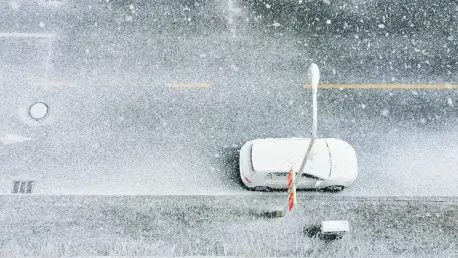

The once-cherished childhood ritual of waking up to a blanket of snow and the thrilling news of a school cancellation is rapidly fading into a memory for millions of American families. In 2026, the United States operates without a single federal mandate governing school closures, a reality that has handed all decision-making authority to states and, more granularly, to individual school districts. This decentralization has cultivated an incredibly complex and fragmented landscape of policies where a winter storm in one town might mean a day of sledding and hot chocolate, while for students in a neighboring district, it signals the start of a full day of remote learning. For parents across the nation’s ten most populous states, this patchwork of rules, driven by both technological advancements and diverse regional climates, has transformed the simple snow day into a source of unpredictability and confusion, demanding a new level of awareness about local educational protocols.
A Patchwork of State Policies
The Rise of Capped Remote Learning Days
A significant number of states have formally embraced a hybrid model that allows for a limited number of virtual instruction days, effectively creating a compromise between instructional continuity and the logistical challenges of remote education. In Pennsylvania, for example, school districts are permitted to utilize up to five “Flexible Instructional Days” (FIDs) to pivot to online learning before they are required to add makeup days to the end of the school calendar. Illinois follows a nearly identical path, allowing districts with state-approved e-learning plans to transition to remote instruction for a predetermined number of days, which is also typically capped at five. This approach reflects a broader legislative effort to provide schools with the tools to avoid extending the academic year while simultaneously placing guardrails to prevent an over-reliance on virtual classrooms, acknowledging persistent concerns about digital equity and the overall quality of online instruction compared to in-person learning. These caps represent a clear policy statement that remote learning is a useful emergency tool but not a full-time substitute.
This model of regulated remote learning is far from a one-size-fits-all solution, with different states imposing their own unique restrictions and demonstrating varying degrees of flexibility. Ohio, for instance, has adopted one of the more restrictive versions of this policy, capping the number of online learning days at a mere three per school year, signaling a stronger preference for traditional in-person instruction. In contrast, North Carolina offers a more nuanced hybrid limit, providing districts with the option to use either five full remote instruction days or an equivalent of 30 total hours to cover weather-related closures. This hourly option gives districts more granular control, allowing them to account for partial-day disruptions without expending a full day from their limited allotment. These variations underscore the ongoing debate at the state level about how to best integrate technology into emergency planning, with each state tailoring its regulations to balance the convenience of remote access with the pedagogical value of the physical classroom environment.
Holding on to Tradition
Despite the widespread adoption of digital learning platforms, some states continue to protect the classic snow day, prioritizing local autonomy over a mandated statewide shift to virtual instruction. New York stands out as a prominent example where the decision to cancel school outright remains a common and accepted practice. Critically, the state leaves the choice of whether to implement remote learning during an emergency entirely in the hands of its individual school districts. This policy of local control creates significant variability across the state; a family in one district may enjoy a traditional day off, while another just a few miles away is required to log into virtual classes. This approach acknowledges that not all communities possess the same technological infrastructure or desire to pivot to remote learning on short notice, thereby preserving a level of local preference that respects the diverse circumstances of its many districts.
In a direct contrast to the complex and technology-dependent models seen elsewhere, Michigan offers one of the most straightforward and traditional policies for managing school closures. The state provides its school districts with up to six “forgiven” days that can be used for emergencies such as heavy snow, ice storms, or widespread power outages. These days do not need to be made up in any form—neither through in-person classes added to the end of the year nor through remote instruction. This simple and predictable rulebook gives parents and students a clear understanding of what to expect, closely mirroring the snow day tradition of the past. Michigan’s policy represents a deliberate choice to value simplicity and a clean break from academic responsibilities during disruptive events, allowing both students and staff a genuine day of rest and recovery without the added stress of navigating online learning platforms.
Beyond the Blizzard Other Emergency Closures
Climate-Specific Closure Plans
In many of the nation’s largest states, the term “snow day” is largely a misnomer, as emergency closure policies are fundamentally shaped by entirely different and often more severe climate-related threats. Florida’s system, for example, is overwhelmingly designed to respond to the annual threat of hurricanes and tropical storms, which can force school closures for extended periods and necessitate significant, localized adjustments to academic calendars long after the storm has passed. Similarly, in California, closures are far more likely to be triggered by destructive wildfires, hazardous air quality from smoke, periods of extreme heat, or public safety power shutoffs implemented to prevent new fires. In response, California’s focus has shifted away from the concept of a “day off” and toward maintaining “instructional continuity” through established independent study programs, a pedagogical approach better suited to potentially prolonged and unpredictable disruptions than a simple one-day cancellation.
The logistical mechanisms for managing these non-winter-related closures are just as diverse as the climates that cause them, reflecting unique state-level administrative philosophies. Texas, for instance, relies on a proactive system of “banked instructional minutes” that are strategically built into the official school calendar at the beginning of the year. Whether a canceled day must be made up depends entirely on whether the district has exhausted this pre-scheduled buffer time. For widespread disasters, districts also have the option to apply for state waivers. At the other end of the spectrum is Georgia, which represents a model of extreme decentralization where nearly all closure decisions are delegated to local authorities. While many of its districts have independently implemented “Digital Learning Days,” the absence of a uniform statewide policy means that neighboring communities often follow completely different protocols, creating a highly fragmented and often confusing system for families living near district lines.
Navigating the New Academic Calendar
The comprehensive analysis of school closure policies in 2026 revealed a system defined by its lack of uniformity, where a student’s experience during an emergency was contingent upon a complex interplay of regional climate, state law, and local district planning. The traditional assumption of a snow day as a day free from all schoolwork was no longer a reliable expectation for families across the country. The investigation concluded that the rise of remote learning was not a monolithic shift but a state- and district-dependent phenomenon, often constrained by strict limitations that could still result in an extended school year if multiple closures occurred. The most critical takeaway for parents was the new necessity of proactive engagement. To successfully navigate this varied landscape, families had to look beyond general trends and ascertain the specific, official policies of their local school district. Understanding these nuances—including the precise limits on remote days, the existence of forgiven days, or the reliance on banked instructional time—proved to be the only effective strategy to prepare for weather-related disruptions to the academic calendar.