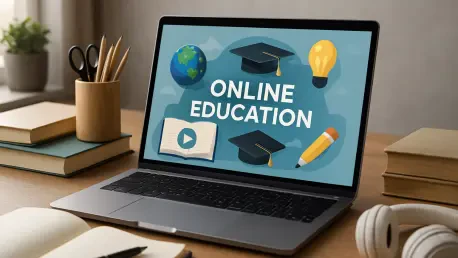

In a small Indiana county where economic challenges loom large, a quiet revolution in education is taking root, promising to reshape the future for K-12 students who often fall through the cracks of traditional systems. Delaware County, with its struggling labor force participation rate hovering at just 59.2%, faces a pressing need for innovative solutions to prepare the next generation for a rapidly changing world. Online education is emerging as a powerful tool in this battle, offering flexibility and personalized learning that can cater to diverse student needs while addressing broader workforce demands. Far from being a mere stopgap, virtual schooling is proving to be a lifeline for families dealing with unique circumstances—be it frequent relocations, medical challenges, or academic struggles. This shift isn’t just about keeping kids in school; it’s about redefining what education can mean for a community on the brink of transformation, sparking hope where opportunity has long been scarce.
Addressing Economic Challenges Through Virtual Learning
Delaware County’s economic landscape paints a stark picture of urgency for educational reform, with a significant portion of the population disengaged from the workforce and in need of new pathways to success. A recent report from Ivy Tech Community College highlights that Indiana must retrain over 82,000 workers each year to meet evolving industry needs, a goal that starts with equipping younger generations with relevant skills. Online education steps into this gap by offering an adaptable framework that can upskill students right from their K-12 years. Unlike traditional models bound by rigid schedules, virtual platforms allow for tailored curriculums that align with local economic demands. This means a middle schooler in Muncie could explore fields like manufacturing or tech long before high school graduation, laying the groundwork for a career that revitalizes their community. The potential here is not just individual growth but a collective lift for a region hungry for renewal.
Moreover, the impact of online learning on economic revitalization extends beyond just skill-building to fostering a mindset of resilience and adaptability among students. Virtual classrooms break down geographical and logistical barriers, connecting learners with resources and mentors that might otherwise be out of reach in rural or underserved areas like Delaware County. Imagine a student partnering with a local business for a project on sustainable operations, all coordinated through a digital platform that accommodates their unique schedule. Such experiences instill problem-solving skills and a sense of agency, critical traits for a workforce that must evolve with technological advancements. By prioritizing real-world applications over rote memorization, online education offers a pragmatic approach to preparing kids for jobs that don’t yet exist, ensuring that the next generation isn’t just reacting to change but driving it forward with confidence.
Flexibility for Diverse Student Needs
One of the standout strengths of online education lies in its ability to meet students where they are, no matter their circumstances, providing a lifeline for those who struggle in conventional school settings. Whether it’s a military family relocating every few years, a young athlete with demanding training schedules, or a student battling health issues that make daily attendance impossible, virtual learning offers a customizable solution. Platforms like those implemented by schools in Indiana allow for asynchronous lessons and one-on-one teacher support, ensuring that a teen parent or an introverted learner isn’t left behind. This isn’t about lowering standards but raising accessibility—giving every child a chance to thrive by adapting education to their life, not the other way around. The result is often a renewed sense of self-worth as students find their stride in a system built for their success.
Additionally, this flexibility fosters an environment where emotional and social barriers, such as bullying or academic frustration, can be mitigated through personalized attention that traditional classrooms sometimes lack. Online programs often feature smaller virtual class sizes or dedicated mentoring, allowing educators to spot and address struggles early on. For instance, a student who once felt invisible among hundreds of peers might now receive weekly check-ins from a teacher who tailors assignments to their learning style. This individualized approach can transform education from a source of stress into a space of empowerment, particularly for those who’ve felt marginalized. By creating a safe, adaptable learning space, online education doesn’t just keep students enrolled—it helps them rediscover a passion for growth that might have been stifled in a one-size-fits-all system.
Building Career Readiness from an Early Age
Career preparation is no longer a post-high school conversation, and online education is leading the charge by introducing K-12 students to real-world opportunities as early as middle school. With only about half of Indiana’s recent graduates pursuing college, there’s a clear shift toward alternative paths like direct employment or military enlistment. Virtual schools are uniquely positioned to support this trend by integrating career exploration into their curriculums, focusing on what’s often called the “3 E’s”—Enrollment, Enlistment, and Employment. Through digital access to career fairs, mentorships, and hands-on projects, students can test the waters in fields like operations management or machining without leaving their homes. This early exposure isn’t just eye-opening; it’s a game-changer for kids who might never have considered such options in a traditional setting.
Beyond exploration, online education facilitates tangible skill-building through innovative partnerships that bring industry into the virtual classroom. Picture a high schooler in Muncie learning 3D printing through a collaboration with a local makerspace, or another crafting a portfolio in fashion design under the guidance of a professional. These aren’t hypothetical scenarios but real outcomes of programs that prioritize practical experience over textbook theory. By connecting students with community resources and experts, virtual learning ensures they graduate not just with a diploma but with a resume of skills and confidence to match. This focus on career readiness equips students to step directly into roles that fuel Indiana’s economy, proving that education can be both a personal journey and a public good when designed with purpose.
Advocating for Funding Equity and Community Support
Despite its promise, online education in Indiana faces a significant hurdle: funding disparities that limit its reach and impact for K-12 students who need it most. Currently, virtual public schools receive only 85% of the per-student funding allocated to traditional brick-and-mortar institutions, creating an uneven playing field that hampers program development and student support. Advocates argue that equal funding is essential to ensure that every child, regardless of their learning environment, has access to quality resources, technology, and teacher expertise. Bridging this gap would enable virtual schools to expand their offerings, from advanced career training to mental health services, ensuring that students who don’t fit the conventional mold aren’t penalized for choosing a path that works for them. Equity here isn’t just fairness—it’s a necessity for systemic change.
Furthermore, the success of online education hinges on robust community partnerships that align learning with local workforce needs, amplifying its benefits for entire regions. Collaborations with organizations like economic development alliances in places such as Muncie can help tailor curriculums to match job market demands, ensuring students graduate ready to contribute. However, these partnerships require investment and mutual commitment, which often circles back to the funding issue. When schools, businesses, and civic groups work hand-in-hand, the result is a feedback loop of opportunity—students gain skills, employers gain talent, and communities gain stability. Supporting virtual learning through equitable resources and local synergy isn’t just a policy decision; it’s a strategic move to build a future where every Indiana student has a shot at success, no matter how they learn.
Paving the Way for Educational Innovation
Reflecting on the journey of online education in Indiana, it’s clear that the strides made in Delaware County and beyond provided a vital alternative for K-12 students who needed more than what traditional systems could offer. The flexibility to accommodate unique lifestyles, the focus on early career preparation, and the push for equitable funding all played pivotal roles in reshaping how education was perceived and delivered. Virtual learning became not just a supplement but a cornerstone for many families, proving its worth through personalized success stories that rippled into broader community gains. Looking ahead, the challenge lies in sustaining this momentum with actionable steps—lawmakers must prioritize funding parity, schools should deepen industry ties, and communities ought to champion virtual options as equally valid paths. Only through such concerted efforts can the full potential of online education be realized, ensuring that every student in Indiana has the tools to unlock their brightest future.