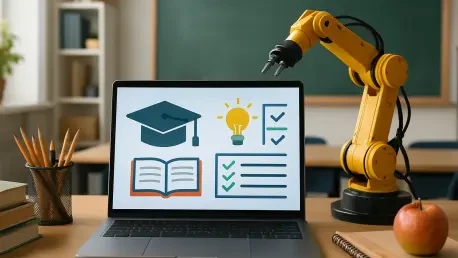

The landscape of professional education is undergoing a seismic shift, driven by the relentless advance of automation and artificial intelligence. While industries from manufacturing to finance have long grappled with technological disruption, the classroom is now at the center of this transformation. AI-powered tutoring platforms, automated grading systems, and data-driven learning analytics are no longer futuristic concepts but are becoming integral components of modern pedagogy. This evolution brings both challenges and unprecedented opportunities. For students currently charting their course through education degree programs, understanding this new reality is not merely an academic exercise; it is a critical component of building a resilient and impactful career. The question is no longer whether technology will change education, but how professionals can adapt and thrive by working alongside it, leveraging its power to enhance human-centered learning and mentorship in ways previously unimaginable.
1. The Growing Role of Automation in Education
Automation is fundamentally altering the day-to-day functions within educational settings, allowing for a strategic reallocation of human effort toward more impactful activities. Imagine a classroom environment where educators are liberated from the time-consuming tasks of grading standardized quizzes and tracking administrative data. Automated tools are increasingly capable of handling these responsibilities with precision and efficiency, evaluating assignments, monitoring student progress in real-time, and even generating personalized learning recommendations based on performance metrics. This technological assistance enables teachers to dedicate more of their focus to one-on-one student mentoring, fostering critical thinking, and addressing individual learning needs. As these systems become more sophisticated, the role of the educator is elevated from a dispenser of information to a facilitator of deep, personalized learning experiences, guiding students through complex concepts and nurturing their intellectual curiosity.
The integration of advanced technological tools extends beyond individual classrooms to reshape the operational fabric of entire educational institutions. Learning Management Systems (LMS), AI-driven writing assistants, and immersive virtual classrooms are becoming standard, streamlining administrative workflows and enhancing instructional delivery. This widespread adoption reflects a dual purpose: not only to improve immediate student outcomes but also to actively prepare the next generation of professionals for a workforce that is inherently technology-driven. Educational institutions are recognizing their responsibility to model the very environments their graduates will soon enter. Consequently, as automation continues its advance, the emphasis for educators and related professionals is shifting decisively toward skills that technology cannot replicate, such as strategic planning, creative problem-solving, and meaningful student engagement.
2. Changing Roles and Responsibilities
Contrary to common fears of replacement, automation is primarily serving to augment and reshape the roles of education professionals. The core responsibilities are evolving as technology absorbs the more repetitive and data-intensive aspects of the job. Tasks that once consumed a significant portion of an educator’s day—such as manually grading multiple-choice tests, tracking attendance, and organizing digital content—are increasingly managed by sophisticated software platforms. This transition frees up valuable time and cognitive resources, allowing professionals to concentrate on higher-order responsibilities. These include innovating curriculum design, providing individualized instruction tailored to diverse learning styles, and mentoring students on complex subjects that require nuanced human interaction. This shift enables educators to focus on the distinctly human elements of teaching, such as fostering empathy, creativity, and collaborative skills.
This technological evolution is also giving rise to a new class of specialized roles within the education sector, creating career paths that did not exist a decade ago. The demand for instructional designers, curriculum developers who specialize in digital content, and digital learning coordinators is expanding rapidly as institutions invest heavily in modern learning solutions. These positions require a unique synthesis of pedagogical theory and practical technological expertise. Professionals who can effectively bridge this gap—understanding both the art of teaching and the science of technology implementation—are becoming exceptionally valuable. Their ability to design engaging online courses, integrate new software seamlessly into lesson plans, and train other educators on best practices is critical for institutions seeking to remain at the forefront of educational excellence.
3. Shifting Workforce Demand
In response to the growing integration of technology in education, employers are actively seeking candidates who possess a dynamic, hybrid skill set. While a deep knowledge of teaching methodologies and subject matter expertise remains fundamental, it is no longer sufficient on its own. These foundational skills must now be complemented by a strong degree of digital literacy, the ability to interpret and act on student performance data, and a practical familiarity with a range of education technology tools. The modern educator is expected to be as comfortable navigating a virtual learning platform as they are leading a classroom discussion. This demand for multifaceted professionals reflects a broader market trend where the ability to leverage technology to enhance traditional practices is a key differentiator for both individuals and the institutions that employ them.
The evolving demands of the job market are creating distinct and expanding career opportunities rather than limiting them. Current workforce trends reveal a significant and rising demand for specialists who can design compelling online and hybrid course experiences, analyze complex student performance data to inform instructional strategies, and manage sophisticated virtual learning platforms. These roles highlight how automation is not just changing existing jobs but also creating entirely new professional pathways. Individuals who proactively adapt to these changes and cultivate these in-demand skills often find themselves with greater career flexibility, enhanced long-term job stability, and more opportunities for leadership. Their ability to navigate the intersection of education and technology positions them as indispensable assets in any modern learning organization.
4. What Degree Seekers Should Know
Students preparing for careers in the modern educational landscape will find that long-term career stability hinges on the cultivation of both technical and uniquely human-centered skills. Adaptability has become a cornerstone competency, as the learning technologies of today will inevitably be replaced by more advanced systems tomorrow. Digital fluency, which encompasses a deep comfort with online platforms, virtual collaboration tools, and digital content creation, is rapidly transitioning from a desirable trait to a standard expectation across nearly all education-related roles. Furthermore, data literacy is an increasingly valuable skill. Automated systems generate vast quantities of student performance data, and professionals who can effectively interpret these insights are empowered to make informed decisions that can significantly improve learning outcomes and guide institutional strategy. Yet, amid this technological push, interpersonal skills such as nuanced communication, emotional intelligence, and creativity remain paramount, as these are abilities that automation cannot easily replicate.
Educational institutions are actively adapting their degree programs to better reflect these profound industry shifts and equip students for the realities of the modern workforce. Many university programs now deliberately incorporate coursework focused on digital pedagogy, instructional technology design, and the application of data-informed teaching strategies. These curriculum updates are designed to help students build practical, transferable skills that are directly aligned with contemporary workforce demands. Simultaneously, the expansion of online learning has made higher education more accessible and flexible. Engaging in remote university studies not only allows learners to balance academic pursuits with other responsibilities but also provides invaluable, firsthand experience with the digital collaboration and virtual classroom environments they are likely to use and manage in their future careers.
5. Practical Automation Tips for Learners
Aspiring educators can begin building automation awareness without needing advanced technical expertise, as small, intentional actions can significantly enhance their readiness for technology-integrated careers. One key step is to responsibly use AI-powered research and study tools to support learning efficiency while meticulously maintaining academic integrity. This practice builds familiarity with AI capabilities and limitations. Another crucial action is to develop a strong working knowledge of the learning management systems and digital communication platforms commonly used in academic and professional settings, as proficiency with these tools is often a baseline expectation for employers. Exploring foundational concepts in data literacy, including how to interpret learning analytics or performance dashboards, will also provide a competitive edge by demonstrating an ability to make data-informed decisions.
Staying current with the rapidly evolving field of education technology is essential for future success. Students can achieve this by actively seeking out and attending webinars on emerging technologies, joining professional organizations that focus on educational innovation, or consistently following reputable education technology publications. This habit of continuous learning ensures that one’s knowledge remains relevant. Furthermore, it is highly beneficial to practice combining automation tools with creative teaching or learning approaches in academic projects or personal studies. This hands-on experimentation strengthens critical problem-solving skills and builds adaptability, demonstrating a capacity to not only use technology but to innovate with it. Applying these practical tips throughout one’s academic journey can help build both the confidence and the practical experience needed to excel in the workforce from day one.
6. Career Implications and Pathways
An early and thorough understanding of automation fundamentally influences not only how individuals perform their jobs but also the breadth of career opportunities available to them. Professionals who can skillfully integrate technology into learning environments are increasingly positioned for influential roles that extend beyond the traditional classroom, such as corporate training development, academic program design, and education technology management. These fields value individuals who can create effective and scalable learning experiences using digital tools. As a result, new career pathways are continuously emerging across a diverse range of sectors, including corporate training departments, fully online education providers, and workforce development organizations that rely heavily on digital platforms and automated learning systems to deliver their programs.
This blend of educational expertise and technical knowledge can also serve as a powerful catalyst for career advancement into leadership or consulting roles. As educational institutions and corporations continue to make significant investments in their digital transformation initiatives, the demand for individuals who can provide strategic guidance on the effective implementation of technology is set to remain high. These experts are needed to ensure that technological adoption is not only efficient but also pedagogically sound and aligned with organizational goals. Consequently, graduates who cultivate an awareness of automation concepts early in their academic journey will be better equipped to stand out in competitive hiring markets and adapt more seamlessly to the evolving professional expectations that will define the future of education and training.
A New Educational Blueprint
The integration of automation into the field of education ultimately represented a paradigm shift that expanded possibilities rather than eliminated them. While technology certainly reshaped job responsibilities, it simultaneously paved the way for new roles that placed a premium on human ingenuity, critical thinking, and sophisticated interpersonal skills. It became clear that students who understood these evolving trends were better positioned to make informed decisions regarding their academic pathways and long-term career development strategies. By proactively researching programs that incorporated technology-focused coursework, exploring flexible and online learning options, and gaining hands-on experience with emerging digital tools, they prepared themselves for a dynamic professional landscape. Building this automation awareness early in their academic careers proved to be a critical factor for achieving sustained success in an educational ecosystem that was, and continues to be, shaped by relentless technological innovation.