
A profound and large-scale transformation is currently reshaping India’s educational landscape, signaling a decisive move away from centuries-old pedagogical traditions toward a digitally empowered future. This rapid evolution is not a singular event but a confluence of deliberate government action, substantial private sector investment, and the ever-expanding reach of the internet into the nation’s most remote corners. At its heart, this movement represents a fundamental pivot toward an educational framework that prioritizes inclusivity, flexibility, and the cultivation of skills essential for the modern global economy, aiming to educate a generation of learners equipped for the challenges of tomorrow. The overarching trend indicates a comprehensive shift toward a hybrid model where technology serves not as an accessory but as a core component of the learning experience.
The Dual Engines of Transformation
Government Initiatives Paving the Way
The Indian government, through its Ministry of Education, has emerged as a primary catalyst in this digital shift by launching and scaling ambitious national programs designed to democratize learning opportunities for millions. Central to this effort are platforms like DIKSHA (Digital Infrastructure for Knowledge Sharing) and the comprehensive PM eVidya Program, which aim to dismantle geographical and economic barriers to quality education. These initiatives serve as vast repositories of digital resources, offering everything from interactive video lessons and e-books to sophisticated adaptive assessments, all curated to align with the national curriculum. A critical feature of this approach is its commitment to linguistic diversity; by making content available in numerous regional languages, these platforms ensure that students in remote rural villages have access to the same high-caliber educational materials as their urban counterparts, thereby fostering a more equitable and unified learning environment across the country.
Furthering this mission, the government’s digital frameworks are engineered not just for content delivery but for creating dynamic and responsive learning ecosystems that cater to individual student needs. The integration of adaptive assessment tools allows for the real-time tracking of a student’s progress, enabling the system to provide personalized feedback and suggest remedial content to address specific learning gaps. This level of customization marks a significant departure from the traditional one-size-fits-all classroom model. By building this foundational digital infrastructure, the government is effectively establishing a new standard for public education—one that is scalable, resilient, and capable of reaching India’s massive student population. These efforts are crucial in ensuring that the digital revolution in education is not confined to affluent urban centers but becomes a tangible reality for every learner, irrespective of their location or socioeconomic background.
The Rise of the Private Edtech Sector
Complementing the government’s foundational work is a vibrant and rapidly expanding private edtech sector that is injecting innovation and cutting-edge technology into the learning process. A surge of investment has fueled the growth of numerous startups and established companies, each competing to offer unique digital solutions that enhance student engagement and improve learning outcomes. These private platforms are at the forefront of leveraging artificial intelligence (AI) to create highly personalized learning paths, where algorithms analyze a student’s performance and tailor course material to their specific strengths and weaknesses. Moreover, the widespread adoption of live online classes facilitates real-time interaction between students and educators, replicating the dynamic of a physical classroom in a virtual space. To make learning more appealing, many platforms have also integrated gamified content, turning complex subjects into interactive challenges and boosting student motivation through points, badges, and leaderboards.
The synergy between public initiatives and private innovation is culminating in the widespread adoption of hybrid learning models, which are quickly becoming the new norm across the educational spectrum. This blended approach combines the best of both worlds: the structured guidance and social interaction of in-person instruction with the flexibility and rich resources of online learning. Students can attend physical classes for hands-on activities and collaborative projects while accessing digital modules for lectures, research, and self-paced study. This model offers unprecedented flexibility, allowing education to continue uninterrupted even when physical attendance is not possible. Crucially, this evolution extends beyond the K-12 and higher education sectors, providing a vital pathway for working professionals to upskill and reskill, ensuring that learning becomes a continuous, lifelong pursuit in an ever-changing professional landscape.
Redefining Access and Future Trajectories
Fostering Inclusivity and Modern Skills
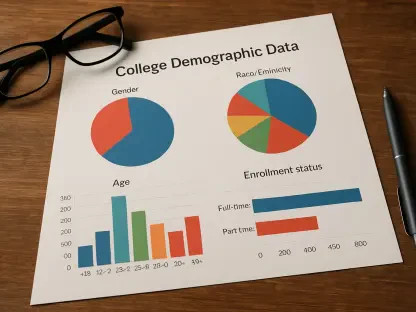
A defining characteristic of this digital education movement is its deliberate focus on reaching a wide and diverse demographic, ensuring that the benefits of technology-enabled learning are distributed equitably across society. The initiatives target learners at every stage, from primary school children taking their first educational steps to university students engaged in specialized studies and working professionals seeking to advance their careers. A concerted effort is underway to bridge the persistent urban-rural divide through targeted programs that provide low-cost digital devices, subsidize internet connectivity, and promote digital literacy campaigns in underserved communities. Furthermore, this revolution is making significant strides in enhancing accessibility for students with disabilities. Through the use of assistive technologies like screen readers, text-to-speech software, and specially designed learning platforms, digital education is opening doors that were previously closed, offering these students greater independence and a more inclusive learning experience.
Beyond simply expanding access, the digital transformation is fundamentally reshaping the very purpose of education by prioritizing the development of 21st-century competencies. The reliance on rote memorization is giving way to a more dynamic learning process that cultivates critical thinking, analytical reasoning, and complex problem-solving skills. Interactive digital platforms encourage students to explore, question, and apply their knowledge in practical scenarios, preparing them for the demands of the modern workforce. By reducing the dependency on physical classrooms and textbooks, digital education offers a uniquely scalable solution to meet the needs of India’s vast student population. With over 150 million students already actively using online learning platforms, this model has demonstrated its capacity to deliver quality education on an unprecedented scale, fostering a new generation of innovative thinkers and skilled professionals.
The Road Ahead with Emerging Technologies
The trajectory of India’s digital education ecosystem points toward continued and accelerated growth, propelled by the imminent integration of next-generation technologies that promise to make learning even more immersive and effective. The rollout of high-speed 5G networks will be a game-changer, eliminating issues of latency and enabling seamless streaming of high-definition educational content, even in remote areas. This enhanced connectivity will provide the backbone for more sophisticated applications, such as AI-powered tutoring systems that can act as personal mentors, offering students one-on-one guidance and support around the clock. Simultaneously, the advent of immersive technologies like virtual reality (VR) and augmented reality (AR) is set to revolutionize pedagogy, allowing students to conduct virtual science experiments, explore historical sites, or visualize complex biological processes in a fully interactive 3D environment.
This forward-looking technological vision is strongly anchored by a supportive policy framework, most notably the National Education Policy (NEP) 2020. This landmark policy provides official sanction and a clear roadmap for the integration of technology into every facet of the education system. The NEP explicitly encourages the adoption of hybrid learning models, advocates for the development of digital assessments to create a more holistic evaluation system, and calls for the establishment of a national body to steer the digital transformation. This policy support from the highest levels of government provides the necessary impetus and institutional backing for schools and universities to invest in digital infrastructure and training. By aligning technological advancements with a coherent national policy, India is strategically positioning itself to build a resilient, future-ready education system that can adapt to emerging challenges and opportunities.
A Paradigm Shift Solidified
The evidence clearly indicated that India had undergone a profound paradigm shift in its educational philosophy and practice. The concerted efforts of both public and private sectors successfully fostered a new ecosystem where equitable access and technological innovation became central pillars of learning. However, the long-term success and sustainability of this digital revolution were ultimately contingent upon two critical factors: continued, robust investment in strengthening the nation’s digital infrastructure and the implementation of comprehensive, ongoing teacher training programs. These elements proved essential to ensure that technology was not merely a supplement but a fully integrated and effective tool, empowering educators and transforming the learning journey for a new generation of students.