
An unusually severe winter season has presented Indiana school districts with a significant challenge, forcing administrators to confront a 2022 state law that has fundamentally altered the classic snow day. With a higher-than-average number of cancellations, schools are navigating a legislative landscape that places strict limits on traditional virtual learning, creating a critical decision point for educators across the state. The predicament has led to a clear divergence in strategy: some districts are proactively embracing a newer form of live, real-time online instruction to maintain educational momentum, while others are adhering to more conventional methods of making up for lost time. This split highlights differing philosophies on technology, equity, and the best way to ensure students meet the state’s mandatory 180-day instructional requirement without the unpopular consequence of extending the school year into the summer.
A Legislative Fork in the Road
The central issue driving this strategic shift is Indiana Code 20-30-2-2.7, a law that distinguishes between two forms of virtual instruction and has reshaped how districts respond to weather emergencies. The statute explicitly limits schools to a maximum of three “asynchronous” eLearning days per academic year. These are the familiar remote learning days where students complete pre-assigned lessons and tasks online at their own pace, without any required live interaction with their teachers. For years, this model was a straightforward solution for weather-related cancellations. However, once a district exhausts its three-day allowance, any subsequent closures must be made up by adding days to the end of the school calendar, a disruptive solution for families and staff. Crucially, the law provides a powerful alternative by placing no limit on the number of “synchronous” eLearning days. This model requires that at least 50% of the school day consists of live, real-time instruction, creating a virtual classroom where teachers and students can interact directly, thus serving as a legally sound alternative to extending the school year.
Embracing the Live Classroom Model
Proactive school districts, including Elkhart Community Schools (ECS) and the South Bend Community School Corporation (SBCSC), have strategically adopted the synchronous model as a sustainable solution to this year’s frequent closures. Kristin Sederberg, the Director of Professional Learning for ECS, pointed out that the district had already used five or six eLearning days due to the harsh winter, underscoring the immediate need for a viable long-term plan. Recognizing the potential for numerous weather-related disruptions, ECS incorporated synchronous learning into its yearly plan from the outset. The district even held a planned, practice synchronous eLearning day to familiarize students, teachers, and families with the technology and format. Sederberg emphasized the primary benefit of this foresight, stating, “The beauty of these days is they count as school days, so we will not have to make up days as long as we continue to use this format.” This preparatory approach has allowed the district to seamlessly transition from in-person to live virtual instruction when needed, ensuring compliance with state law without sacrificing instructional time.
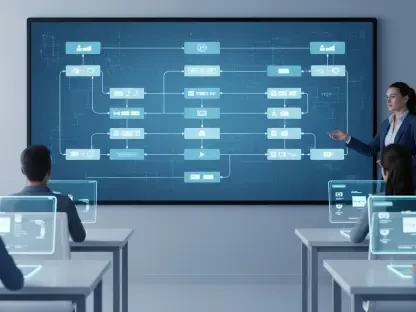
The implementation of synchronous learning in these districts is meticulously designed to replicate the structure and rigor of a normal school day. Derek Albright, the Coordinator of Digital Integration at SBCSC, confirmed that the goal is for the day to “look as it would if they were on face-to-face.” For elementary students in districts like ECS, this includes live lessons in core subjects such as reading and math, small group instruction, and even special area classes. At the middle and high school levels, students rotate through a schedule of shortened periods, allowing them to engage with all their subject teachers throughout the day. A critical component of this model is its inclusivity; support staff, including English as a New Language (ENL) and Special Education teachers, are able to “push in” to virtual classrooms to provide necessary student support. This comprehensive approach ensures that learning continues uninterrupted for all students and that the educational experience remains as close to the in-person standard as possible, a key factor when facing multiple consecutive cancellations.
A Different Path for Other Districts
In stark contrast to the pivot toward live virtual instruction, the Penn-Harris-Madison (P-H-M) School Corporation has chosen not to adopt the synchronous learning model. After utilizing its three allotted asynchronous days for winter weather, the district faced two additional cancellations. These two days would have required an extension of the school year, but P-H-M was able to avoid this outcome by applying for and receiving a state waiver. This waiver was made available due to the Governor’s declaration of a state of disaster emergency for the severe weather that occurred from January 26–30. While this provided an immediate solution, it highlights a reliance on external circumstances and governmental relief rather than a built-in, repeatable district strategy for managing instructional time. This approach leaves the district dependent on a limited number of asynchronous days and the possibility of future waivers, which are not guaranteed for every weather event, creating potential uncertainty for the school calendar in subsequent years.
The rationale behind P-H-M’s decision stems from concerns about the practical challenges and potential inequities of live virtual instruction, especially for younger learners. A spokesperson for the district explained that synchronous learning presents significant hurdles for students in kindergarten through fifth grade, who often struggle with the technology and the demands of sustained online engagement without direct, in-person support. Furthermore, the district noted that the success of this model often requires a higher level of parental or adult involvement at home to help students log in, stay on task, and navigate technical issues. Recognizing that not all families have the flexibility or resources to provide this level of supervision during the school day, P-H-M opted to avoid a model that could potentially widen the learning gap. This decision reflects a philosophy that prioritizes avoiding potential barriers to access, even if it means relying on more traditional methods of managing snow days like make-up days or state-level waivers.
A New Precedent for Instructional Continuity
The varied responses to Indiana’s eLearning law revealed that synchronous virtual learning had emerged as an effective and legally sound strategy for many districts. The experiences of school systems like ECS and SBCSC demonstrated that with proactive planning, including practice sessions and clear communication, live virtual days could provide a structured and rigorous learning experience that maintains instructional momentum. Teachers found they could largely replicate their in-person lessons, and critical support services for students continued without interruption. Conversely, the path taken by P-H-M illustrated the alternative, which involved leveraging a limited number of asynchronous days and depending on traditional cancellations, which could necessitate makeup days or rely on external measures like state-approved waivers. The choice between these two approaches reflected differing philosophies on the feasibility of live virtual instruction and the best way to ensure educational equity for all student populations.