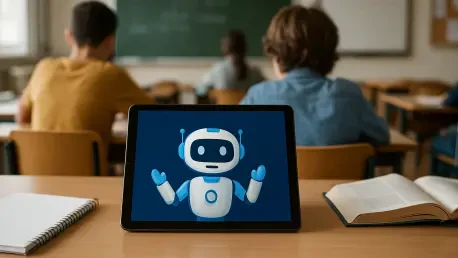

Imagine a student in a remote village of Madhya Pradesh, miles away from the nearest school, yet still engaging with high-quality educational content right from a mobile phone, even during a global crisis that shuttered classrooms. This is the reality crafted by the Swayam Siddhi Chatbot, an innovative tool launched by the State Education Center under the School Education Department in Madhya Pradesh. Designed for students up to grade 12, this mobile-based platform emerged as a lifeline during the unprecedented challenges of the COVID-19 pandemic. It’s not just a stopgap measure but a pioneering step toward redefining how education reaches every corner of the state. By focusing on home learning, the chatbot ensures that academic progress doesn’t hinge on physical access to schools. Instead, it brings structured practice and instant feedback directly to students, no matter their location. This initiative, born out of necessity, has evolved into a powerful symbol of educational equity, bridging gaps that traditional systems often overlook.
Moreover, the collaboration with ConveGenius has infused the project with technical expertise, making the chatbot a seamless and accessible resource. It’s hosted on the Swift Chat system, where a simple greeting like “Hi” opens a world of interactive learning—questions, answers, scores, and even remedial videos tailored to a student’s needs. What sets this apart is the consistent effort to keep content fresh and relevant. Every Saturday, new questions certified by the State Council of Educational Research and Training (SCERT) are uploaded, ensuring students have regular opportunities to test their grasp of various subjects. Operated by the Assessment Cell of the State Education Center, this tool doesn’t just facilitate learning; it introduces a methodical, scientific approach to evaluation. For students in underserved or remote areas, this means access to a quality of education that might otherwise remain out of reach, transforming their daily learning experience into something dynamic and engaging.
Bridging Educational Gaps with Digital Innovation
Looking deeper, the impact of this digital tool extends beyond mere convenience—it’s about leveling the playing field. A recent live discussion on the State Education Center’s YouTube channel, featuring experts like Dr. Arun Singh, Additional Director of the State Education Center, highlighted how the chatbot enhances learning outcomes across diverse communities. Representatives from ConveGenius also emphasized its role in reaching both students and teachers, creating a broader educational network. This isn’t just technology for technology’s sake; it’s a deliberate effort to address disparities in access, especially for those in resource-poor regions of Madhya Pradesh. The platform fosters independent learning by offering consistent practice and immediate feedback, empowering students to take charge of their academic journey even when external disruptions strike.
Additionally, this initiative reflects a broader trend in education: the growing reliance on technology to ensure continuity and fairness. Educators and policymakers in the state have reached a consensus on the urgent need for high-quality learning resources that transcend the traditional classroom. The chatbot meets this demand by providing a scalable solution that doesn’t just supplement education but reimagines it for those who need it most. Looking back, the strides made through this program showed how digital tools could tackle long-standing challenges, setting a benchmark for inclusive education. As future efforts build on this foundation, the focus should remain on expanding reach and refining content to address evolving student needs. Scaling similar innovations nationwide could be the next step, ensuring no learner is left behind in an increasingly digital world.