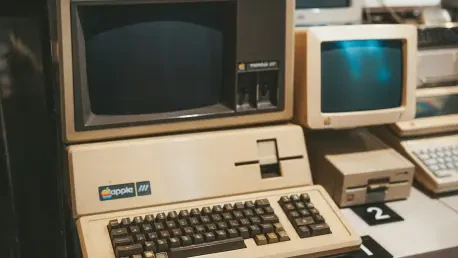

The year 1998 marked a definitive threshold where the theoretical promise of the Information Superhighway finally collided with the practical realities of the American K-12 classroom. School districts across the Fargo-Moorhead region found themselves at the epicenter of a national mandate, championed by federal leadership, to ensure that every single classroom in the United States was connected to the World Wide Web by the turn of the millennium. This was far more than a simple upgrade of existing tools; it was a fundamental reimagining of the educational environment that necessitated a radical overhaul of physical infrastructure. Administrators were forced to look at their aging buildings with new eyes, recognizing that the traditional “study hall” model—a place of quiet, passive supervision—was becoming obsolete in the face of a digital revolution that demanded active, networked engagement. Consequently, school floor plans began to shift as libraries and storage rooms were gutted to house rows of humming computer towers and CRT monitors. This physical evolution mirrored a deeper intellectual shift, as the reliance on static, often outdated textbooks began to give way to the fluid and infinite nature of online data. The transformation was visible in the very walls of the schools, where miles of Ethernet cable were snaked through ceilings to bring a once-distant digital world directly to the student’s desk.
This period of rapid transition served as the first real test of how technology could be integrated into a standardized curriculum without disrupting the core mission of public education. In Fargo, the repurposing of Fargo North High School’s old study hall into a high-tech computer lab became a local symbol of this new era, proving that schools were willing to sacrifice traditional spaces to accommodate the tools of the future. Meanwhile, in Moorhead, the transition was defined by a move away from the agonizingly slow and “patience-trying” era of dial-up modems toward more robust, dedicated direct links. This change in connectivity speed was crucial because it allowed for simultaneous access across entire buildings, transforming the Internet from a niche novelty into a reliable utility. Educators and administrators alike realized that they were no longer just managing a school district; they were managing a complex technological ecosystem that required constant maintenance and forward-thinking logistics. The shift was so comprehensive that it touched every grade level, forcing a dialogue between traditionalists who valued the tactile nature of paper and innovators who saw the “Cyber Sea” as the only relevant training ground for the upcoming generation. By the end of 1998, the blueprint for the modern, connected school had been drawn, setting the stage for a century defined by digital literacy.
Financial Investments: The High Price of Digital Progress
The push to modernize the Fargo-Moorhead school districts for the digital age came with a staggering financial burden that tested the limits of local budgets and taxpayer patience. In 1997 and 1998, the Fargo School District alone allocated nearly $2 million toward technology infrastructure, a massive sum at the time that covered everything from the purchase of hardware to the labor-intensive process of wiring historic buildings. These figures highlighted a significant shift in fiscal priorities, where “technology” was no longer a line item for a few specialized vocational classes but a foundational requirement for the entire student body. Beyond the initial capital outlay for the 3,200 computers Fargo maintained for its 11,000 students, the district faced high recurring operational costs. For instance, leasing dedicated data lines like T1 connections from providers such as U S West required annual fees of approximately $22,000 per line, creating a permanent drain on resources that had previously been reserved for teacher salaries or facility repairs. This financial reality meant that every new computer lab built was not just a one-time gift to the students but a long-term commitment to a cycle of hardware obsolescence and software updates that would continue indefinitely.
In neighboring Moorhead, the economic challenge was equally formidable, as officials grappled with a projected $4 million bill to modernize their fleet of 1,900 workstations. The district’s inventory was described as a “mixed bag,” a frustrating collection of state-of-the-art machines sitting alongside aging processors that struggled to run the increasingly demanding web browsers of the late nineties. To bridge the funding gap, school leaders like Superintendent Bruce Anderson had to engage in a sophisticated campaign of community persuasion, often seeking increases in the district’s excess levy to fund the digital expansion. This required convincing a skeptical public that spending millions on “electronic boxes” was just as essential as fixing leaky roofs or buying new buses. The debate over these expenditures fundamentally changed the relationship between schools and their communities, as digital literacy was framed as an economic necessity for the region’s future workforce. Taxpayers were essentially asked to invest in a technological infrastructure that many of them did not yet fully understand, based on the promise that their children would be left behind in the global economy if the schools remained tethered to the pre-digital past.
Redefining the Curriculum: From Textbooks to Primary Sources
By 1998, the Internet was no longer viewed as an elective luxury or a high-tech toy; it was being integrated into the core curriculum as a vital tool for academic and professional success. Educators in both Fargo and Moorhead identified a specific set of digital competencies that students were expected to master before they could receive a high school diploma. These included the ability to navigate complex digital directories, a complete mastery of productivity software like word processors and spreadsheets, and the skill to move efficiently through the “Cyber Sea” to find verified information. This pedagogical shift began early, with fourth graders starting formal keyboarding lessons to ensure that their physical typing speed would not be a bottleneck for their intellectual exploration in later years. The goal was to move beyond the rote memorization of facts found in a single textbook and instead teach students how to treat raw data as the building blocks for original thought. This “amplifier” effect of the Internet allowed teachers to assign projects that were previously impossible, such as comparing live data sets or researching global events through the eyes of international news sources.
In classroom settings, this newfound access to the world’s information allowed for a much more nuanced and comparative approach to traditional subjects like social studies and history. For example, a ninth-grade student in Moorhead could bypass a summarized paragraph in a textbook and instead access the actual journals of James Madison from the Constitutional Convention via a law library in another state. This level of access transformed the student from a passive consumer of a pre-digested narrative into a junior researcher capable of analyzing primary sources. Students could compare the United States Constitution with the governing documents of various Native American tribes or examine how different political groups utilized their First Amendment rights in real-time. This method of teaching fostered a deeper level of critical thinking, as students were encouraged to find “raw materials” online and synthesize them into cohesive arguments. The classroom was no longer a closed loop where the teacher provided all the answers; it became a laboratory where the Internet provided the data and the students provided the analysis, effectively mirroring the research environments of higher education and professional industries.
The Evolution of the Educator: Guiding the Digital Journey
The arrival of ubiquitous internet access in 1998 triggered a profound and sometimes uncomfortable evolution in the professional identity of the teacher. The traditional instructional model, often described as the “sage on a stage,” where the educator was the sole gatekeeper and distributor of knowledge, began to crumble under the weight of the World Wide Web. In its place, school districts promoted the concept of the “guide on the side,” a role where the teacher acted as a coach rather than a lecturer. This transition recognized that in a world where students could look up facts in seconds, the teacher’s primary value shifted from providing information to providing context, verification, and methodology. Educators were now responsible for teaching students how to learn and how to evaluate the quality of the information they encountered, rather than just requiring the memorization of a set curriculum. This change was a significant psychological shift for many veteran teachers who had spent decades as the undisputed authorities in their classrooms, and it required a new kind of humility to admit that, in many cases, the students possessed more technical savvy than the adults.
Despite the clear benefits of this new model, the transition was met with a measurable degree of resistance and “less than enthusiastic” responses from some staff members. There was a palpable fear among some educators that the encroaching presence of computers would dehumanize the learning experience or that they would be replaced by software. However, the prevailing administrative consensus in the Fargo-Moorhead area was that technology was an inescapable reality of the “real world” and that teachers who failed to adapt would eventually do a disservice to their students. The focus of professional development shifted toward synthesis—training teachers to help students take the vast, unorganized “catch” of information from a web search and process it into a useful, structured presentation. This required teachers to be more flexible and creative in their lesson planning, as they could no longer rely on the same static materials year after year. By embracing the role of a coach, educators were able to maintain their relevance in the digital age, ensuring that technology served as a bridge to deeper understanding rather than a distraction from the fundamental goals of literacy and critical inquiry.
Navigating the Frontier: Safety and the Reality of Online Behavior
As schools in 1998 opened their digital doors to the world, they immediately encountered the darker and more chaotic aspects of the early Internet, commonly referred to at the time as “digital garbage.” Safety concerns became a top priority for administrators who had to protect students from inappropriate content while maintaining the open nature of a research tool. One of the most controversial decisions of the era was the widespread prohibition of chat rooms, driven by a deep-seated fear of the anonymity inherent in online communication. Lab managers and teachers were particularly concerned that students might believe they were chatting with a peer when they were actually interacting with someone dangerous or entirely different from who they claimed to be. This era was characterized by a specific type of anxiety regarding the “unknown” parts of the web, leading to strict behavioral codes that treated the computer lab as a high-stakes environment where any breach of trust resulted in a total loss of privileges. The focus was not just on blocking content, but on instilling a sense of caution in a generation that was the first to navigate a truly global, unregulated network.
The debate over how to handle “X-rated” or “inappropriate” websites led to a surprisingly pragmatic approach in the Fargo-Moorhead districts, where many officials expressed skepticism toward filtering software. At the time, filters were notoriously unreliable, frequently blocking legitimate educational resources while failing to stop truly objectionable material. Instead of relying on a “technological fix,” many schools adopted a policy of “line-of-sight” monitoring. This involved arranging computer workstations so that all screens were clearly visible to any adult walking through the room, creating an environment of natural accountability. Teachers focused on educating students about the “back button” method—teaching them to immediately exit a site if they stumbled upon something inappropriate by accident. This philosophy was rooted in the belief that teaching students to make responsible, self-correcting decisions was more effective than trying to build a digital wall that savvy teenagers would eventually find a way to climb. By treating the Internet as a professional tool rather than a toy, schools aimed to bridge the gap between the technical ability to access information and the moral maturity required to use it wisely.
Ethics and Digital Responsibility: Lessons from the Real World
One of the most striking challenges schools faced in 1998 was the psychological disconnect students felt between their actions on a screen and the consequences in the physical world. A famous local anecdote involved a student who, perhaps out of boredom or a lack of understanding of the medium, sent a threatening email to the White House, which promptly resulted in a visit from the Secret Service to the school. This incident served as a wake-up call for administrators like Lowell Wolff, who noted that many students viewed the computer monitor as a television—something to be watched without real interaction—rather than a two-way communication portal. This “television mentality” meant that students often failed to realize that a human being, or a powerful federal agency, was on the receiving end of their keystrokes. This lack of digital empathy and awareness forced schools to implement “appropriate use” policies that were often an inch thick, detailing exactly what constituted harassment, threats, and illegal activity in a digital context. These policies were not just about discipline; they were an essential part of a new kind of civic education for the digital age.
The legal and ethical complexities of monitoring student behavior online also forced districts to find a difficult middle ground regarding liability. Attorneys warned that if schools tried to control every single piece of content, they might be legally classified as “publishers” and held responsible for anything that slipped through. Conversely, if they did nothing, they risked being seen as a “newsstand” with no oversight at all. The resulting compromise was a policy that placed the primary onus of responsibility on the students themselves, reinforcing the idea that digital access was a privilege to be earned and maintained through professional behavior. By the end of 1998, a clear consensus had emerged that the teacher remained the most important “filter” in the room. While students were often faster at clicking through links, they lacked the critical “weeding out” skills necessary to distinguish high-quality information from digital noise. The successful integration of the Internet depended less on the speed of the T1 lines and more on the ability of educators to guide students through the moral, social, and intellectual complexities of this new digital frontier.
Future Considerations: Sustaining Digital Literacy Beyond the Classroom
The transformation of schools in 1998 established a foundation for digital literacy that remains relevant as we look toward the future of educational technology. One of the most critical takeaways from this era is the realization that hardware alone is never a solution; rather, it is the ongoing support and training of educators that determines the success of any technological rollout. As schools continue to integrate more advanced systems, the focus must remain on the teacher’s role as a facilitator of critical thinking. To ensure long-term success, districts should prioritize sustainable funding models that account for the rapid cycle of obsolescence, perhaps by exploring public-private partnerships or tiered equipment lifecycles. Furthermore, the “guide on the side” model should be expanded to include data privacy education, teaching students not just how to find information, but how to protect their own digital footprints in an increasingly interconnected world. The lesson of 1998 was that technology is an amplifier of human intent, and our primary goal should be to ensure that students have the ethical framework to use that power responsibly.
Looking forward, the integration of technology must move beyond the “computer lab” and into every facet of the learning environment, fostering a seamless transition between school and the professional world. Schools should consider implementing more robust peer-to-peer mentoring programs where tech-savvy students can assist in the technical aspects of the classroom, allowing teachers to focus on the higher-order synthesis of information. Additionally, the move away from imperfect filtering software toward a philosophy of digital responsibility should be reinforced with modern curricula that address the complexities of algorithmic bias and misinformation. By treating digital literacy as a fundamental right rather than a technical elective, we can prepare a generation that is not just proficient with tools, but capable of navigating the moral and social challenges of a digital society. The infrastructure of the future will be built not just on faster data lines, but on the ability of students to think critically and act ethically within the vast “Cyber Sea” that was first charted in the classrooms of the late 1990s. The groundwork laid then served as a vital precursor to the fully connected educational systems we rely on today.