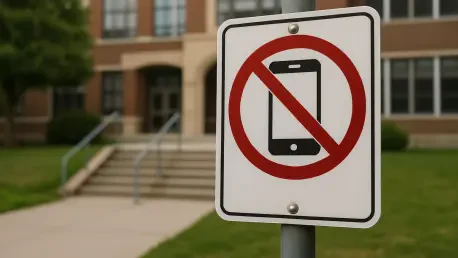

The silence that once defined the American classroom has increasingly been replaced by the persistent hum of digital notifications, prompting the Pennsylvania Senate to advance a legislative overhaul of student conduct. Senate Bill 1014 represents a significant shift toward reclaiming the educational environment by proposing a “bell-to-bell” prohibition on mobile phone usage in all K-12 institutions. This mandate would restrict students from accessing their personal devices from the moment they enter the building until the final dismissal bell. While the measure has successfully cleared the Senate as of early February, its final implementation across the Commonwealth remains contingent upon approval from the House of Representatives. If the bill passes into law, school districts will have a structured timeline to adapt, with the requirements slated to become mandatory by the 2027-28 school year. This window is intended to allow administrators and families to navigate the complex cultural and logistical transitions that such a sweeping state-wide policy inevitably requires.
Comprehensive Restrictions and Necessary Exceptions
The core of the proposed legislation is built upon the principle of uninterrupted learning, requiring students to remain disconnected throughout the entire school day, including lunch periods and transitions between classes. Advocates of the bill argue that even brief interactions with social media or text messaging during breaks can disrupt cognitive focus and prolong the time it takes for a student to re-engage with academic material once they return to the classroom. By eliminating these digital distractions during the middle of the day, lawmakers hope to foster a more cohesive and social school culture where students are encouraged to interact with their peers in person rather than through a screen. However, the bill is not a blanket prohibition without nuance; it includes specific exemptions designed to protect the rights and health of certain student populations. For instance, students with documented medical conditions that require specialized monitoring apps will retain access to their devices as a matter of safety.
In addition to medical exemptions, the legislation provides essential carve-outs for English language learners who may utilize mobile devices for real-time translation services or other specialized linguistic support. These exceptions ensure that the ban does not inadvertently create barriers to learning for those who rely on technology to bridge communication gaps in an English-speaking environment. Furthermore, the bill allows for the use of devices during specific academic events, such as science fairs or off-campus field trips, where digital tools might be integral to the educational experience. Beyond these state-mandated guidelines, the legislation grants individual school districts a high degree of autonomy to develop their own enforcement protocols and physical storage solutions. This localized approach allows rural and urban districts to tailor their strategies based on their unique infrastructure and community expectations, ensuring that the transition to a phone-free environment is handled with the necessary sensitivity and practical foresight.
Measurable Impacts and Qualitative Improvements
Early indicators from districts that have already experimented with more stringent electronic policies suggest that such mandates can be highly effective when implemented with clear expectations. The Bethlehem Area School District recently updated its policy for the first time in over two decades to address the modern technological landscape of 2026, prohibiting phone use during all instructional periods. Administrators within the district have reported a staggering 96% compliance rate across thousands of classroom observations, demonstrating that students are largely willing to adhere to the rules when they are consistently enforced. This high level of cooperation has allowed teachers to regain control of the classroom dynamic, shifting the focus away from policing digital behavior and back toward the delivery of high-quality instruction. The success in Bethlehem serves as a practical blueprint for other Pennsylvania districts, illustrating that a transition toward restricted access is not only possible but can lead to a more disciplined and productive learning environment.
Beyond the quantitative data, educators have observed profound qualitative changes in the way students interact with one another and their surroundings when phones are removed from the equation. At Liberty High School, faculty members have noted a marked increase in student engagement, with many reporting that students appear more present and attentive during discussions. Similarly, administrators at Freedom High School have pointed to a shift in social dynamics, as students are becoming significantly more interactive in person rather than spending their free time loitering in hallways while staring at screens. A particularly unusual but telling metric of success was a 75% drop in vending machine revenue at one location, which administrators linked to a decrease in student wandering and phone-related distractions. This suggests that when students are not constantly searching for opportunities to use their devices, they remain more focused on their immediate academic environment and are less likely to seek out reasons to leave the classroom or congregate in unsupervised areas.
Logistical Hurdles and Educational Perspectives
Despite the documented benefits, the transition to a statewide “bell-to-bell” ban is not without significant logistical and emotional challenges that must be addressed before the 2027-28 deadline. A primary concern for many families is student safety, as parents often view the cell phone as an essential lifeline for direct communication during emergencies or unexpected schedule changes. Reconciling this need for security with the goal of a distraction-free classroom requires schools to implement robust communication systems that can reassure parents their children remain reachable through official channels. Additionally, the physical act of securely storing thousands of expensive electronic devices presents a daunting operational task for large high schools. Many districts are concerned about the financial burden of purchasing specialized storage pouches or secure lockers, especially if the state does not provide additional funding to cover these costs. Without a clear plan for managing and protecting student property, administrators face potential liability issues and significant pushback from the community.
The debate over the phone ban also touches on deeper pedagogical questions regarding the role of technology in preparing students for life after graduation. Some educators argue that a total prohibition does a disservice to older students by removing the opportunity to practice responsible technology use in a supervised setting. These critics suggest that schools have an obligation to teach self-regulation and digital citizenship, as electronic devices are an inescapable reality of the modern professional world. However, from a policy perspective, the movement to limit digital distractions has managed to secure rare bipartisan consensus in Pennsylvania’s often divided legislature. Policy experts emphasize that for these rules to be truly effective, schools must involve the student body in the implementation process to foster a sense of legitimacy and mutual respect. By giving students a voice in how the rules are applied, districts can create a culture of compliance that balances the need for academic focus with the practical realities of living in a technology-heavy society.
Actionable Strategies for Future Implementation
The movement toward a statewide cell phone ban in Pennsylvania schools reflected a significant shift in how the Commonwealth prioritized academic focus over digital convenience. To ensure a successful transition as the 2027-28 school year approached, districts began prioritizing the installation of centralized communication hubs to address parental safety concerns effectively. School boards sought out partnerships with local law enforcement to develop emergency protocols that did not rely on individual student devices, thereby maintaining security without compromising the distraction-free environment. Furthermore, successful implementations relied on transparent discussions with student councils to determine the best methods for device storage, whether through designated lockers or signal-blocking pouches. Administrators also invested in professional development for teachers to help them leverage non-digital engagement strategies that filled the void left by personal technology. By focusing on these practical steps, the education system worked to ensure that the removal of phones was viewed not as a loss of freedom, but as an intentional investment in the cognitive and social development of the next generation.