
The landscape of higher education in Texas is currently undergoing a seismic shift as the University of Texas System considers new mandates that could fundamentally redefine the boundaries of the classroom. To help navigate these complex changes, we are joined by Camille Faivre, an expert in education management with a deep focus on instructional integrity and open learning. In this conversation, we explore the friction between traditional academic freedom and new “academic integrity” principles, the role of automated technology in curriculum oversight, and the long-term impact of state-level scrutiny on the recruitment of world-class scholars.
New policies require faculty to stick strictly to syllabi and present balanced views on contested issues. How do these requirements change daily classroom dynamics, and what specific steps should instructors take to ensure they remain “germane” to the course without suppressing spontaneous academic inquiry?
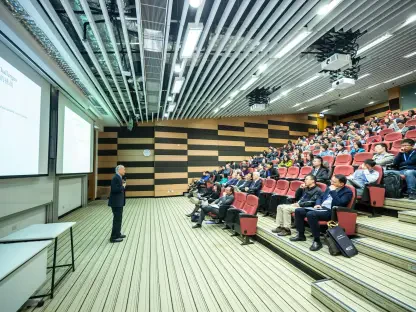
The imposition of these “academic integrity” principles creates a palpable tension in the classroom, effectively turning the syllabus into a rigid legal contract rather than a living roadmap for learning. When instructors are mandated to avoid topics not deemed “germane” to the course, they often feel a chilling effect that discourages them from following a student’s insightful but unexpected question into new territory. To navigate this, faculty must meticulously document how every discussion point ties back to the core learning objectives outlined in the initial 13-institution UT System guidelines. It requires a high level of intentionality, where professors must explicitly label “unsettled issues” and proactively offer multiple perspectives to avoid any perception of indoctrination. The challenge is preserving the sensory richness of a debate—the quick fire of ideas and the energy of discovery—while operating under a policy that many faculty groups describe as sweeping and dangerously vague.
Some institutions have implemented AI-driven reviews of course content to identify restricted topics like race or gender. What are the technical and ethical implications of this shift, and how can faculty navigate these nontransparent audits while maintaining the integrity of their instructional materials?
The introduction of nontransparent AI reviews represents a shift toward algorithmic surveillance that can strip the nuance out of complex academic discourse. These tools are often programmed to flag specific keywords related to sexual orientation, gender, or race, which can lead to mid-semester course cancellations or the sudden removal of essential texts without a human understanding of their context. For faculty, this creates an environment of “digital anxiety” where they must audit their own materials through the lens of a machine before the university does. To maintain integrity, instructors should keep detailed pedagogical justifications for every reading, showing how the material serves the academic standards of the field rather than a political agenda. It is a grueling process that forces educators to act as both scholars and defense attorneys for their own curricula.
When classical literature or foundational philosophies are removed from curricula due to their “controversial” nature, how does this reshape specific degree requirements? What criteria should administrators use to define “unnecessary” subjects, and how can they demonstrate that these changes don’t compromise academic standards?
We are seeing a disturbing trend where even foundational thinkers like Plato are being censored in introductory philosophy classes, a move that PEN America has rightly identified as antithetical to the goals of education. When administrators are tasked with defining “unnecessary” subjects, they run the risk of hollowing out degree programs to the point where students are no longer prepared for global intellectual competition. Administrators should ideally use peer-reviewed disciplinary benchmarks rather than political pressure to determine what is “germane,” yet the current proposal leans toward avoiding anything that might cause friction. This reshaping of degree requirements suggests a future where a Texas degree might be viewed as narrower or less rigorous if it systematically avoids “controversial” material. Proving that standards haven’t been compromised becomes nearly impossible when you are removing the very texts that have defined Western thought for over two millennia.
High-profile disciplinary actions against professors for their political speech have recently occurred alongside the creation of state-level panels on campus discourse. How do these actions affect the recruitment of faculty, and what strategies can institutions use to build trust while operating under such scrutiny?
The high-profile disciplinary actions, including the firing of over two dozen faculty members nationwide following the death of a controversial commentator, have sent a shockwave through the academic job market. Top-tier scholars are increasingly hesitant to move to states where panels on “bias and discourse” feel more like tools for ideological policing than protectors of free speech. To combat this, institutions must work twice as hard to build internal cultures of trust, perhaps by creating faculty-led committees that mediate between the administration and the state government. They need to demonstrate through concrete actions—such as the reinstatement of wrongly disciplined staff—that the university remains a sanctuary for diverse thought. Without these safeguards, the “Texas brand” in higher education risks losing its competitive edge as elite researchers opt for environments with more stable protections for their speech.
What is your forecast for higher education policy in Texas?
I anticipate a period of significant litigation and structural fragmentation as these policies move from draft proposals to enacted law across the UT System. We will likely see a “dual-track” educational experience emerge: one track that adheres to a sanitized, state-approved curriculum, and another where faculty and students push the boundaries of “academic freedom” through off-campus forums or private digital spaces. The ongoing tension between the Governor’s office and faculty advocacy groups will probably result in more automated oversight, with at least a 20% increase in the use of monitoring technologies to ensure syllabus compliance. Ultimately, the next few years will determine whether Texas can maintain its status as a hub for innovation or if the focus on “indoctrination” will lead to a brain drain that reshapes the state’s intellectual landscape for a generation.