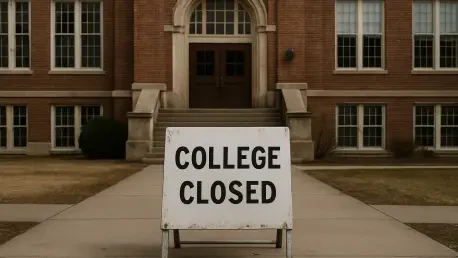

Hampshire College, once a celebrated comeback story in the embattled world of American higher education, now finds itself teetering on a financial precipice where a mountain of debt threatens to bring its bold academic experiment to an abrupt end for a second time. After narrowly escaping closure in 2019, the institution is again confronting an existential crisis, a situation detailed in its latest audit that raises substantial doubt about its ability to continue operating. The college’s struggle is a potent case study of the immense pressures facing similar institutions across the country.
The Fragile Landscape of American Liberal Arts Colleges
The challenges confronting Hampshire are not unique but are instead symptomatic of a broader crisis within American higher education. Small, private liberal arts colleges are caught in a perfect storm of financial pressures. A looming “demographic cliff,” which refers to the projected drop in the number of high school graduates, means fewer potential students and intensified competition for a shrinking pool of applicants. This creates a difficult environment where only the most resilient and financially stable institutions can thrive.
Compounding the demographic issue are soaring operational costs, from faculty salaries and campus maintenance to technology upgrades and student services. Unlike larger universities with massive endowments and diverse revenue streams, these smaller colleges rely heavily on tuition, making them particularly vulnerable to enrollment fluctuations. This dependency forces many to offer significant tuition discounts to attract students, a strategy that can erode their financial foundations over time and push them closer to the brink.
Hampshire’s Financial Rollercoaster: From Turnaround to Turmoil
The 2019 Revival: A Brief Glimmer of Hope
Just a few years ago, Hampshire College appeared to have defied the odds. Following a near-collapse in 2019 that saw it admit only a partial class, the institution mounted an extraordinary recovery. A successful fundraising campaign, coupled with a radical overhaul of its interdisciplinary curriculum, injected new life and capital into the college. This revitalization effort was designed to reaffirm Hampshire’s identity as a leader in progressive, student-driven education.
The results of this turnaround were, for a time, spectacular. The renewed vision and financial support translated directly into enrollment growth, with the student body surging by nearly 70% over two years. By the fall of 2023, with 844 students on campus, a sense of optimism permeated the community. It seemed as though Hampshire had not only survived but had also crafted a sustainable model for the future, proving that its unique approach to learning remained relevant and appealing.
By the Numbers: A Deep Dive into the Current Crisis
However, that optimism has been short-lived, as the latest financial audit reveals a starkly different reality. The report for the fiscal year ending June 30 paints a grim picture, with total net assets plummeting by 13.9% to $37.9 million. An operating deficit of $3.7 million underscores the ongoing negative cash flow that is steadily draining the college’s resources, reversing much of the progress made during its recovery.
The primary catalyst for this downturn was a critical failure to meet enrollment targets. Last fall, the college enrolled approximately 150 new students, a figure 50% short of its goal. This significant miss dealt a devastating blow to the budget and the entire recovery strategy, which was predicated on steady enrollment growth. The shortfall forced immediate action, leading to a 9% reduction in staff in 2024 and signaling that the college’s financial footing was once again unstable.
The Crushing Weight of Debt and Dwindling Enrollment
At the heart of Hampshire’s current crisis is a crippling debt load totaling $24.9 million. This long-standing financial obligation has become an anchor, weighing down every operational decision and limiting the college’s ability to invest in its future. While debt is a common financing tool in higher education, for a small institution with fluctuating enrollment and limited assets, such a significant liability represents an ever-present existential threat that overshadows all other strategic initiatives.
The situation has become acute due to immediate triggers outlined in the audit. The college has breached the covenants on a series of bonds, an action that technically places it in default and gives lenders the right to demand immediate repayment. Furthermore, one bondholder is seeking to exercise a put option, a clause that would force Hampshire to buy back the securities on demand. These pressures have forced the reclassification of over $20 million in debt from long-term to short-term, creating a sudden and massive liquidity crisis.
Navigating Covenants, Auditors, and Financial Lifelines
For the third consecutive year, auditors have issued a “going concern” warning, a formal declaration of substantial doubt about an entity’s ability to operate for the next twelve months. This is more than an accounting formality; it is a red flag to creditors, donors, and prospective students that the institution’s future is in jeopardy. The warning severely complicates efforts to secure new financing, as potential lenders are hesitant to invest in an organization with such a high-risk profile.
The college’s survival now hinges on critical and time-sensitive negotiations. Lenders have extended a deadline to September for the college to refinance over $20 million of its debt, providing a narrow window to find a solution. The audit is unequivocal on this point: securing this new financing is not merely a strategic goal but a fundamental requirement for Hampshire to remain a going concern. Failure to do so would almost certainly trigger a financial collapse.
A Crossroads for Survival: Hampshire’s Path Forward
In response to this severe threat, Hampshire’s leadership is actively pursuing a multi-pronged survival strategy. Expense reduction is a key component, with staff cuts already implemented to control operational costs. Beyond trimming the budget, officials are exploring more drastic measures, including the potential sale of campus real estate to generate immediate capital. These actions are being paired with new enrollment initiatives aimed at stabilizing and growing the student body, which remains the most critical factor for long-term sustainability.
Ultimately, the viability of Hampshire College rests on its ability to execute this strategy successfully. The path forward is perilous and requires achieving two difficult goals simultaneously: securing a complex debt refinancing package and reversing the recent decline in student enrollment. The success or failure of these efforts over the coming months will determine whether the college can establish a stable financial foundation or if it will succumb to the immense pressures it currently faces.
The Final Verdict: Can Hampshire Avert a Second Collapse?
Hampshire College stands at a critical juncture, its innovative spirit pitted against the unforgiving logic of its balance sheet. The college’s history is one of resilience and a fierce commitment to its unique educational mission, qualities that fueled its remarkable recovery after 2019. Yet, the current crisis, driven by a staggering debt load and breached loan covenants, presents a challenge that resilience alone may not be enough to overcome.
The central question remains whether Hampshire can secure the financial lifelines necessary to continue its mission. The “going concern” warning from auditors highlights the urgency of the situation, placing immense pressure on the administration to refinance its debt and stabilize enrollment before its options run out. The outcome will serve as a powerful indicator of whether a small, unconventional college can survive in an increasingly competitive and financially demanding higher education landscape.