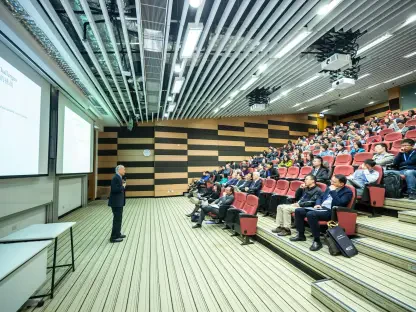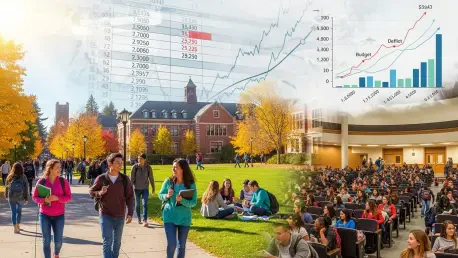

Walking through the vibrant Corvallis campus, one might easily mistake the overflowing lecture halls and bustling student unions for a sign of unprecedented financial prosperity. Oregon State University currently hosts a student body exceeding 38,000, marking a 16% growth rate over the last decade that stands in stark contrast to the shrinking enrollment seen at many other public institutions. Yet, beneath this surface-level success lies a troubling fiscal reality where the university recently approved significant tuition increases to bridge a projected $14 million budget deficit.
This financial paradox challenges the traditional assumption that more students automatically equate to a healthier bottom line. Despite the record-breaking interest from applicants, the university is struggling to keep its fiscal head above water while being “bursting at the seams” with paying attendees. The administration now faces the difficult task of explaining why an institution at the height of its popularity must demand more from the very students who drive its success.
The Irony of Full Classrooms and Empty Coffers
The disconnect between high enrollment and financial stability reveals a fundamental flaw in the modern university funding model. While tuition checks continue to arrive, they are increasingly insufficient to cover the escalating costs of maintaining a comprehensive educational infrastructure. For the current fiscal year, Oregon State expects expenditures to hit the $1 billion mark, yet estimated revenues trail behind at roughly $986 million, forcing leadership to seek immediate adjustments.
The decision to raise costs followed a contentious 12-2 vote by the governing board, reflecting deep internal tension between institutional survival and student affordability. Leaders argue that without these hikes, the university would face “across-the-board” cuts that could compromise the quality of the degrees it confers. Consequently, the burden falls on the student body, even as the campus physical footprint expands to accommodate its growing population.
The Hidden Costs of Supporting a Modern Student Body
To understand this crisis, one must look beyond enrollment totals to the “continuing service levels” required to operate a 21st-century campus. The influx of students has necessitated massive investments in support services that were far less intensive a decade ago. Today’s budget must account for expanded mental health resources, comprehensive disability accommodations, and mandated safety programs, all of which represent essential human infrastructure that tuition alone often fails to subsidize.
Furthermore, state funding has not kept pace with the inflationary pressures of operating a massive physical and digital enterprise. While the university serves more Oregonians than ever before, the per-student investment from the state remains stagnant. This gap leaves the institution responsible for the rising costs of utilities, insurance, and specialized labor, turning every new enrollment into a complex calculation of service demand rather than a simple revenue stream.
Dissecting the Financial Math: Hikes, Revenue, and R1 Requirements
The university’s strategy involves a tiered tuition increase designed to generate approximately $32.3 million in additional revenue. This plan includes a 5.8% hike for returning undergraduates, a 6.3% jump for new students, and a 5% increase for graduate programs. These specific figures are not arbitrary; they are calculated to sustain the university’s status as an R1 research institution, which requires high fixed costs for laboratories, technology, and specialized faculty.
Maintaining a land-grant mission alongside elite research capabilities creates a unique financial burden that smaller regional colleges do not share. Unlike institutions that can pivot toward leaner operations, Oregon State must maintain a vast array of high-cost programs in engineering, agriculture, and oceanography. The administration contends that these adjustments are the only viable path to stabilize the long-term outlook without sacrificing the prestige that attracts students in the first place.
The Defense of Institutional Excellence and Regional Comparisons
University President Jayathi Murthy has emphasized that protecting the core academic mission is the priority, even if it requires unpopular fiscal decisions. This struggle reflects a systemic instability across the entire Oregon higher education landscape, though Oregon State is an outlier in its growth. While other public colleges in the state saw a 7% decline in enrollment over the last decade, OSU’s expansion has actually intensified its fiscal pressure by increasing the demand for limited resources.
The regional context provides a sobering view of the alternatives to tuition hikes. Nearby, Portland State University has considered the elimination of entire departments, while the University of Oregon implemented significant layoffs to bridge its own multimillion-dollar gaps. By choosing tuition increases over mass layoffs or program closures, Oregon State is betting that students will continue to value the quality of the OSU experience enough to absorb the higher price tag.
Strategic Alternatives and the Future of the Public Funding Model
As the university moves toward the next fiscal cycle, the focus shifted to how the institution could remain accessible without eroding its academic rigor. State lawmakers began exploring strategies for greater institutional integration and cost-reduction frameworks to mitigate the need for constant tuition increases. For the university, the path forward involved a delicate balance of strategic 5.2% budget cuts aimed at operational efficiency and a continued push for more sustainable state investment partnerships.
Ultimately, the university community recognized that the old model of relying on enrollment growth to fix budget gaps was no longer sufficient in an era of rising service expectations. Moving forward, stakeholders looked toward a new funding framework that treated higher education as a shared public good rather than a self-sustaining business. This transition required a shift toward more transparent fiscal management and a renewed commitment to state-level advocacy to ensure that record enrollment would eventually lead to record stability.