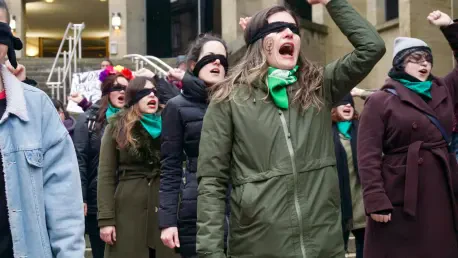

The historic grounds of Florida Agricultural and Mechanical University have recently become the epicenter of a profound ideological battle that pits student activists against their own administration. At the heart of this escalating tension is a formal cooperation agreement with federal immigration authorities, a move that has ignited fierce opposition from student-led coalitions who view the partnership as a betrayal of the institution’s core identity. While the university leadership frames this collaboration as a necessary measure for ensuring regional safety and streamlining emergency responses, a growing number of students perceive it as an affront to the campus’s status as a sanctuary for higher learning and personal growth. This conflict is not occurring in a vacuum; it is deeply amplified by recent leadership transitions and a rapidly evolving political landscape within the state of Florida that has increasingly scrutinized the role of public universities. The resulting friction has transformed the campus into a staging ground for a much larger debate regarding the limits of administrative authority and the responsibilities of a Historically Black College and University in the modern political era.
Administrative Justifications and Student Security Concerns
The Debate: Public Safety Versus Institutional Complicity
The administration at Florida A&M University defends the decision to maintain a partnership with federal immigration authorities by characterizing it as an essential component of a comprehensive public safety strategy. Officials argue that establishing formal ties through the 287(g) agreement allows campus police to access specialized federal training and resources that are critical during high-stakes emergencies, such as active shooter scenarios or credible bomb threats. From the university’s perspective, these relationships are not intended to target the student body but rather to integrate the campus into a broader network of law enforcement agencies that can provide immediate support when local resources are stretched thin. They emphasize that the primary mission of the campus police remains the protection of all students, faculty, and staff, and that the agreement provides a framework for professional cooperation that has been standard practice in many jurisdictions across the country for several years.
In stark contrast, student activists and the FAMU chapter of Students for Democratic Society argue that the benefits of such a partnership are vastly outweighed by the ethical costs of complicity. These groups point out that the 287(g) agreement is entirely optional, meaning the university chose to invite federal immigration enforcement onto a campus that serves a historically marginalized community. Protesters assert that the presence of federal agents, even in a training capacity, creates a pervasive atmosphere of surveillance and hostility that specifically targets the most vulnerable members of the student population. For these activists, the agreement is a symbolic and literal bridge that allows federal intervention into academic life, undermining the trust between the student body and campus security. They maintain that true safety cannot exist in an environment where students feel they are being monitored by federal entities whose primary mission often conflicts with the supportive and inclusive values of an HBCU environment.
Transparency Deficits: The Climate of Retaliation
One of the most significant grievances voiced by the student body involves the perceived lack of institutional transparency regarding the inception and signing of the federal agreement. Activists claim that the administration finalized the deal in early 2025 without providing any prior notification to the campus community or facilitating a public forum for discussion. This perceived secrecy has led to widespread accusations of a breakdown in democratic governance, as students feel they were denied the opportunity to voice their concerns before a binding legal partnership was established. The silence from the university leadership in the months following the signing has only fueled further suspicion, creating a vacuum where rumors and anxiety have replaced factual discourse. This lack of communication is viewed by many as a deliberate attempt to bypass the student voice in favor of administrative expediency, leading to a profound sense of disenfranchisement among the very people the university is supposed to serve.
This environment of secrecy has fostered a palpable climate of fear, particularly among international students who rely on visas to remain in the country and continue their education. Activists report that many students are hesitant to participate in the “ICE OUT” movement or attend rallies due to the high stakes of potential visa revocation or academic retaliation. Even though the university asserts that all currently enrolled students are properly documented, the mere existence of a formal link to federal immigration enforcement is enough to chill free speech on campus. The fear is not necessarily based on immediate deportation but on the long-term consequences of being identified as a political dissenter in an institution that is increasingly aligned with federal law enforcement priorities. This dynamic has effectively silenced a portion of the student body, making the protests even more significant as they represent those who feel they cannot speak for themselves without risking their entire academic future and legal status.
Institutional Shifts and the Broader Political Climate
Strategic Alignment: State Mandates and Programmatic Shifts
The current unrest at the university coincides with a period of significant institutional transformation that many students link to a broader political agenda within the state. The appointment of leadership seen as closely aligned with the state’s executive branch has prompted concerns that the university is being steered away from its traditional mission toward a more conservative administrative model. Students frequently point to the ICE agreement as just one piece of a larger puzzle that includes the elimination of the Africana Studies major and the scaling back of various Diversity, Equity, and Inclusion initiatives. While the university administration cites low enrollment numbers and financial necessity as the primary drivers for these programmatic cuts, the timing of these decisions has led to a widespread perception that the school is being systematically realigned with state-mandated political priorities that favor administrative control over cultural and historical academic depth.
This alignment suggests that the partnership with federal immigration authorities is part of a broader effort to transform the institution’s operational philosophy. By prioritizing relationships with federal and state agencies, the university leadership is seen as signaling a shift toward a more bureaucratic and security-focused institutional identity. Activists argue that this shift comes at the expense of the university’s historical role as a center for social justice and Black intellectual thought. The removal of specific academic programs, combined with the introduction of federal law enforcement training on campus grounds, is interpreted by the student body as a dual-front approach to reshaping the campus culture. For many, this represents a move toward a model of higher education that values state compliance over the traditional values of academic freedom and community-based advocacy, leading to a fundamental disagreement over what the future of the university should look like in an increasingly polarized state.
Regional Activism: The Suppression of Student Voices
The protests at Florida A&M University are not isolated incidents but are part of a larger, coordinated regional effort that involves students from Florida State University and Tallahassee State College. This coalition of activists emphasizes that the 287(g) agreements pose a direct threat not only to the student population but also to the broader Tallahassee community, which includes more than 40,000 foreign-born residents. By joining forces across different institutions, these students have created a unified front that challenges the normalization of federal immigration enforcement in local and academic spaces. They argue that the safety of the entire city is compromised when a significant portion of the population lives in fear of interacting with any form of law enforcement. This regional perspective has broadened the scope of the protests, turning a campus-specific issue into a city-wide debate about the role of police and the protection of immigrant rights within the state capital.
In response to this rising tide of regional activism, some neighboring institutions have resorted to punitive measures that students describe as a direct attempt to suppress dissent and hide the truth. For example, the suspension of specific student organizations following protests against federal collaboration has been cited as a clear example of administrative overreach. These actions have highlighted a volatile standoff where students are demanding a greater voice in the governance of their institutions while administrators appear to prioritize their standing with state and federal authorities. The crackdown on organized dissent has only served to galvanize the movement, as activists view these punishments as a confirmation of the university’s shift toward an authoritarian management style. This tension between student-led advocacy and administrative control has created a challenging environment for dialogue, as both sides remain entrenched in their respective positions regarding the future of campus security and political engagement.
Future Paths: Transparency and Community Reconciliation
The resolution of the ongoing conflict at the university required a fundamental shift in how the administration engaged with its constituents. Moving forward, the university leadership should establish a permanent, independent oversight committee composed of students, faculty, and legal experts to review all existing and future agreements with federal agencies. Such a body would ensure that any partnership involving campus police undergoes a rigorous public impact assessment, providing the transparency that was so notably absent during the initial signing of the ICE agreement. By institutionalizing a process for community feedback, the university could begin to rebuild the trust that has been eroded by months of secrecy and protest. This approach would move beyond simple public relations statements and toward a model of shared governance where the safety and ethical concerns of the student body are given equal weight to administrative and law enforcement priorities.
Furthermore, the university must prioritize the protection of its international and marginalized student populations by clearly defining the limits of federal cooperation on campus property. Implementing specific policies that prohibit campus police from inquiring about immigration status during routine interactions or academic inquiries would go a long way in alleviating the fear of surveillance that currently plagues the student body. Looking ahead, the institution should also reinvest in the cultural and historical programs that were recently cut, demonstrating a renewed commitment to the unique mission of an HBCU. By balancing the practical needs of campus security with a proactive defense of student rights and academic diversity, the university could serve as a model for other Florida institutions navigating similar political pressures. Ultimately, the lessons learned from this period of unrest suggested that administrative authority is most effective when it is rooted in the consent and active participation of the community it intends to protect.