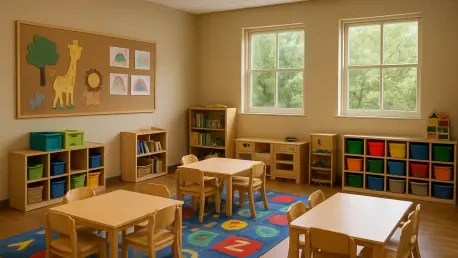

In a landscape where the foundations of education are more critical than ever, one San Marcos school has distinguished itself as a beacon of innovation in early childhood development. Bonham Pre-K, a campus within the San Marcos Consolidated Independent School District, recently earned statewide recognition as one of five finalists for the prestigious H-E-B Excellence in Education Award in the early childhood facility category. This nomination, the second for the school, not only brings a $5,000 prize but also places it in contention for a $25,000 grand prize, solidifying its reputation as a leader. The distinction is not merely an accolade but a testament to a deeply ingrained philosophy that prioritizes holistic growth, linguistic immersion, and robust community engagement. A panel of judges is set to tour the campus to observe this model firsthand, interacting with the administrators, staff, parents, and community members who collectively fuel its success, with a final decision anticipated on May 3. This rigorous evaluation shines a spotlight on the intricate elements that make Bonham a blueprint for what early education can and should be.
A Philosophy of Holistic Development
At the heart of Bonham’s celebrated approach is a profound commitment to the development of the “whole child,” a philosophy championed by Principal Eulogia Martinez, a veteran of the district with nearly 29 years of service. This educational model is rooted in play-based learning, a dynamic framework that is continuously adapted to meet the diverse developmental and linguistic needs of its young students. Rather than relying on rigid, rote memorization, the school fosters an environment where exploration, curiosity, creativity, and problem-solving are cultivated through meaningful play. Classrooms are equipped with open-ended materials that encourage children to think critically and imaginatively, transforming learning into an organic process of discovery. This methodology recognizes that foundational academic skills are best acquired when intertwined with social and emotional growth, allowing children to build not just knowledge, but also confidence, resilience, and a genuine love for learning that will serve them throughout their academic careers. The school’s dedication to this evolving, child-centered approach is a primary driver of its recognition as an exemplary institution.
The school’s focus on the whole child became even more pronounced following the unique challenges presented by the COVID-19 pandemic, which brought the social and emotional needs of young learners into sharp focus. In response, Bonham renewed its commitment to nurturing the well-being of its students by integrating specific, targeted strategies into the daily classroom experience. This included the implementation of designated safe spaces within each room, providing children with a quiet area to process their emotions and de-escalate when feeling overwhelmed. Complementing these physical spaces, the curriculum was enhanced with explicit instruction on self-regulation techniques. Teachers guide students in identifying their feelings and developing healthy coping mechanisms, empowering them with essential life skills from an early age. This proactive approach ensures that children feel secure, understood, and equipped to navigate their emotional landscape, creating a stable foundation upon which academic learning can flourish. By prioritizing mental and emotional health alongside cognitive development, Bonham demonstrates a comprehensive understanding of what children need to thrive in a complex world.
Innovations in Language and Community
One of the most transformative evolutions at Bonham has been the strategic shift in its bilingual education program. The campus has moved away from a traditional early-exit model, which primarily aimed to transition students toward English proficiency as quickly as possible. In its place, the school has implemented a comprehensive dual language immersion model with a 90-10 structure. Under this framework, 90% of classroom instruction is delivered in Spanish, with the remaining 10% in English. This immersive environment is not just for native Spanish speakers; it envelops all students, including those whose primary language is English, in a rich, Spanish-speaking curriculum. The objective extends far beyond basic fluency. The program is designed to cultivate genuine biliteracy, enabling students to read and write proficiently in both languages. Furthermore, it aims to foster deep bilingualism and bicultural competence, giving children an appreciation for diverse cultures and the cognitive benefits associated with mastering multiple languages. This bold approach prepares students to be global citizens in an increasingly interconnected society.
Bonham’s success is not cultivated in isolation; it is significantly amplified by a network of robust community partnerships that enrich the educational experience. A cornerstone of this collaborative ecosystem is the school’s close relationship with the early childhood education team at Texas State University. This symbiotic partnership allows university professors and their students to engage directly with the Pre-K classrooms, conducting studies and interacting with the children. This provides university students with invaluable hands-on experience while reinforcing the principles of play and exploration that define Bonham’s philosophy. Principal Martinez also credits the school’s “phenomenal” special needs program, which serves three and four-year-old students with the support of highly skilled special education teachers, for its inclusive environment. Furthermore, the school actively works to build strong foundational relationships with parents, recognizing that early and consistent family engagement is a critical predictor of a child’s long-term academic success. By weaving together the expertise of university partners, specialized educators, and dedicated families, Bonham creates a powerful support system for every child.
The Human Element of Excellence
The innovative programs and advanced philosophies at Bonham are brought to life by its most valuable asset: a dedicated and passionate staff. Principal Martinez emphasizes that teaching at the Pre-K level requires an extraordinary measure of patience and love. It is the educators who are on the front lines, tasked with the monumental responsibility of sparking a lifelong passion for learning in their young scholars. Their role goes beyond instruction; they are nurturers, guides, and the first architects of a child’s educational journey. The school’s success is a direct reflection of their ability to create a warm, stimulating, and emotionally secure environment where every child feels seen and valued. This human element is the engine that drives the school’s mission, transforming pedagogical theories into tangible, positive outcomes for students. The staff’s unwavering commitment to fostering both academic and personal growth is what ultimately makes Bonham a place where children do not just learn, but flourish. This deep-seated dedication is a key factor observed by those evaluating the campus for its prestigious award.
The recognition Bonham Pre-K received served as a powerful affirmation of an educational model built on intentional, holistic, and community-centered principles. The school’s journey demonstrated that a deep investment in play-based learning, coupled with a forward-thinking dual language program, created an environment where all children could thrive. Its leaders and educators had successfully fostered a culture where the social and emotional well-being of a child was considered as fundamental as their academic progress. The strong partnerships forged with a local university and the deep engagement with parents were not supplementary additions but integral components of its success. This comprehensive approach provided a clear and actionable blueprint for other districts seeking to elevate their early childhood education programs. The story of Bonham’s nomination was a reminder that excellence in education was achieved not through a single initiative, but through the thoughtful integration of curriculum, community, and compassionate instruction.