
In the landscape of early childhood education, identifying the precise ingredients that elevate a program from merely effective to truly exceptional is a critical endeavor for communities and educators alike. A compelling case study emerges from Bonham Pre-K, a San Marcos CISD facility recently distinguished as one of five state finalists in H-E-B’s prestigious Excellence in Education Awards program. This nomination, which comes with a $5,000 award and positions the school to compete for a $25,000 grand prize, is not its first brush with such accolades, having been previously honored in 2019. The upcoming evaluation by a panel of judges, who will engage with administrators, staff, parents, and community members on campus, provides a unique opportunity to dissect the core components that constitute an award-winning model. This recognition underscores a deep-seated commitment to innovation and student success that extends far beyond standard curriculum, offering a blueprint for what is possible when a school dedicates itself to nurturing its youngest learners.
Fostering Holistic Development Through Innovative Pedagogy
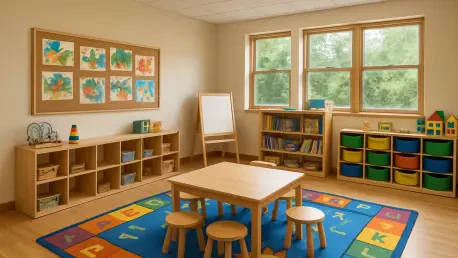
At the heart of an exemplary Pre-K program lies a philosophical commitment to developing the “whole child,” a principle masterfully embodied by Bonham Pre-K under the guidance of Principal Eulogia Martinez, a veteran of the district with nearly three decades of experience. The school’s dynamic, play-based learning environment is a testament to this philosophy, intentionally designed to be in a constant state of evolution to meet the diverse developmental, linguistic, and social-emotional needs of its students. This is not simply unstructured playtime; it is a sophisticated pedagogical approach that leverages open-ended materials to foster exploration, curiosity, and critical problem-solving skills. By providing resources that allow children to create and explore without a predetermined outcome, the program empowers them to become active agents in their own learning. This approach ensures that education is a vibrant, engaging experience that sparks a genuine passion for discovery, laying a crucial foundation for all future academic pursuits.
An outstanding program distinguishes itself by its capacity to adapt and expand its offerings to serve every child inclusively and effectively. A significant evolution at Bonham has been the transformation of its bilingual education from an “early exit” model, which prioritized English fluency, to a comprehensive dual-language immersion structure. This advanced model begins with 90% of instruction delivered in Spanish, immersing all students, including native English speakers, in a second language from the outset. The objective is to cultivate genuine biliteracy, bilingualism, and bicultural competence, providing students with invaluable cognitive and cultural advantages. In tandem with this linguistic focus, the school has amplified its support for social and emotional well-being, particularly following the challenges of the pandemic. By integrating safe spaces within classrooms and explicitly teaching students crucial self-regulation strategies, the program addresses the foundational needs of young learners. This inclusive vision is further demonstrated through its “phenomenal” early childhood special needs program, which provides dedicated support for three and four-year-old students, ensuring that every child has the resources to thrive.
The Power of Partnership in Early Education
The success of a leading Pre-K program is rarely achieved in isolation; rather, it is fortified by a robust network of strategic collaborations. A cornerstone of Bonham’s success is its strong, ongoing partnership with the Texas State University early childhood education department. This synergistic relationship creates a rich learning ecosystem where university professors and students collaborate on research and engage directly with the children on campus. This connection serves multiple purposes: it reinforces and validates the school’s play-based methodology with current academic research, provides university students with invaluable hands-on experience, and introduces fresh perspectives and innovative practices into the Pre-K classrooms. By functioning as a living laboratory for best practices in early education, the school ensures its approach remains at the forefront of the field, continually refined by academic insights and evidence-based strategies. This commitment to external partnership demonstrates a profound understanding that educational excellence is a shared, community-wide responsibility.
Beyond institutional alliances, the most impactful Pre-K programs are built upon the foundational partnership between educators and families. Principal Martinez emphasizes that the preschool years represent a pivotal opportunity to deeply engage parents in their child’s educational journey, establishing a pattern of involvement that can last a lifetime. This collaborative spirit extends to the internal team, where the dedicated staff is recognized as the program’s most vital asset. Teaching at the Pre-K level demands a unique combination of skill, compassion, and resilience. It requires “extra patience and lots of love” to successfully ignite a lifelong passion for learning in such young scholars. The ability to create a nurturing, stimulating, and emotionally secure environment is paramount. By cultivating a culture where educators feel valued and parents are welcomed as essential partners, an award-winning program creates a unified and supportive community wholly dedicated to the success and well-being of every child who walks through its doors.
A Blueprint for Lasting Impact
The journey of a school like Bonham Pre-K to becoming a state-recognized model of excellence offered a clear and actionable blueprint for success in early childhood education. It was a story built not on a single initiative but on the integration of a holistic, child-centered philosophy with a dynamic and inclusive curriculum. The program’s strength was derived from its thoughtful evolution, seen in the shift to a dual-language immersion model and the heightened focus on social-emotional learning. Furthermore, its success was cemented through powerful collaborations, linking the school with higher education to ensure its methods remained innovative and with families to create a cohesive support system for every learner. These elements, woven together by a dedicated and compassionate staff, demonstrated what was required to create an environment where the youngest students could truly flourish. The recognition it received was a validation of this comprehensive and deeply humanistic approach to education.