
The pursuit of educational excellence often brings to light individuals whose methods transcend traditional instruction, creating learning environments where students not only absorb information but also develop a genuine passion for discovery. Melissa Hughes, a reading and English teacher at Beechwood Elementary with 22 years of experience, stands as a prime example of such an educator, earning a nomination for the prestigious Educator of the Year award. Her career is a testament to an unwavering commitment to a student-centered philosophy that prioritizes active participation, real-world applicability, and individualized instruction. By examining her pedagogical strategies and personal reflections, a clear picture emerges of the qualities that distinguish a truly transformative teacher. Her approach moves beyond the curriculum, focusing instead on fostering deep, meaningful learning that equips students for a lifetime of inquiry and success. This profile delves into the specific techniques and core beliefs that define her impactful presence in the classroom and the broader educational community.
The Architecture of Active Learning
At the very core of an effective educational framework is the belief that learning is not a spectator sport; it demands full and active participation from every student. This principle is foundational to Hughes’s teaching methodology, which is built upon the interconnected pillars of engagement, active participation, and student ownership. According to this philosophy, genuine comprehension cannot be achieved through passive reception of information. Instead, students must be immersed in the material, collaborating with their peers, and taking control of their own learning journey. This approach transforms the classroom from a lecture hall into a dynamic workshop where knowledge is constructed, not just consumed. By fostering an environment where students are encouraged to question, explore, and teach one another, the responsibility for learning shifts from the teacher to the students themselves. This empowerment is crucial for developing critical thinking skills and building the confidence necessary for students to tackle complex challenges both inside and outside the classroom walls.
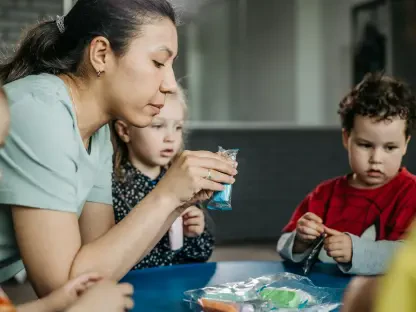
This philosophy is vividly illustrated through a carefully designed lesson on informational text features, which serves as a microcosm of her broader teaching strategy. Rather than resorting to rote memorization of terms like “index” and “glossary,” Hughes organized an interactive “scavenger hunt.” Students were placed in intentionally formed groups, pairing those who had mastered the concept with peers who were still developing proficiency. Tasked with locating specific information in high-interest books, the groups had to rely on their collective knowledge of text features to succeed. This structure served a dual purpose: it empowered proficient students to solidify their own understanding by articulating the concepts and guiding their peers, while simultaneously providing a supportive, collaborative space for struggling learners. In this peer-to-peer model, success was a shared celebration, building both competence and confidence. The activity demonstrated that true mastery is achieved not through passive learning but through the active, practical application of knowledge toward a common goal, allowing students to take tangible ownership of their educational progress.
Erasing the Lines Between School and Society
A profound commitment to connecting classroom concepts to the world outside of school is another hallmark of an exceptional educator, ensuring that learning remains relevant and has a lasting impact. Hughes champions the idea that students must see the practical application of their studies in their daily lives and the wider community for the knowledge to be truly meaningful. To achieve this, she employs a variety of strategies across all content areas, consistently prompting students to identify real-world examples of academic concepts and encouraging them to share their own life connections during discussions. This practice is woven into the fabric of her curriculum, which actively incorporates community resources. Discussions might revolve around local parks, historical sites, or even the small, community-driven “little free libraries” found throughout their neighborhoods. By grounding abstract ideas in familiar, tangible contexts, she helps students build a bridge between academic theory and lived experience, making their education a vital and integrated part of their world.
Furthermore, technology in this educational model serves not as a tool for passive consumption but as a gateway to immersive, interactive experiences that dissolve the physical boundaries of the classroom. Hughes leverages digital resources to create powerful learning opportunities that would otherwise be impossible. One compelling example is a virtual field trip that included a live Google Meet session with a park ranger from the Great Smoky Mountains National Park, allowing students to ask questions and engage directly with an expert in the field. In another instance, she used a live webcam to enable her class to witness the eruption of the Old Faithful geyser in real-time, transforming a geography lesson into a shared, memorable event. These methods are intentionally designed to help students recognize that what they learn in school is directly and dynamically tied to the world they inhabit, fostering a sense of global citizenship and a deeper appreciation for the relevance of their education.
Differentiated Instruction for Universal Achievement
Recognizing and addressing the diverse and evolving needs of every student is fundamental to improving overall academic achievement. A flexible and responsive approach is essential, and Hughes demonstrates this through a commitment to differentiated instruction. She cultivates a dynamic classroom environment characterized by frequent discussions, partner work, and continuous opportunities for students to articulate their thinking. This communicative atmosphere allows for real-time assessment of understanding, enabling immediate instructional adjustments to meet students where they are. This constant feedback loop ensures that no student is left behind and that those who are ahead remain challenged. The classroom becomes a responsive ecosystem where the curriculum is adapted to the learners, rather than forcing learners to conform to a rigid curriculum. This agile methodology is key to fostering an inclusive setting where every student feels seen, supported, and capable of reaching their full potential.
Central to this method of differentiation is the strategic implementation of small-group instruction, which occurs several times each week. This dedicated time is invaluable for providing tailored support precisely where it is most needed, creating a more personalized learning experience for every child. For high-achieving students, these small groups serve as an opportunity to delve deeper into complex concepts and engage in enrichment activities that push their thinking beyond the standard curriculum. Conversely, for students with identified learning gaps, this focused setting allows for targeted remediation and the reinforcement of foundational skills. By strengthening these essential building blocks, students are better equipped to access and succeed with grade-level content in the larger group setting. The positive impact of these combined strategies is not merely anecdotal; it is reflected in measurable data that consistently shows significant academic growth for all students, validating the power of an individualized and responsive teaching approach.
A Career Forged by Connection and Growth
A deeply personal reflection offers a window into the long-term dedication and professional growth that has defined a distinguished career in education. Hughes described the experience of “looping”—the practice of staying with the same cohort of students for three consecutive years—as one of her most moving and formative educational experiences. This extended period together allowed her to witness profound growth in her students, not just academically but also personally, as they navigated the crucial developmental stages of their young lives. The continuity fostered a uniquely strong and cohesive classroom community built on years of mutual trust and understanding. It also presented a significant professional challenge: the need to continually innovate and find new ways to engage students who were already intimately familiar with her teaching style. This prevented any sense of complacency from setting in, pushing her to evolve as an educator alongside her students in a mutually beneficial journey of discovery and growth.
This narrative of shared growth underscored the deep-seated care for her students’ futures, which served as the ultimate motivation for her enduring career. The experience solidified the understanding that teaching is not merely the transmission of knowledge but the cultivation of potential over the long term. The culmination of such dedication is recognized at events like the Educator of the Year award ceremony, where winners and runners-up were announced and celebrated. At the ceremony, honorees received monetary prizes for their outstanding contributions to education, generously provided by local sponsors Ameristar Casino and Mutual Federal Credit Union. The event stood as a powerful community affirmation of the dedication, innovation, and profound impact that educators like Melissa Hughes have on their students and the future they are helping to shape.