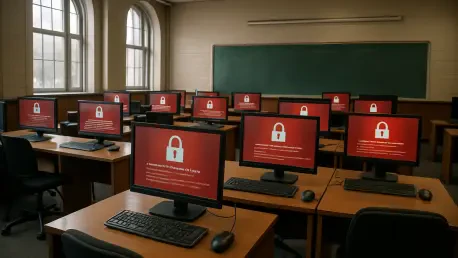

The alleged theft of over one million Social Security numbers and employee records highlights the growing vulnerability of academic institutions to sophisticated international ransomware operations. As the investigation unfolded on the Vanderbilt University campus in Nashville throughout late 2026, the sheer scale of the digital incursion became painfully clear to students, faculty, and administrative staff. A cyber-extortion group operating under the moniker “BYOD” claimed responsibility for the breach, asserting that they had successfully bypassed university security protocols to encrypt central databases and exfiltrate highly sensitive data. The initial signs of the attack were visible across various departments, where computer screens suddenly displayed cryptic ransom notes and researchers found their proprietary data transformed into unreadable, encoded formats. This incident forced university leadership to implement emergency measures designed to isolate the campus network, a move that effectively halted all standard academic and administrative operations for several days.
The atmosphere on campus shifted from one of routine academic pursuit to a state of defensive urgency as news of the data theft spread through local news outlets and internal communications. Vanderbilt, home to roughly 14,000 students and 7,000 staff members, serves as a massive repository for intellectual property, medical research, and personal financial information, making it a high-value target for international criminal syndicates. While the university has remained cautious in confirming the exact volume of data compromised, public statements from the threat actors suggest a deep penetration into the university’s domain controllers. This level of access typically implies that the attackers could potentially view or copy any record stored on the network, ranging from undergraduate applications to high-level faculty payroll details. The incident serves as a stark reminder that even well-funded research institutions face an uphill battle against the evolving tactics of ransomware groups that utilize advanced social engineering and zero-day vulnerabilities to achieve their objectives.
1. Power Off Your Hardware: Stopping the Initial Infection
The first and most critical directive issued by Vanderbilt information technology officials was the immediate termination of power to all university-provided hardware. When a ransomware payload is executed, it often runs as a background process that systematically scans the local hard drive and mapped network shares to identify file headers for encryption. By cutting the power immediately, users can interrupt this automated process, potentially saving thousands of documents that have not yet been processed by the malicious software. This “kill switch” approach is a standard emergency protocol intended to freeze the state of the machine, preventing the ransomware from completing its encryption cycle or moving laterally to other connected devices. For many students in active lab sessions or faculty members in the middle of grading, the sudden command to shut down was the first physical manifestation of the invisible digital threat that had infiltrated their work environment.
University IT staff, known as VUIT, took the extraordinary step of physically visiting classrooms and administrative offices to ensure that desktop towers and laptops were completely powered down rather than just placed in sleep mode. A device in sleep mode remains vulnerable because the operating system’s kernel is still active, allowing the ransomware to continue its destructive activities once the system is woken up or if the software has been programmed to bypass low-power states. The university’s insistence on a hard shutdown was designed to protect the integrity of the data that remained untouched and to prevent the malware from “beaconing” back to the attackers’ command-and-control servers. As thousands of screens went black across the Nashville campus, the manual intervention highlighted the limitations of automated security software when faced with a coordinated breach of this magnitude, emphasizing that human speed remains a vital component of incident response.
2. Sever Network Connections: Isolating the Digital Perimeter
Following the physical shutdown of hardware, the secondary directive required all users to manually disconnect from the campus Wi-Fi and avoid any university-linked networks until further notice. This step was essential because modern ransomware is designed to be “wormable,” meaning it can spread automatically across a local area network once a single entry point has been established. By severing the connection to the Wi-Fi, students and faculty ensured that their devices could not serve as a bridge for the malware to reach additional servers or sensitive research repositories. The university specifically warned against attempting to use Ethernet connections or guest networks, as these pathways often lack the robust segmentation found in more modern, zero-trust architectures. The goal was to create a total “air gap” between individual user devices and the core infrastructure while forensics teams worked to identify the source of the infection.
The disruption caused by this network isolation was felt immediately across all academic disciplines, particularly within the Blair School of Music and various engineering laboratories where students rely on high-speed campus connectivity for their daily tasks. Without access to the internal network, essential services such as library databases, online grading portals, and internal communication tools became inaccessible, forcing many to rely on personal cellular data plans. This transition to out-of-band communication was a necessary precaution to prevent the “BYOD” group from intercepting administrative traffic or gaining further insight into the university’s response strategies. By limiting the network environment to a closed loop, the IT department was able to begin the painstaking process of scanning for malicious traffic patterns without the noise generated by thousands of legitimate users, effectively turning the campus into a digital crime scene under active investigation.
3. Refrain From Interacting With Suspicious Content: Preventing Further Compromise
As the ransomware incident unfolded, students and staff were strictly advised to avoid interacting with any unfamiliar files, pop-up windows, or unexpected email attachments. Cybercriminals often use the chaos of an ongoing attack to launch secondary phishing campaigns, appearing as “IT support” or “university alerts” to trick panicked users into providing their credentials. The attackers behind the Vanderbilt breach reportedly used the “.byod” file extension to mark encrypted documents, and some users found their desktops littered with duplicated copies of a “README” text file. Interacting with these elements—whether by clicking a link to a supposed decryption tool or opening a “ransom note” attachment—can trigger additional malicious scripts that deepen the infection or provide the attackers with real-time access to the user’s keystrokes and webcam.
The university’s warning focused heavily on the concept of social engineering, where the psychological pressure of a data breach is exploited to bypass technical security measures. Students were reminded that official communication would never include requests for passwords or instructions to download software from third-party websites. Many individuals reported seeing strange prompts on their screens that appeared to be legitimate system updates, but these were later identified as sophisticated overlays designed to capture administrative login information. By maintaining a policy of total non-interaction, the university sought to prevent the “BYOD” group from gaining new footholds within the network. This vigilance was especially important for those who might have seen ransom demands appearing directly on their screens, as engaging with the attackers’ chat portals could inadvertently reveal technical details about the university’s internal defense posture to the criminal organization.
4. Avoid Self-Repair Attempts: Preserving Critical Forensic Integrity
One of the most frequent mistakes made during a cyberattack is the attempt by individual users to troubleshoot or fix affected devices on their own. Vanderbilt officials explicitly warned students and faculty not to attempt to delete suspicious files, run third-party antivirus scans, or reboot their machines in an effort to clear the ransomware. Such actions can inadvertently destroy volatile memory data and log files that are essential for forensic investigators to determine exactly how the breach occurred and what data was accessed. In a high-stakes investigation involving the potential theft of Social Security numbers, every piece of digital evidence is vital for building a timeline of the attackers’ movements. Amateur repair attempts often overwrite the very sectors of the hard drive that contain the traces left by the ransomware’s encryption engine, making it much harder for professionals to recover the original files.
Furthermore, many modern ransomware strains are programmed with “anti-tamper” logic that can trigger a total deletion of the encryption key or the underlying data if it detects an unauthorized attempt to bypass the lock screen. By trying to fix a university-issued device, a well-meaning student could accidentally cause the permanent loss of years of research or sensitive administrative records. The professional recovery process involves creating bit-for-bit clones of the affected drives and working on those copies in a controlled environment to ensure the original evidence remains pristine. This level of caution is necessary not only for data recovery but also for potential legal proceedings and insurance claims that follow a major institutional breach. University leaders emphasized that the IT service desk was the only authorized entity for handling compromised hardware, as their specialized tools are designed to work within the specific forensic requirements mandated by federal law and university policy.
5. Report Unusual Activity: Strengthening Centralized Incident Response
Effective incident response relies on a centralized flow of information, which is why Vanderbilt requested that all unusual activity be reported immediately through authorized channels. Students and staff were instructed to use separate personal phones or off-network devices to contact the VUIT service desk if they noticed ransom notes, encoded files, or strange system behaviors. This reporting mechanism allows the security team to map the spread of the infection in real-time, identifying which departments are hit the hardest and which segments of the network remain secure. Without these individual reports, the central IT department would be working in the dark, unable to correlate specific hardware failures with the broader tactical movements of the “BYOD” threat group. Each report serves as a data point that helps the forensics team identify the “patient zero” of the attack, which is the first device that was compromised to allow the initial entry.
The university also stressed the importance of reporting suspicious activity rather than attempting to investigate it independently. When a student reports a strange pop-up, it might seem like an isolated incident, but when dozens of similar reports come in from a single building, it signals a localized network breach that requires immediate isolation. The use of out-of-band communication was particularly emphasized because the attackers might have been monitoring the university’s internal email systems during the early stages of the breach. By using personal devices to report issues, users ensured that their communications were not being intercepted by the malicious software active on the campus network. This collective vigilance creates a “human firewall” that complements the technical defenses, providing the university’s leadership with the situational awareness needed to make informed decisions about when it is safe to begin the restoration of digital services.
6. Secure External Accounts: Defending Synced Cloud Environments
While the primary attack targeted the university’s local infrastructure, the risk extended to cloud-based services like OneDrive, Dropbox, and Microsoft Word. Ransomware can often traverse the link between a local computer and a synced cloud account, encrypting the online versions of files as the software modifies them on the physical hard drive. Vanderbilt officials instructed users to close any open documents and folders synced to these services to sever the automated update loop. If a student’s thesis was being actively synced while the ransomware was encrypting the local copy, the cloud service might interpret the encrypted junk data as the “latest version” and overwrite the clean backup in the cloud. By stopping the synchronization process, users could preserve the integrity of their remote backups, providing a vital safety net for their academic and professional work.
Beyond securing current files, the university highlighted the need for long-term account security, including the rotation of passwords and the re-evaluation of multi-factor authentication settings. Even if a computer was powered down in time to save its files, the “BYOD” group might have already harvested login credentials stored in browser caches or system memory. Securing external accounts ensures that the theft of a university password does not lead to a “domino effect” where attackers gain access to personal banking, social media, or other private platforms. This comprehensive approach to digital hygiene is crucial in the aftermath of a breach, as it limits the long-term utility of any stolen data. As the university moved toward the recovery phase, students were encouraged to audit their account recovery options and transition to hardware-based security keys, which offer a much higher level of protection against the credential-harvesting techniques used by sophisticated ransomware operations.
In the days following the initial shutdown, Vanderbilt University transitioned into a structured recovery phase that prioritized the restoration of essential services while maintaining rigorous security standards. The incident response teams successfully identified the primary entry points used by the threat actors and began the process of scrubbing the network for any remaining traces of the “.byod” malware. Officials worked closely with federal law enforcement agencies and third-party cybersecurity firms to analyze the exfiltrated data, eventually providing individualized notices to those whose Social Security numbers and personal records were confirmed to be at risk. This proactive approach helped to mitigate the immediate panic on campus, as the university provided comprehensive identity theft protection services and credit monitoring to all affected members of the community. By treating the breach as a catalyst for systemic change, the institution was able to modernize its digital defenses much faster than originally planned.
Vanderbilt administrators took several actionable steps to ensure a more resilient future, including the implementation of a campus-wide zero-trust network architecture. This new system required continuous verification for every user and device attempting to access sensitive data, effectively eliminating the “flat network” vulnerabilities that allowed the ransomware to spread so quickly during the initial attack. Faculty and staff were mandated to undergo enhanced cybersecurity training that focused on identifying the latest social engineering tactics and the proper use of encrypted communication tools. These measures were complemented by a massive upgrade to the university’s backup infrastructure, which now includes immutable storage options that are physically disconnected from the main network. By the time the academic year concluded, the university had transformed its digital environment into a model of modern cybersecurity excellence, demonstrating that a coordinated and transparent response to a crisis can lead to a stronger and more secure institution.