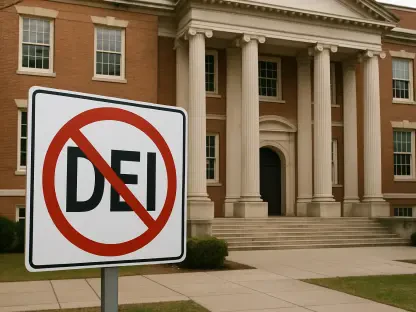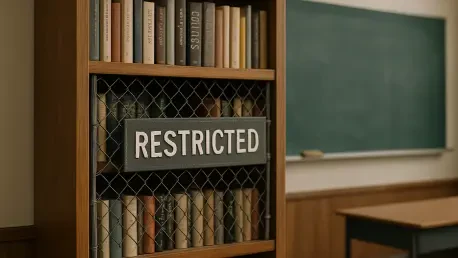

In the shifting landscape of American higher education, few issues are as contentious as the line between institutional oversight and academic freedom. We’re joined by Camille Faivre, an expert in education management and institutional policy, to dissect a new policy adopted by the University of Texas System’s governing board. The unanimous vote, passed without discussion despite faculty objections, introduces significant restrictions on teaching “controversial” subjects, sparking a firestorm of debate.
Today, we’ll explore the real-world implications of this policy with Camille. We will delve into how vague terms like “indoctrinate” could be weaponized against standard teaching practices and examine the potential chilling effect on curriculum development in both the humanities and sciences. We’ll also discuss the trade-offs of creating “controversy-free” courses and how rigid syllabus requirements might stifle the dynamic, responsive teaching that prepares students for a complex world.
The new policy requires faculty to present differing views on “reasonably disputed matters.” How might this be interpreted differently in a science versus a humanities class, and what process will determine which specific topics are considered “unsettled” or “contested” by the administration?
That’s the core of the problem—the ambiguity is staggering and it creates different traps for different disciplines. In a humanities course, one might be asked to present a fringe conspiracy theory alongside established historical fact as a “differing view.” But in a science class, the danger is even more acute. Does a biology professor now have to give equal time to creationism when teaching evolution? The policy offers no clarity, no guiding principles. The fact that the board passed this without any discussion or questions suggests the process for determining what is “disputed” will be entirely top-down, leaving faculty in a constant state of uncertainty, trying to guess what an administrator might deem controversial tomorrow.
Professors raised concerns about subjective terms like “indoctrinate” and “belittle.” Can you walk me through a classroom scenario where a standard teaching practice, like challenging a student’s assumptions, could be reinterpreted as a violation under these new, undefined standards?
Absolutely. Imagine a history professor, like Alex Karner who spoke at the meeting, presenting well-documented but uncomfortable evidence about a period in American history. A student, raised with a more sanitized version of that history, might feel their deeply held beliefs are being attacked. When the professor then critically evaluates that student’s essay, pointing out where their argument ignores the evidence, that student could feel belittled. Before, this was just rigorous teaching. Now, under these vague rules, that entirely necessary act of pushing a student to think more critically could be reported as an attempt to “indoctrinate” or a personal attack. This creates a chilling effect where the safest option for an instructor is to avoid any topic that might elicit a strong emotional response, which is a disaster for genuine learning.
The rules aim to create core classes that let students avoid “unnecessary controversial subjects.” What are the potential trade-offs for students’ critical thinking skills, and how might this affect an instructor’s ability to prepare them for complex professional environments?
The trade-off is immense, and frankly, it devalues the very degree students are working toward. As Professor Widder noted, learning to grapple with controversial issues is precisely how students learn to think carefully and creatively. Professor Nelson pointed out her students succeed in the museum world because they have “sophisticated critical thinking skills.” You don’t develop those skills by being shielded from complexity. You develop them by analyzing challenging ideas, debating different perspectives, and learning to defend your own position with evidence. Creating a pathway to a degree that avoids all controversy is like training a surgeon who has never been allowed to see a complex procedure. It leaves graduates unprepared for the real world, which is inherently filled with controversy and ambiguity.
Since faculty must now detail all topics in their syllabi and strictly adhere to them, how does this affect the pedagogical freedom to address relevant current events or follow spontaneous, intellectually valuable class discussions? Please provide a specific example.
This rule effectively puts a muzzle on dynamic, responsive teaching. An instructor’s greatest tool is often the ability to connect course material to the world outside the classroom. For instance, if a major Supreme Court decision is handed down mid-semester, a political science professor would be remiss not to pause and analyze the ruling with their class. It’s a perfect, real-time teaching moment. But if that specific decision wasn’t listed on the syllabus written months earlier, is discussing it now a violation? This policy forces instructors to choose between being effective and being compliant. It essentially transforms a syllabus from a guide into a rigid contract, suffocating the spontaneous intellectual curiosity that sparks the most memorable and impactful learning.
A professor described how a provocative work of art like “A Logo for America” is used to teach critical perspectives. Under this new policy, how might an instructor’s decision to use such material be scrutinized, and what chilling effect might that have on curriculum design?
The use of a piece like “A Logo for America” is a perfect test case for this policy. An art history professor like Adele Nelson uses it to invite students to understand a perspective that challenges a U.S.-centric worldview. It’s designed to be provocative to spark critical analysis. Under the new rules, this could be flagged as “controversial” and “not germane” by an administrator who doesn’t understand the pedagogy. An instructor would have to worry if showing that piece could be interpreted as an attempt to “indoctrinate” students with a particular political viewpoint. The chilling effect is that faculty will start self-censoring. They’ll think twice about including any material—whether it’s art, literature, or a historical document—that could be misinterpreted, leading to safer, blander, and ultimately less effective curricula.
What is your forecast for academic freedom and curriculum development within the UT System over the next few years?
My forecast is, unfortunately, quite grim. When you look at the directive for the chancellor to “ensure compliance,” combined with what the AAUP pointed out is happening at the Texas A&M System—course cancellations, AI syllabus reviews, even censoring Plato—you see the likely path forward. I anticipate a period of significant conflict and fear. We will see faculty becoming more risk-averse, avoiding contentious but vital topics and designing courses to fly under the administrative radar rather than to best serve students. This will likely trigger a brain drain, as top scholars and educators may choose to leave for institutions where their academic freedom isn’t under constant threat. Ultimately, the biggest losers will be the students, who will receive a more constrained and less challenging education, diminishing the value and reputation of a UT degree.