
A Looming Infrastructure Breaking Point for American Higher Education
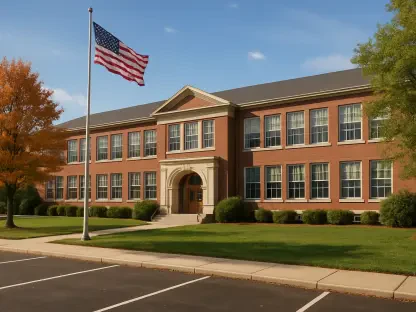
Beneath the polished facades of many American universities, a silent and corrosive fiscal pressure is threatening to undermine the foundational stability of the higher education sector. This crisis manifests as a record-breaking surge in deferred maintenance, where the dollar value of postponed capital projects has recently spiked by 8%, climbing to an average of $156 per gross square foot. Such a dramatic rise signals a widening chasm between the physical needs of campus environments and the actual financial resources allocated to address them. This exploration into the state of academic infrastructure reveals a landscape where structural decay and fiscal strain have formed a self-feeding cycle, challenging the long-term viability of institutions nationwide.
The Evolution of the Campus Capital Gap
The current predicament is the result of a decades-long historical trajectory defined by rapid expansion and the pursuit of prestige through new construction. For much of the late twentieth century, the American university model prioritized building state-of-the-art facilities to attract students, often at the expense of long-term upkeep plans. This growth-focused era has left a legacy of aging infrastructure that is now reaching the end of its functional life simultaneously. Today, backlog levels have nearly doubled compared to those seen two decades ago, indicating that traditional facility management concepts have failed to keep pace with the wear and tear of massive physical footprints. These background factors have created a “hidden liability” that administrators can no longer ignore or manage with temporary repairs.
The Financial and Strategic Complexity of Physical Assets
The Burden of Embodied Debt and Hidden Liabilities
At the heart of this fiscal strain is “embodied debt,” a term used to describe the massive accumulation of deferred costs that typically remain off traditional balance sheets. These liabilities act as a heavy weight on long-term solvency, with market analysts estimating a $1 trillion need for physical capital improvements over the next decade across just 500 rated institutions. Current spending levels cover only about 73.5% of what is required to simply stabilize these backlogs, meaning colleges fall further behind with every passing year. This financial burden is a ticking clock that may eventually force schools to take on high-interest emergency debt to address catastrophic failures in essential mechanical systems or roofing.
The Strategic Shift Toward Courageous Right-Sizing
As the industry prepares for a significant decline in the traditional student-aged population, a notable shift in campus strategy has finally emerged. For the first time in forty years, the pace of new construction has slowed to record lows, a trend described by industry observers as “courageous right-sizing.” By curbing expansion, administrators are attempting to avoid being overbuilt for a shrinking demographic while preventing the addition of new maintenance burdens. However, this pivot presents a delicate balancing act, as schools must find ways to remain competitive without the allure of brand-new buildings. The focus has shifted toward the painstaking task of modernizing existing assets to meet contemporary standards.
Competitive Risks and the Modernization Mandate
The challenge of maintenance extends far beyond simple physical repairs; it involves the necessary evolution of technological environments. A common misconception suggests that merely maintaining the status quo is sufficient for institutional survival. In reality, the competitive marketplace demands that schools upgrade their interior environments and digital infrastructure or risk losing prospective students to better-equipped rivals. Furthermore, regional differences play a significant role, as smaller private colleges with limited endowments face much higher risks than well-funded public systems. This disparity suggests that the maintenance crisis is a market-access problem that could lead to further consolidation across the entire sector.
Navigating the Future of Campus Stewardship
Looking ahead, the future of the industry will be defined by a transition toward strategic and sustained reinvestment rather than sporadic, reactive projects. There is an increasing reliance on data-driven building intelligence to prioritize repairs that offer the highest return on student experience and operational efficiency. Technological innovations, such as smart building systems, may eventually reduce long-term costs, though the initial capital investment remains a significant hurdle. Additionally, new regulatory pressures regarding energy efficiency and carbon footprints will likely impact how colleges approach their backlogs, forcing upgrades that are both environmentally necessary and financially taxing for already strained budgets.
Strategic Recommendations for Institutional Survival
The analysis of current trends suggests that while halting physical growth is a prudent survival tactic, neglecting the quality of current assets leads to inevitable failure. To navigate these pressures, institutions should consider the following best practices:
- Prioritize Stabilization: Ensure that annual capital spending meets the threshold required to halt the growth of the maintenance backlog.
- Audit Embodied Debt: Conduct comprehensive facility condition assessments to reveal the true scope of hidden liabilities.
- Repurpose Existing Assets: Identify opportunities to transform underutilized spaces into modern hubs rather than breaking ground on new projects.
- Communicate Stewardship Value: Educate stakeholders on the fact that infrastructure investment is directly tied to the student experience and institutional health.
Reclaiming the Foundation of Higher Education
The mounting crisis over maintenance backlogs represented a definitive challenge that forced a fundamental rethinking of the university business model. By acknowledging that a campus’s physical environment served as the stage for its academic mission, successful administrators moved toward a model of radical transparency regarding their facility needs. They recognized that neglecting the foundation provided a short-term financial reprieve but ensured a much more expensive and difficult rebuilding process in the long run. Ultimately, the industry learned that the quality of an institution’s current assets dictated its ability to attract and educate the next generation, making strategic reinvestment the only viable path forward.