
Beyond the ivy-covered walls and spirited campus debates lies a complex, often invisible architecture that gives a university degree its value, and the Trump administration has now set its sights on completely redesigning it. The United States Department of Education has formally launched a sweeping overhaul of the regulations that govern higher education accreditation, initiating a process that could fundamentally reshape the power dynamics between the federal government, academic institutions, and the agencies that validate them. This initiative, set to unfold through a series of negotiated rulemaking sessions, signals a new era where accreditation is not just a mark of quality but a potent tool for policy enforcement and ideological alignment.
The Little-Known “Secret Weapon” Aimed at America’s Universities
While public attention often focuses on tuition costs or campus controversies, a more fundamental transformation is underway within the machinery of higher education. The Trump administration has identified the accreditation process—a system that functions as the sector’s central nervous system—as its primary target for reform. This move aims to leverage the obscure but powerful role of accreditors to implement the administration’s agenda, addressing what it views as ideological overreach and institutional stagnation across the nation’s colleges and universities.
The core of this reform effort will be hashed out during negotiated rulemaking sessions, bringing together a diverse panel of stakeholders, including student representatives, college administrators, and the accrediting agencies themselves. This process is designed to collaboratively rewrite the rules that dictate how institutions are approved, monitored, and held accountable. The administration’s intent is clear: to transform this once-bureaucratic function into a dynamic instrument for driving its vision for American higher education.
Why Accreditation Matters: The Gatekeeper to Federal Funding and Prestige
Accreditation serves as the critical gatekeeper in the American higher education system, a designation that is far more than a simple seal of approval. For nearly every college and university, an accreditor’s endorsement is the key that unlocks access to billions of dollars in federal student aid, including Pell Grants and federal loans. Without this validation, most institutions would be financially unsustainable, making the accrediting agencies incredibly powerful arbiters of institutional viability.
Beyond its financial necessity, an accreditor’s stamp of approval directly impacts an institution’s reputation and the value of its degrees. It ensures that credits can be transferred between schools and that diplomas are recognized by employers and graduate programs. The administration views this powerful system as slow-moving and insular, believing it is ripe for disruption. The goal is to reshape this gatekeeping function to better align with its policy objectives, turning a procedural checkpoint into a proactive lever for change.
The Blueprint for Change: A Multi-Front Overhaul
The administration’s agenda for reform is multifaceted, aiming to increase competition, challenge existing academic standards, and establish a new model for accountability. A primary objective is to lower the barriers for new accrediting agencies to enter the market while simplifying the process for colleges to switch accreditors. This formalizes a recent executive order and rescinds stricter Biden-era guidance, a move critics worry could encourage a “race to the bottom” as schools shop for more lenient oversight. This policy shift has already spurred action, with six Southern public university systems, backed by Florida Governor Ron DeSantis, moving to form their own accrediting body.
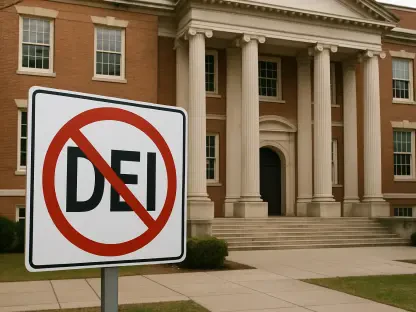
A central and explicit goal of the overhaul is to scrutinize and curb accrediting standards that promote diversity, equity, and inclusion (DEI) initiatives, which the administration frames as potential violations of federal law. This pressure has yielded tangible results, as seen with the American Bar Association (ABA), which put its diversity-related standards on hold amid federal scrutiny. This federal push is mirrored at the state level, where states like Texas and Florida are challenging the ABA’s authority in legal education.
Furthermore, the administration plans to weaponize accreditation as an enforcement tool to ensure compliance with its interpretation of federal civil rights laws. This strategy was deployed when federal pressure on Columbia University’s accreditor contributed to a $221 million settlement and significant policy changes at the university. However, this approach has met resistance. When similar pressure was applied regarding Harvard, its accreditor, the New England Commission of Higher Education, pushed back, asserting its independence from direct federal control and highlighting a potential power struggle between the government and the agencies it oversees.
Voices from the Debate: Regulation, Reform, and Resistance
The proposed overhaul has ignited a sharp debate among stakeholders. Under Secretary of Education Nicholas Kent has framed the reforms as essential to making the entire higher education sector “healthy,” arguing that the current system lacks accountability and stifles innovation. The administration and its allies, including prominent conservative leaders like Governor DeSantis, contend that existing accreditors have become ideologically driven and fail to focus on tangible student outcomes.
In contrast, many higher education experts have sounded the alarm, warning that encouraging colleges to shop for oversight could severely degrade academic quality and harm students. They argue that a competitive marketplace for accreditors may incentivize lax standards rather than rigorous improvement. This tension is further illustrated by the institutional pushback, such as the New England Commission of Higher Education’s response to federal pressure on Harvard, which underscores a fundamental conflict over the independence of these quasi-governmental agencies.
Navigating the New Landscape: What This Means for Students and Schools
For higher education institutions, the impending changes create an urgent need to re-evaluate their relationship with current accreditors and closely monitor the formation of new, alternative agencies. The prospect of switching oversight bodies introduces both opportunities and risks, forcing colleges and universities to navigate a regulatory environment in flux. Strategic decisions made now could have long-term implications for institutional identity, academic standards, and financial stability.
For students and their families, the “seal of approval” on a university diploma could soon be subject to a new set of politically influenced standards. The value, perception, and transferability of a degree may be impacted by which agency accredited the institution. As the negotiated rulemaking sessions proceed, stakeholders will have the opportunity to engage with a process that will redefine what it means for a college to be considered a valuable and legitimate institution of higher learning. The outcome of these discussions did more than just alter regulations; it reshaped the very foundation upon which the quality and integrity of American higher education were built.