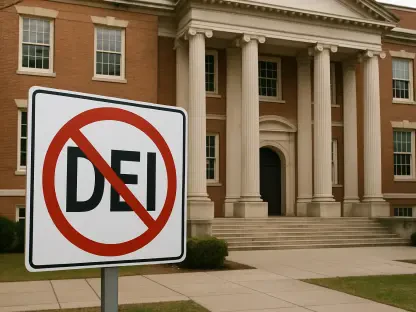

The historical sanctuary of the American ivory tower is rapidly transforming into a contested battlefield where the traditional autonomy of faculty meets the assertive political will of state legislatures across the country. As public higher education becomes a focal point of national political discourse, the traditional boundaries between state authority and academic independence are being redrawn. This systemic shift from faculty-led “shared governance” toward centralized, board-heavy oversight marks a departure from the mid-century consensus of institutional insulation. The analysis explores the drivers, real-world applications, and the evolving trajectory of this legislative trend, examining how it reshapes the identity of the public university.
The Shift Toward Centralized Oversight
The movement to centralize university governance represents a calculated effort to align academic missions with state-level executive priorities. For decades, the administrative structure of public colleges relied on a decentralized model where faculty senates held significant sway over curriculum and hiring. However, current trends indicate a decisive pivot toward a corporate-style management structure where power is concentrated in the hands of politically appointed governing boards. This reorganization is often framed by proponents as a way to increase institutional agility and ensure that taxpayer-funded entities remain responsive to the broader public interest rather than the internal interests of the academic guild.
This centralization is manifesting through the implementation of “democratic oversight” frameworks that empower boards to bypass traditional academic protocols. By altering the reporting structures of university presidents and provosts, state governments are effectively making these leaders more accountable to the state capital than to their own campus constituents. This shift is not merely administrative; it is a fundamental revaluation of what a public university represents. Instead of being viewed as autonomous havens for inquiry, these institutions are increasingly treated as instruments of public policy, expected to deliver specific social and economic outcomes dictated by elected officials.
Statistical Evidence: The Rise of Model Legislation
Recent data highlights an accelerating trend of state intervention in university operations that shows no sign of slowing down. According to reports from organizations like PEN America, legislative efforts in recent cycles have been heavily influenced by model language crafted by national think tanks such as the Manhattan Institute. These legislative proposals signify a 150% increase in governance-related bills compared to the previous decade, illustrating a coordinated national strategy rather than isolated local incidents. Statistics show that in states like Indiana, Texas, and Florida, the adoption of these frameworks is no longer a theoretical debate but a standard legislative priority.
The scale of this intervention is reflected in the fact that over 30% of public institutions are currently facing revised statutes regarding administrative hiring and curricular review. The trend from 2026 to 2028 suggests that this legislative momentum will likely spread to additional states, particularly as model legislation becomes more sophisticated and legally resilient. These numbers reflect a broader ideological shift where the “neutrality” of the university is being questioned, leading to a surge in mandates that require public institutions to demonstrate their alignment with foundational state values through transparent, board-led auditing processes.
Case Studies: Governance Restructuring
The practical application of these reforms is best observed in Florida and Texas, where new laws have fundamentally altered the academic landscape and set a precedent for other regions. In Florida, the passage of Senate Bill 266 mandated a complete audit of general education courses to remove content related to “identity politics,” resulting in the elimination of dozens of core curriculum options that were previously staple offerings. This legislation did not just suggest changes; it forced a re-evaluation of the entire liberal arts foundation, placing the ultimate authority over course content in the hands of political appointees rather than subject-matter experts.
Similarly, in Texas, Senate Bill 17 has led to the restructuring of search committees, requiring that politically appointed board members constitute at least 60% of the selection groups for university presidents and provosts. These real-world scenarios demonstrate a shift where university leadership now aligns more closely with state executive branches than with faculty senates. The result is a governance model where the hiring of high-level administrators is a political act, ensuring that the strategic direction of the university mirrors the ideology of the state government. These case studies serve as a blueprint for other legislatures seeking to exert similar control over their respective state university systems.
Expert Perspectives: The Erosion of Shared Governance
Academic leaders and policy analysts offer starkly different interpretations of this trend, reflecting a deep philosophical divide over the purpose of higher education. Proponents, including scholars from the Manhattan Institute, argue that these reforms are a necessary “corrective path” to ensure taxpayer-funded institutions remain accountable to the public and free from ideological capture. They posit that governing boards must exercise their fiduciary and moral responsibility to define what constitutes “foundational” education. From this perspective, the intervention is not an attack on the university but a restoration of its true purpose as an institution that serves the common good as defined by the citizenry.
On the other hand, the American Association of University Professors (AAUP) has labeled these developments an “extreme assault” on academic freedom and the integrity of the profession. Many higher education experts warn that relegating faculty to a strictly advisory role undermines the professional expertise required to maintain global academic standards. The consensus among critics is that by allowing political appointees to determine “core content,” the objective pursuit of knowledge is replaced by a system of “thought policing.” This could lead to a decline in the value of degrees from affected states, as the credibility of the curriculum is tied more to political mandates than to rigorous scholarship.
Future Implications: Public Higher Education
The trajectory of governance reform suggests a move toward a “corporate-political” model of education that will have long-lasting effects on the American academic system. In the coming years, the emergence of a bifurcated higher education landscape is a distinct possibility, where the definition of a “liberal arts education” varies drastically depending on state borders. This regionalization of knowledge could create a fragmented intellectual environment, where the value and transferability of credits and degrees are questioned by employers and peer institutions. The shift toward board-led curricula may also lead to a focus on narrow vocational training at the expense of broad, critical inquiry.
Institutions in high-oversight states may struggle to attract top-tier faculty who prioritize academic autonomy, leading to a “brain drain” that benefits private universities or public systems in states with less intervention. Furthermore, as state mandates clash with the standards of independent accrediting bodies, legal battles over institutional legitimacy are likely to increase. These conflicts could jeopardize federal funding and the international standing of American universities. While proponents argue that board-led curricula will better align with workforce needs, the potential narrowing of the intellectual scope might produce graduates who are less capable of critical thinking and competing in a global economy.
Conclusion: Redefining the Public University
The landscape of state oversight transformed the blueprint for public higher education, marking a definitive departure from the 20th-century model of institutional independence. State legislatures asserted that public universities were instruments of public policy rather than autonomous havens for inquiry, centralizing power within governing boards. This shift required stakeholders to prioritize transparency and fiscal accountability over traditional academic protocols. As the line between political authority and academic expertise blurred, the nation moved toward a model where institutional success was measured by its alignment with state-defined values.
Actionable steps were taken to reconcile the need for public oversight with the preservation of intellectual rigor, including the development of new accreditation frameworks that accounted for state mandates. Policy analysts focused on creating balanced governance structures that integrated board leadership with professional faculty expertise to prevent the complete erosion of academic standards. Future considerations involved judicial rulings on the First Amendment rights of educators and the long-term economic impact of narrowed curricula. Ultimately, the evolution of this trend forced a nationwide conversation on whether the university should be a mirror of state values or a window into a broader, independent world of ideas.