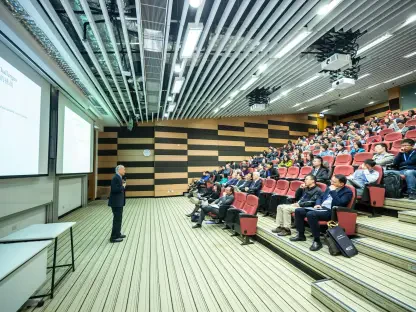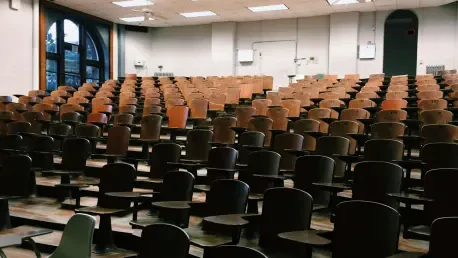

While the link between smaller class sizes and improved student outcomes has long been established in educational research, a new initiative is tackling the persistent reality that reducing classroom populations is not a feasible solution for many public school systems facing budget constraints and teacher shortages. This comprehensive research project moves beyond simply reaffirming the problem of overcrowding and instead aims to generate specific, actionable strategies that can enhance teaching quality and boost student performance within the existing framework of large classrooms. By bridging the gap between academic theory and on-the-ground practice, the study is designed to equip educators and administrators with evidence-based tools to foster more effective learning environments, even when resources are limited. The initiative’s core purpose is to provide practical solutions that can be implemented directly, offering a new path forward for schools struggling to meet the needs of a growing student body.
The Far-Reaching Impact of Classroom Crowding
Class size is not merely a logistical number; it is a fundamental structural component of the educational ecosystem that profoundly influences every aspect of the learning process. The challenges posed by an overcrowded classroom ripple outward, affecting teaching quality, student engagement, and, ultimately, academic achievement. Decades of educational research have consistently associated smaller classes with a wide range of benefits, including higher rates of student participation, more meaningful teacher-student relationships, and more effective classroom management. However, many education systems are grappling with a confluence of pressures, including expanding student populations, insufficient infrastructure, and a persistent shortage of qualified educators. This reality makes large classrooms an enduring feature of the educational landscape, creating a significant and ongoing barrier to providing high-quality instruction for every student and necessitating a shift in focus from ideal scenarios to practical, effective interventions.
The consequences of this challenge are felt deeply on a human level by both educators and learners. For teachers, an unmanageably large class size leads to an overwhelming workload, making it nearly impossible to implement interactive and differentiated teaching methods, provide the individualized attention students need, or offer timely, constructive feedback. This environment is a significant contributor to professional stress, burnout, and a subsequent decline in instructional quality over time. For students, the effects can be even more detrimental. Those with additional learning needs or from disadvantaged backgrounds are particularly vulnerable in a setting where individual support is scarce. The lack of personalized guidance can cause these students to fall behind academically, leading to diminished motivation, reduced classroom participation, and a potential increase in behavioral issues, thereby exacerbating existing educational inequalities and widening achievement gaps.
A Methodical Approach to Uncovering Solutions
To directly confront this complex issue, the project has established a clear and overarching goal: to enhance student academic performance by systematically identifying and evaluating effective strategies applicable across a wide range of classroom settings. This broad objective is supported by five specific, measurable aims. First, the study will conduct a quantitative assessment to precisely map the relationship between class size and student academic achievement across various grade levels. Second, it will perform a qualitative examination of how class size impacts crucial classroom dynamics, including levels of student engagement, participation, and overall behavior. Third, it will analyze how an expanded class roster influences teachers’ instructional practices, their workload, and their own perceived effectiveness. In a forward-thinking, solution-oriented approach, the project will also identify and document successful classroom management and instructional techniques that skilled educators are already employing to achieve positive outcomes in large-class environments. Finally, the initiative will synthesize all of its findings to develop a robust set of evidence-based recommendations tailored for key stakeholders.
The study’s design incorporates a rigorous and comprehensive mixed-methods research approach that will unfold across four distinct phases to ensure a deep and nuanced understanding of the issue. The initial phase, a Baseline Assessment, will involve the collection and analysis of extensive quantitative data, including student enrollment figures, historical class sizes, student-to-teacher ratios, and past academic performance records from standardized tests and school reports. This phase will also incorporate initial surveys distributed to a broad cohort of teachers to capture their baseline perceptions, challenges, and current strategies related to managing large classes. The second phase is dedicated to Classroom Observation and Qualitative Research, which will provide the rich, contextual data necessary to interpret the quantitative findings. This will involve trained researchers conducting direct observations of instructional practices and student engagement in classrooms of varying sizes, supplemented by in-depth, semi-structured interviews with teachers to explore their workload and coping mechanisms in detail.
Charting a Course for Systemic Improvement
Following the data collection stages, the project will transition into its analytical and collaborative phases to transform raw information into actionable insights. Phase three, Data Analysis and a Comparative Study, will see the integration of the quantitative and qualitative datasets. Researchers will conduct a thorough comparative analysis of academic outcomes across different class-size categories, working to identify statistically significant patterns that link classroom population to student performance and behavior. A key focus of this phase will be the systematic documentation of best practices observed in high-performing but large classrooms, creating a repository of effective, real-world strategies. The final stage, Phase four, involves Stakeholder Consultation and Validation. During this critical phase, the project’s preliminary findings and draft recommendations will be presented in a series of workshops with classroom educators, school administrators, and education policy experts. This collaborative process is designed to validate the research results and refine the final recommendations, ensuring they are not only evidence-based but also practical, relevant, and readily implementable in diverse educational contexts.
The initiative ultimately delivered a set of tangible outcomes that benefited a wide spectrum of educational stakeholders. Students in primary and secondary schools experienced improved teaching and more effective learning environments, while teachers were equipped with a new repository of validated strategies to manage their classrooms and engage learners more effectively. The data-driven insights provided school administrators with the evidence needed to inform school-level policies on resource allocation and teacher support. Furthermore, the findings gave education planners and policymakers a clear evidence base to guide systemic decision-making regarding teacher recruitment, professional development, and long-term instructional planning. The project’s emphasis on developing low-cost, scalable solutions and building teacher capacity ensured a sustainable and lasting impact that extended well beyond the study’s timeline, contributing to the creation of stronger, more inclusive education systems capable of better serving the needs of all learners.