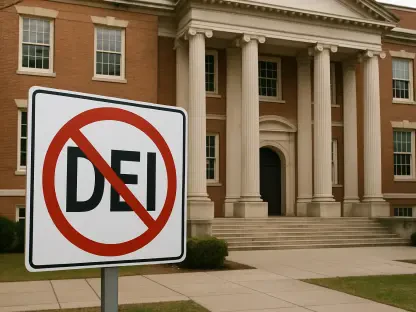

With the recent launch of Texas’s “Students First” portal, the landscape of public higher education in the state is facing a seismic shift. This new system, designed to enforce recent legislation targeting diversity initiatives and faculty governance, has created a direct pipeline for complaints to a state-level ombudsman, bypassing traditional campus procedures. To unpack these complex changes, we spoke with Camille Faivre, an education management expert who helps institutions navigate the evolving world of higher education policy. Our conversation explores the practical implications of this new oversight, the potential chilling effect on academic freedom, the step-by-step process of state investigation, and the broader political currents reshaping the fundamental relationship between faculty, administrators, and the state.
The new “Students First” portal allows students and employees to bypass their college’s internal complaint process. How might this change the dynamic between students and administrators, and what kind of metrics will the ombudsman’s office use to triage and prioritize these incoming complaints?
It fundamentally alters the dynamic by removing the first line of defense and dialogue, which is the institution itself. Previously, a student with a grievance would navigate an internal process, allowing for mediation and resolution within the campus community. Now, that student can immediately escalate their concern to a state-level political body. This creates an environment where administrators might feel constantly under a microscope, potentially leading to more risk-averse decision-making. As for triaging, the ombudsman’s office, led by a regent, will likely prioritize complaints that allege clear, systemic violations of SB 17 or SB 37—for example, an entire department still running a DEI office or a university policy that explicitly grants power to a faculty senate. They will have to filter the high volume of informal feedback from the public to focus on formal complaints from students and employees that could trigger a full investigation.
With the state encouraging public reporting on DEI and faculty governance, what practical effects do you foresee on classroom discussions and faculty-student interactions? Can you share any early anecdotes or describe the potential chilling effect on campus discourse and academic freedom?
The most immediate and concerning effect is a chilling of open discourse. When any student, employee, or member of the public can submit a complaint through a user-friendly portal, faculty may begin to self-censor. They might hesitate to introduce topics that could be misconstrued as promoting a “leftist ideology,” a term a state leader has explicitly used. A history professor discussing systemic inequality, for instance, might worry that a student’s interpretation of the lesson could lead to a formal complaint. This puts a damper on the very purpose of higher education, which is to explore complex and sometimes uncomfortable ideas. Faculty groups like the Texas Conference of the American Association of University Professors voiced these exact fears, worrying that this system erodes academic freedom by making instructors teach with one eye on the curriculum and the other on a potential political investigation.
The ombudsman’s investigation timeline gives colleges nearly a year to resolve issues after a complaint is filed. What does this process look like step-by-step for a college found non-compliant, and how does the office ensure meaningful changes are made rather than just procedural ones?
The process is deliberately methodical, suggesting the goal is institutional realignment rather than swift punishment. Once a formal complaint is investigated and the college is notified—which happens within five days—the institution has a substantial 175 days to formulate its response. If the ombudsman’s office isn’t satisfied and finds the college non-compliant, a new clock starts: the college then gets another 180 days to resolve the issues. This entire process can stretch for almost a year. The real pressure comes from the final step. If, after all that time, the college is still deemed non-compliant, the ombudsman’s office will submit a report to both its own leadership and the State Auditor. An official report to the State Auditor is a serious threat; it carries implications for funding and public standing, ensuring that institutions are motivated to make substantive changes rather than just superficial, procedural tweaks to satisfy the letter of the law.
The law known as SB 37 significantly shifted power from faculty senates to governor-appointed regents. In practical terms, how does this alter day-to-day decisions about curriculum and academic policy, and what specific concerns has this raised among faculty groups regarding political influence?
In practical terms, it’s a complete inversion of the traditional model of shared governance. Historically, faculty senates—composed of academic experts—were the primary drivers of curriculum development, degree requirements, and academic standards. SB 37 effectively strips them of that authority. Now, the power to make those core academic decisions ultimately rests with boards of regents, whose members are appointed by the governor. This means a political appointee, who may have no background in pedagogy or a specific academic field, could have final say over a new course or program. The concern raised by faculty groups is that this injects partisan politics directly into the classroom. Decisions that were once based on academic merit could now be shaped by the political agenda of the current administration, which has openly stated its goal of targeting certain ideologies.
State leaders have expressed a goal of targeting certain ideologies on campus, while the author of these laws now leads a major university system. How might this political environment influence the types of complaints filed and the way the ombudsman’s office interprets and investigates them?
The political environment is not just a backdrop; it’s the driving force. When the governor says the state is “targeting professors who are more focused on pushing leftist ideologies,” it sends a clear signal. This rhetoric can embolden individuals to file complaints based on perceived political bias rather than actual violations of the law. Furthermore, the fact that the author of both SB 17 and SB 37, Brandon Creighton, now serves as the chancellor of the Texas Tech University System creates a powerful feedback loop. The ombudsman’s office, led by an appointee, operates within this context. It’s plausible that interpretations of what constitutes a violation will be heavily influenced by this political climate, potentially leading to investigations that scrutinize course content, faculty research, and campus speakers in a way that aligns with the stated political goals of state leadership.
What is your forecast for the future of academic freedom and shared governance in Texas public universities?
My forecast is that Texas is entering a deeply challenging period that will test the resilience of its public universities. The architecture of SB 17 and SB 37, enforced by the “Students First” portal, creates a permanent state of political oversight that fundamentally redefines academic freedom and shared governance. I anticipate a prolonged phase of adjustment and conflict. We may see a “brain drain” as faculty who feel their academic freedom is compromised seek positions in other states. Campuses will likely become more cautious and internally divided as they navigate this new reality. The future of robust, faculty-led academic inquiry in Texas now depends on how successfully institutions can protect their core educational mission while operating under a governance model that prioritizes political alignment over traditional academic autonomy.