
The persistent gap between the growing number of students referred for special education evaluations and the limited number of school psychologists available to conduct them has forced districts nationwide to confront a significant operational and ethical dilemma. This challenge, intensified by years of workforce shortages and the lingering academic and behavioral effects of the pandemic, has created extensive backlogs, leaving students waiting months for critical support. In this environment, remote psychoeducational testing has emerged not just as a possibility but as a necessary innovation, though it has been met with both cautious optimism and considerable skepticism.
Recent research now offers a definitive answer to the central question of its validity, providing a data-driven foundation for a new standard of care. This guide will deconstruct the evidence supporting remote assessment, outline the strict protocols required for its successful implementation, and provide a strategic roadmap for school leaders. The findings confirm that when executed with high fidelity, remote testing can provide a timely, reliable, and equitable pathway to identifying student needs and accelerating their access to essential services.
A Timely Solution for an Overburdened System
The special education system is currently strained to its limits, facing a convergence of unprecedented demand and insufficient resources. Referrals for psychoeducational evaluations have surged, driven by a greater awareness of neurodiversity and the complex learning challenges that have become more visible in recent years. This increased need has collided with a chronic, nationwide shortage of qualified school psychologists, creating an unsustainable environment where evaluation timelines are frequently extended far beyond regulatory requirements. This bottleneck not only delays access to Individualized Education Programs (IEPs) but also places immense pressure on existing staff.
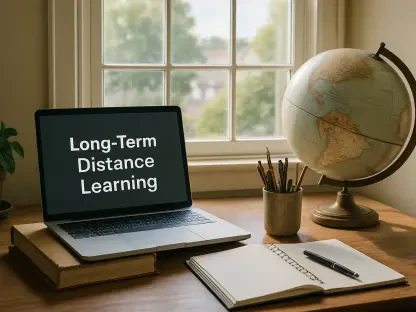
In this context, remote psychoeducational testing offers a powerful and immediate solution. By leveraging technology to connect students with licensed psychologists regardless of geographic location, districts can tap into a broader talent pool to manage overwhelming caseloads. This approach promises to alleviate backlogs, reduce staff burnout, and, most importantly, provide students with faster access to the specialized instruction and support they need to thrive. The validation of this modality marks a pivotal moment, shifting remote assessment from a debated alternative to a viable, evidence-based strategy for modernizing special education services.
The Growing Crisis Why Remote Assessment Matters Now
The workforce shortage in school psychology is not a new phenomenon; it has been a growing concern for over a decade. However, the pressures of the modern educational landscape have amplified its impact, turning a persistent issue into an acute crisis. School districts, particularly those in rural or under-resourced urban areas, struggle to recruit and retain enough qualified professionals to meet the needs of their students. This scarcity means that on-site psychologists are often forced to prioritize legally mandated evaluations, leaving little time for preventative services, mental health support, and consultation with teachers.
This widening chasm between student needs and district capacity has tangible consequences. Evaluation backlogs create a domino effect of negative outcomes, including prolonged academic and social-emotional struggles for students awaiting support, increased frustration among parents, and a heightened risk of legal challenges for non-compliance. Staff burnout accelerates as caseloads become unmanageable, further depleting the already limited pool of professionals. The urgency for a scalable and effective alternative is therefore undeniable. Remote assessment directly addresses this core problem by expanding a district’s capacity, offering a practical way to manage demand and ensure that no child’s progress is hindered by a lack of available personnel.
The Evidence is In Deconstructing the Landmark Study
For any new practice to gain widespread acceptance in education, particularly one as critical as psychoeducational assessment, it must be supported by rigorous, empirical evidence. The debate surrounding remote testing has long centered on questions of equivalence: can an evaluation conducted through a screen produce the same reliable and valid results as a traditional, face-to-face assessment? A landmark study has provided a clear and compelling answer, offering the substantiation that school leaders need to move forward with confidence.
This research systematically dismantles common concerns by not only demonstrating score equivalency but also by defining the precise conditions under which that equivalency is achieved. The findings emphasize that remote testing is not simply a matter of conducting an assessment over a video call. Instead, its validity is contingent upon replicating the standardized conditions of an in-person test environment through a carefully controlled technological setup and strict procedural protocols. By understanding the methodology and outcomes of this study, district leaders can effectively distinguish between ad-hoc virtual assessments and high-fidelity, research-backed remote evaluations.
Part 1 Analyzing the Woodcock-Johnson V (WJ V) Study
The most definitive evidence to date comes from a large-scale national study published in July 2025, which compared in-person and remote administrations of the Woodcock-Johnson V (WJ V). As one of the most comprehensive and widely used assessment systems for evaluating cognitive abilities, academic achievement, and oral language, the WJ V serves as a cornerstone of special education eligibility evaluations. The study’s focus on this essential tool makes its findings particularly relevant and impactful for districts across the country.
The research was designed to directly test the hypothesis of score equivalence between the two administration formats. It involved a diverse sample of participants and experienced, licensed psychologists from various regions, ensuring that the results were not limited to a specific demographic or geographic area. The core finding was unambiguous: when remote testing was conducted under specific, controlled conditions, it produced results that were statistically indistinguishable from those obtained through traditional in-person methods. This conclusion provides a strong, research-based endorsement for the use of remote assessment as a valid and reliable practice.
Insight Matched Case-Control Design Ensures Strong Equivalence
The scientific rigor of the WJ V study is anchored in its use of a matched case-control design. This methodology is the gold standard for comparison studies, as it ensures a true apples-to-apples analysis. Researchers meticulously paired 300 student participants based on key demographic and cognitive variables, creating two statistically identical groups. One group was assessed in person, while the other was assessed remotely by one of 44 licensed psychologists.
By controlling for variables that could otherwise influence test performance, such as age, grade level, and cognitive profile, the design effectively isolated the single variable being tested: the administration format. This robust structure eliminates confounding factors and allows for a high degree of confidence in the results. The use of this rigorous design means that any differences—or lack thereof—in the scores between the two groups can be directly attributed to the testing modality, providing a solid foundation for the study’s conclusions about equivalence.
Key Finding No Statistically Significant Difference in Scores
The data gathered from the study offered a clear and statistically robust conclusion. When comparing the scores of the in-person group with the remote group, the analysis revealed p-values consistently above .05. In statistical terms, this indicates that there was no significant difference between the two sets of scores; any minor variations were attributable to chance rather than the testing format.
Furthermore, the effect sizes, which measure the magnitude of the difference, were below .03. This is considered a negligible effect, reinforcing that from a practical standpoint, the scores were equivalent. For district leaders and school psychologists, this finding is profoundly important. It confirms that scores obtained from a properly conducted remote WJ V administration can be interpreted with the same level of confidence as those from an in-person assessment, making them legally and ethically defensible for high-stakes decisions regarding special education eligibility and services.
Part 2 Addressing Skepticism by Defining Done Right
Despite the growing body of positive research, many school leaders remain understandably cautious about adopting remote testing. Legitimate concerns about reliability, legal defensibility, and the potential for a diminished student experience persist. Leaders often question whether remote scores would be upheld in a due process hearing or if the nuances of a student’s engagement can be accurately captured through a digital interface. These are valid and important considerations that must be addressed directly.
The latest research tackles this skepticism head-on by emphasizing that the validity of remote testing is not inherent but conditional. The key phrase that emerges from the findings is “done right.” This means that equivalency is only achieved when the remote environment scrupulously replicates the standardized, controlled conditions of a traditional testing session. This requires a structured, high-fidelity setup that goes far beyond a simple video conference, ensuring that every aspect of the assessment process adheres to established best practices.
Requirement A Controlled and Standardized Technology Setup
A fundamental requirement for valid remote testing is the implementation of a specific and standardized technology package. The research-validated model requires more than just a stable internet connection. To maintain fidelity, the student must use a touchscreen laptop with a screen size of 13 inches or larger, ensuring that test stimuli are presented clearly and that interactive tasks can be completed accurately.
This hardware must be paired with a secure, integrated platform that houses all digital test materials, such as e-books and manipulatives, to prevent security breaches and ensure standardized presentation. Crucially, a dual-camera system is required. One camera focuses on the student’s face to monitor engagement and rapport, while a second camera provides a view of the student’s workspace, allowing the remote psychologist to observe their problem-solving approaches and ensure that no unauthorized aids are being used. This controlled setup is designed to mirror the in-person experience as closely as possible.
Warning A Guided Proctor is Non-Negotiable
Technology alone cannot guarantee a standardized testing environment. The presence of a trained, in-room proctor is an essential and non-negotiable component of a valid remote assessment. This individual, often a paraprofessional or school staff member, serves as the hands of the remote psychologist, managing physical materials, helping the student navigate the technology, and redirecting their attention when necessary.
The proctor’s role is critical in maintaining the integrity of the session. They are responsible for establishing the controlled environment, ensuring the room is free from distractions, and troubleshooting minor technical issues so the psychologist can remain focused on the assessment. By performing these functions, the guided proctor helps replicate the direct support and environmental control that a psychologist provides in person, ensuring the testing conditions remain consistent and standardized from start to finish. Without this role, the reliability of the assessment is compromised.
A Strategic Checklist for District Leaders
Transitioning to a remote testing model requires a thoughtful and systematic approach. To ensure a successful and defensible implementation, district leaders should follow a clear set of actionable steps that prioritize fidelity, consistency, and alignment with research-backed best practices. This begins with a thorough evaluation of potential partners and platforms to confirm they meet the high standards established in equivalency studies.
It is crucial to vet providers carefully by inquiring about the specifics of their technology platform, the training protocols for both their psychologists and the district’s on-site proctors, and their adherence to published research standards. Leaders should also clarify the technology and equipment requirements upfront, ensuring that schools have the necessary devices, internet bandwidth, and physical spaces to conduct assessments properly. Finally, developing clear internal policies is essential for creating district-wide consistency and ensuring that all staff members and contractors understand and follow the established protocols for remote evaluations.
Beyond the Backlog The Future of Psychoeducational Assessment
The validation of remote testing has implications that extend far beyond simply managing evaluation backlogs. While its immediate value lies in addressing the current crisis of capacity, its long-term potential is to create a more equitable and accessible special education system. For students in rural communities, where specialized professionals are scarce, remote assessment provides a lifeline, connecting them to high-quality services that would otherwise be out of reach. Similarly, it offers a consistent and reliable evaluation solution for the growing number of students enrolled in virtual or non-traditional school settings.
This shift in practice encourages a move away from viewing remote assessment as a temporary fix and toward integrating it as a strategic component of a comprehensive service delivery model. It allows districts to build a more flexible, resilient, and responsive system capable of meeting student needs wherever they are. As technology continues to evolve, remote psychoeducational assessment is poised to become a permanent fixture in education, fostering a more sustainable approach that prioritizes timely and accurate support for all students.
Embracing a New Standard of Care in Special Education
The evidence presented in recent, rigorous studies provided a clear verdict: remote psychoeducational testing, when implemented with strict fidelity, stood as a valid and reliable practice. The data confirmed that this modality was not a compromise on quality but a different path to the same accurate and defensible results. For school leaders, this research offered a path forward, transforming the conversation from one of skepticism to one of strategic implementation.
By adopting this evidence-based tool, districts took a significant step toward alleviating the immense pressures on their special education systems. They found a way to expand access to evaluations, improve the timeliness of service delivery, and provide stronger, more immediate support for every student in need. The successful integration of remote testing represented an embrace of a new standard of care, one that leveraged innovation to build a more equitable and efficient system for the future.