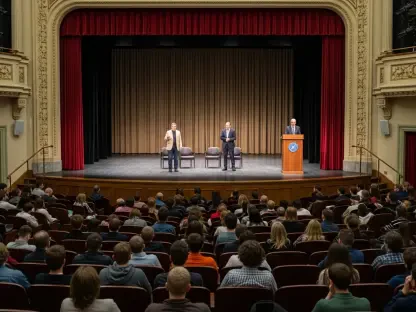

As artificial intelligence rapidly reshapes industries and redefines professional skill sets, higher education institutions find themselves at a crucial juncture, tasked with preparing students for a world that is fundamentally and perpetually in flux. Responding to this paradigm shift with decisive action, St. Bonaventure University recently dedicated its entire Spring Convocation to a rigorous, four-hour deep dive into the multifaceted implications of AI. The event, held on January 16, brought together nearly 300 faculty and staff for a day of intensive exploration, collaborative dialogue, and hands-on engagement with the technology poised to transform teaching, learning, and institutional operations. The central theme was a comprehensive examination of AI’s burgeoning role from pedagogical, ethical, operational, and student-centered viewpoints, moving beyond surface-level discussions to foster a foundational understanding and a strategic path forward. This proactive assembly aimed not just to react to the rise of AI, but to thoughtfully and deliberately shape its integration into the academic fabric of the university, ensuring that its adoption is guided by principle and purpose.
Fostering a Critical and Practical Dialogue
Setting a Tone of Measured Inquiry
The convocation began by establishing a framework of critical reflection rather than technological evangelism, a tone set by the keynote address from Dr. Corey John Maley, a philosophy professor from Purdue University. He urged the nearly 300 attendees to approach the subject of artificial intelligence with a combination of conceptual clarity and profound intellectual humility. His message was a powerful counter-narrative to the prevailing hype cycle, framing AI not as a panacea or an existential threat, but as a sophisticated tool with distinct capabilities and significant current limitations. Dr. Maley emphasized the importance of understanding the underlying mechanics and philosophical implications of these systems before rushing to adopt them. He challenged the faculty and staff to avoid uncritical adoption and instead to engage with the technology on a deeper level, questioning its outputs and recognizing its inherent biases. This foundational address was pivotal, steering the day’s subsequent conversations away from simple fear or fascination and toward a more nuanced, scholarly investigation of how these tools could augment, rather than replace, human intellect and pedagogical values.
A Focus on Practical Pedagogical Adaptation
Following the philosophical grounding of the keynote, the event transitioned into a series of 14 distinct breakout sessions and multiple panel discussions, allowing participants to delve into specific areas of interest and practical application. These workshops were designed to move from theory to practice, equipping educators with tangible strategies for the modern classroom. A significant focus was placed on redesigning academic work to be “AI-resilient,” shifting the emphasis from the final product to the learning process itself. Sessions explored innovative pedagogical techniques, such as using AI-powered tools to facilitate Socratic dialogue, thereby enhancing students’ reasoning and critical thinking skills. Other workshops provided hands-on training with specific applications like Google’s NotebookLM, demonstrating how AI can be leveraged as a research assistant or a brainstorming partner. The overarching trend across these sessions was a strategic pivot in teaching philosophy: prioritizing process, reflection, and deep conceptual understanding as the core tenets of learning in an age where information generation has become trivial. This approach aims to cultivate skills that AI cannot replicate, such as creativity, ethical judgment, and complex problem-solving.
Shaping Institutional and Student-Centered Strategies
An Institutional Culture of Proactive Adaptation
One of the most significant findings from the convocation was the prevailing mindset among the university’s faculty and staff, which was overwhelmingly characterized as one of “measured curiosity.” This attitude, a blend of cautious optimism and a genuine desire to learn, suggested an institutional readiness to engage with AI constructively rather than reactively. This consensus was quantitatively supported by post-event survey data, in which an impressive 84% of attendees rated the convocation as a valuable and productive experience. The feedback provided clear indicators of how this engagement will translate into action. Faculty members indicated plans to proactively adapt their work by fundamentally rethinking assignment design to emphasize process and critical analysis, explicitly clarifying AI usage policies in their syllabi to set clear expectations, and exploring AI tools for personal efficiency in tasks like brainstorming and content summarization. Crucially, this exploration is framed by the understanding that AI is a supplemental tool, not a substitute for the irreplaceable value of human learning, deep reading, and critical judgment.
Integrating the Student Perspective
The university’s exploration of AI was not a top-down directive; it was a holistic dialogue that placed the student experience at the forefront of the conversation. This commitment was made evident through dedicated panel discussions that featured students sharing their direct experiences, perspectives, and concerns regarding the use of AI in their academic lives. These sessions provided an invaluable feedback loop, offering faculty and administrators unfiltered insights into how students are already interacting with these technologies—for both sanctioned and unsanctioned purposes. This direct engagement went beyond passive listening, as students were also actively involved with the President’s AI Commission, the body tasked with developing campus-wide policy. By incorporating student voices directly into the governance and policy-making process, the institution ensured that its strategic approach to AI would be not only comprehensive and ethically sound but also deeply resonant with the needs and realities of the primary stakeholders in the educational mission. This inclusive model signaled a forward-thinking commitment to collaborative policy development.