
In a world increasingly focused on vocational training and immediately accessible digital content, the notion of introducing freshmen at a community college to the dense, archaic, and morally complex tragedies of Sophocles might seem counterintuitive, if not outright misguided. The prevailing pedagogical wisdom often leans toward meeting students where they are, selecting texts with conversational voices that mirror their contemporary reality to foster engagement. Yet, one English professor, Bob Blaisdell, has found remarkable success by deliberately challenging this convention. His experience demonstrates that the works of an ancient Greek playwright, far from being irrelevant, can catalyze a uniquely profound and collaborative learning environment. By making a consistent exception to his own teaching rules for plays like Oedipus the King and Antigone, Blaisdell has cultivated a classroom where the sublime nature of classical literature not only justifies the immense effort required to access it but also generates an inexhaustible well of relevant topics for discussion, proving that the deepest connections are often forged in the crucible of shared intellectual struggle.
A Justification for the Sublime
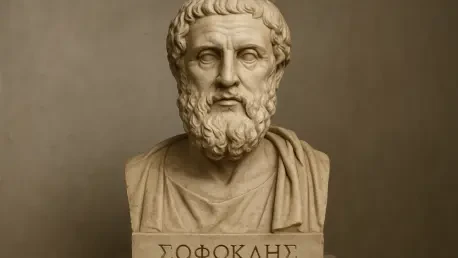
At the core of Blaisdell’s pedagogical approach is a foundational rule: select readings for freshman English classes that feature a conversational voice and create an “immediate, imaginable world.” This principle is born from a desire to avoid texts that demand extensive historical or literary context, which he believes can inadvertently foster a passive learning environment. When faced with material that feels impenetrable, students may disengage, waiting for the professor or an AI-powered tool to summarize and simplify the content for them, thereby short-circuiting the critical thinking process. However, this carefully considered rule is consistently broken for one specific author: Sophocles. This deliberate exception is not an oversight but the cornerstone of a deeper educational philosophy. Blaisdell justifies this choice by pointing to the sublime quality of the plays, their capacity to generate discussions that are both timeless and urgently relevant. For example, the decision to assign Antigone during the fall of 2024 was a direct response to the looming presidential election, leveraging the play’s enduring exploration of state power versus individual conscience to illuminate contemporary political and ethical dilemmas for his students.
The initial moments of engaging with these texts starkly illustrate the inherent challenges of this approach. Blaisdell recounts how a lesson on Antigone must begin with the painstaking process of drawing the complex and shocking family tree of Oedipus on the whiteboard. The students’ reaction, perfectly encapsulated by a student named Varna exclaiming, “Jocasta can’t be Oedipus’s mother, too—right?,” exemplifies the profound cultural and historical chasm that must be bridged. This moment of disbelief is not a failure but a critical starting point. It reveals the necessity of a teaching methodology that does more than simply present information. It underscores why a traditional approach—assigning the play as homework with a follow-up lecture—would likely fail. The material’s initial impenetrability demands a more dynamic, communal, and supportive method to guide students from bewilderment to understanding, transforming a potential obstacle into a shared intellectual journey. This initial shock serves as the catalyst for a pedagogical transformation, forcing a departure from conventional methods toward a more active and participatory model of learning.
From Passive Spectators to Active Participants
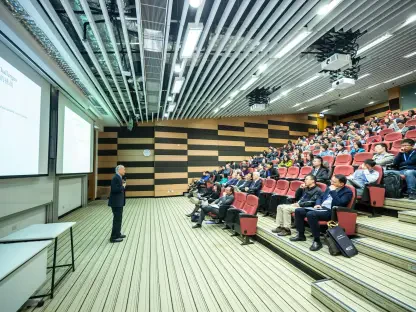
To navigate the formidable challenges posed by Sophoclean tragedy, Blaisdell has radically restructured his classroom into what he calls an “ancient Greek school.” The most significant change is the complete abandonment of assigning the plays as homework. Instead of expecting students to grapple with the dense language and alien concepts alone, the reading becomes a communal, in-class activity. In this dedicated space, students are instructed to put away their electronic devices, and the play is read aloud, with individuals taking turns embodying the various roles. This participatory method proves to be transformative. It shifts the dynamic from one of passive reception to active engagement, compelling students to inhabit the characters, speak their lines, and experience the drama unfold in real time. Blaisdell observes that even students with “shaky English” or a profound discomfort with public speaking eventually connect with the “play’s spirit and profundity.” The act of vocalizing the text together breaks down initial barriers of intimidation and fosters a direct, visceral connection to the material that silent, solitary reading often fails to achieve.
This collaborative environment cultivates a powerful atmosphere of mutual encouragement and peer support, which becomes as crucial to the learning process as the text itself. The classroom comes alive with compelling moments of individual and collective achievement. We see a student named Marie, whose accent does not prevent her from delivering an “inspired and masterful” reading that captivates her peers. Another student, the initially “bewildered” Samuel, discovers unexpected delight in embodying the Sentry’s comic relief, finding an accessible entry point into the dramatic world. When an anxious student named Tina falters, her classmates rally around her with cheers of encouragement, turning a moment of vulnerability into an instance of communal strength. In this setting, the professor’s role naturally shifts from that of a traditional lecturer to a guide or facilitator. His interventions become more targeted—defining a difficult vocabulary word, explaining a forgotten idiom, or posing a clarifying question to check comprehension. He likens the experience not to a relaxing “pleasure cruise” but to a more demanding and ultimately more rewarding “field trip through a museum,” where the effort of shared exploration yields discoveries that would be impossible to attain alone.
Teaching as a Reflective and Creative Act
The profound impact of this unique teaching experience extends far beyond the confines of the academic calendar, becoming a source of deep personal reflection and artistic inspiration for the instructor. During a sabbatical spent working on a biography of his former teacher and mentor, Max Schott, Blaisdell found himself missing the dynamic energy of his classroom. As a creative exercise to reconnect with that experience, he began writing a play that imagined the day-to-day process of teaching Oedipus the King to a fictional class of students. His mentor, serving as his primary audience, encouraged him to continue the project even after Blaisdell felt it had reached a natural conclusion. When he expressed that, in reality, he would never attempt to teach the entire Theban trilogy in a single freshman semester, Max humorously dismissed this self-imposed limitation, reminding him, “You’re making it up anyway!” Spurred by this encouragement, Blaisdell continued writing, imagining his fictional students grappling with the full arc of the tragic saga. This creative endeavor reveals a deeper truth about his professional life: the act of teaching is not merely a job but a profound source of artistic inquiry and personal meaning.
This journey into fiction ultimately led to a powerful realization about the nature of reality in his classroom. After completing his play, Blaisdell revisited old emails he had sent to his mentor, which contained candid, on-the-spot descriptions of his actual classes. He was struck by the uncanny resemblance between the dialogue and dynamics he had invented and the authentic interactions documented in his correspondence. The unvarnished words of his real students—their questions, their confusions, their moments of insight—mirrored the scenes he had painstakingly constructed. Recalling his mentor’s advice—”Don’t explain … See if you can reveal the characters mostly through what they say”—Blaisdell understood that the most compelling evidence for his teaching method’s success lay not in academic theory or personal reflection, but in the raw, unscripted transcripts of the classroom itself. This discovery provided a new lens through which to view his work, affirming that the drama unfolding in his community college classroom was just as compelling and illuminating as the ancient plays they were studying.
The Unvarnished Proof of Engagement
The ultimate testament to this pedagogical approach is captured in an extended, unvarnished transcript from a real class discussion on Antigone. This raw dialogue serves as the article’s core evidence, illustrating all the previously mentioned themes in a concrete and authentic manner. The scene opens with the professor, “Bob,” patiently guiding the students as they work to reconstruct their fragmented recall of the plot after a weekend break. Their collective memory is pieced together not through lecture, but through a persistent series of Socratic questions. In this exchange, distinct student personalities emerge organically through their speech. Tawny proves knowledgeable but terse in her responses, while Paul appears distracted and disengaged, his contributions reflecting a wandering focus. Other students contribute small but vital pieces of information, each adding a thread to the tapestry of their shared understanding. The professor skillfully navigates this dynamic, attempting to connect the play to prior lessons on “identities” and re-establish “context” by having a student read a key speech by Creon aloud. This act of guided close reading proves pivotal.
Through this collaborative effort, the class successfully identifies a central theme of the play: Creon’s demand for absolute loyalty from his citizens. The entire discussion is framed by the practical goal of preparing for a writing assignment in which students must imagine a conversation with one of the play’s characters about the purpose of life. This pragmatic anchor grounds the lofty literary analysis in a tangible, achievable task, making the intellectual work both meaningful and purposeful. The scene, and the argument it so powerfully represents, concluded on a perfectly realistic and humanizing note. Just as the students reached a moment of collective insight into the complex political philosophy of the play, the high-minded discussion was abruptly interrupted by Paul’s mundane, everyday concern: “I forgot my pen.” This small detail perfectly encapsulated the classroom experience—a space where the sublime and the ordinary coexisted, and where profound intellectual discovery happened amidst the simple, relatable realities of student life. The immense effort required to bring Sophocles into this setting was profoundly justified, not only by the deep engagement it fostered but by the unique community it built, a community founded on mutual support and the shared, triumphant struggle with a timeless and challenging text.