
Imagine a world where a college degree isn’t the golden ticket to a good job, where raw talent and hard-earned skills open doors just as wide. In Colorado, this isn’t a distant dream but a reality taking shape under innovative policies and a bold vision to reshape how talent is recognized. For too long, the so-called “paper ceiling”—the barrier created by degree requirements—has locked out countless capable individuals from meaningful careers, leaving both workers and employers at a disadvantage. This invisible wall has stood firm for decades, but now, a growing movement is chipping away at it, with Colorado leading the charge. Through a blend of policy reform, educational partnerships, and real-world success stories, the state is proving that what you can do matters more than the diploma on your wall. Let’s dive into how this shift is unfolding, the challenges it faces, and why it could redefine the future of work.
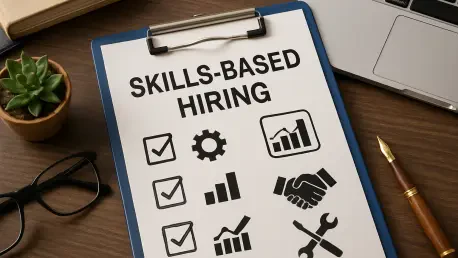
Colorado stands as a beacon in this evolving landscape, driven by a commitment to prioritize skills over credentials. Under Governor Jared Polis, the state has rolled out executive orders and significant funding to transform hiring practices, focusing on ability rather than academic pedigree. Take Cherri McKinney, for instance—a woman whose diverse career spanned bookkeeping and aesthetics before landing a role as a benefits administrator. Her story isn’t just inspiring; it’s a testament to how tearing down educational barriers can unleash hidden potential. As more states and companies watch Colorado’s progress, the question isn’t whether skills-based hiring is viable, but how far it can go in reshaping the national workforce.
The urgency of this movement comes from a painful history of degree inflation, a trend that sidelined skilled workers without formal education. Now, with labor shortages lingering after the global pandemic, the tide is turning. Employers can no longer afford to overlook talent based on outdated criteria, and Colorado’s proactive stance—reshaping job descriptions and training hiring managers—offers a roadmap for others. Yet, even with momentum building, hurdles remain. Cultural biases and economic uncertainties could stall progress, raising doubts about whether this approach can truly scale. This exploration will unpack the roots of this change, the strategies fueling it, and the obstacles that must be navigated to sustain it.
The Roots of Change
Historical Context of Degree Inflation
Tracing back to the aftermath of the Great Recession, a troubling pattern emerged in the job market that reshaped opportunities for countless workers. Employers, swamped with applicants during a time of economic hardship, began tacking on degree requirements for roles that never needed them before—think administrative assistants or construction supervisors. This shift wasn’t about skill necessity; it was a convenient way to filter an overwhelming pool of candidates. The result? A formidable barrier, often dubbed the “paper ceiling,” that shut out skilled individuals lacking formal education. In Colorado, this legacy of degree inflation has long hindered workforce diversity and limited employer access to talent. Today’s push to value skills over credentials is a direct response to that exclusion, aiming to right a wrong that has persisted for far too long. By recognizing that many jobs don’t require a diploma to be done well, the state is challenging a deeply entrenched norm.
Moreover, this historical barrier didn’t just hurt workers—it hurt businesses too. When degree requirements became a default standard, companies narrowed their talent pool, often missing out on employees with practical experience who could excel in roles. Colorado’s current initiatives are grounded in undoing this damage, acknowledging that the old way of hiring created inefficiencies on both sides of the equation. Data from workforce studies show that many roles labeled as “degree-necessary” can be filled by those with alternative training or real-world know-how. The state’s focus isn’t just on fairness; it’s on pragmatism. Breaking down these artificial walls isn’t a handout—it’s a strategy to build a stronger, more adaptable economy where talent isn’t sidelined by outdated rules.
Momentum from Labor Market Shifts
Fast forward to the present, and the labor market tells a different story—one of scarcity rather than surplus, especially after the disruptions of the COVID-19 era. With workers in short supply, particularly in public sector roles, employers have been forced to rethink rigid hiring standards. At least 26 states, alongside major corporations like IBM, have started stripping degree mandates from job postings, emphasizing what candidates can demonstrate over what they’ve studied. Colorado has seized this moment under Governor Polis, whose 2022 executive order pumped resources and structure into skills-based hiring. This isn’t a fleeting trend but a calculated pivot, spurred by a job seeker’s market where talent holds the upper hand. The state’s leadership is setting a precedent, showing how policy can harness market dynamics to drive systemic change and open pathways for those previously overlooked.
Beyond state borders, this momentum reflects a broader awakening to the flaws of degree-centric hiring. Labor shortages have exposed the absurdity of turning away capable individuals over a lack of formal credentials, especially when roles can be learned on the job or through alternative programs. Colorado’s model, backed by dedicated funding and clear directives, goes a step further by institutionalizing these shifts—think revised job classifications and trained hiring teams. It’s not just about reacting to a tight market; it’s about building a framework that outlasts temporary conditions. As other regions take note, the ripple effects of this approach could redefine how talent is valued nationwide, proving that necessity often breeds innovation in unexpected ways.
Building a Skills-Focused Future
Educational Pathways and Partnerships
On the front lines of Colorado’s transformation are its educational institutions, which are stepping up to equip non-degreed individuals with the tools to compete in a skills-driven job market. High schools and community colleges are at the heart of this effort, crafting programs that prioritize practical abilities over traditional academic tracks. Red Rocks Community College, for instance, has partnered with industry giants like Northrop Grumman to offer cybersecurity apprenticeships, blending hands-on training with real-world application. Similarly, Warren Tech focuses on soft skills—think communication and problem-solving—that employers crave just as much as technical know-how. These initiatives aren’t just stopgaps; they’re a deliberate strategy to build a talent pipeline that meets market demands without the burden of a four-year degree. Colorado’s $15 million investment in behavioral health career pathways further targets specific shortages, showing how focused efforts can address niche needs.
Equally important is the shift in mindset that these programs foster among students and employers alike. By embedding work-based learning into curricula, Colorado is normalizing alternative routes to success, dismantling the notion that a degree is the only path to a good job. These partnerships do more than train—they build bridges between learners and industries, ensuring skills taught today match the roles hiring tomorrow. Unlike traditional education models that can feel detached from workplace realities, these efforts are rooted in collaboration, with companies providing input on what they need. This alignment reduces the guesswork for job seekers, giving them confidence that their training translates directly to opportunity. It’s a forward-thinking approach that could inspire a generational shift in how career readiness is defined.
Policy and Structural Reforms
At the policy level, Colorado’s commitment to skills-based hiring is anything but superficial—it’s a deep, structural overhaul aimed at lasting impact. Governor Polis’ initiatives go beyond rhetoric, with executive orders backed by funding to rewrite the rules of state hiring. Around 80 percent of job classifications in state roles now emphasize skills over degrees, a bold statistic that signals real change. Dashboards and clear goals track progress, while training for hiring managers ensures biases don’t creep back in. About 25 percent of recent hires lack formal education credentials, a figure that holds steady but prompts questions about why growth isn’t accelerating. This isn’t just a pilot program; it’s an attempt to embed a new philosophy into the fabric of public employment, making skills the currency of opportunity rather than a piece of paper.
However, steady numbers also hint at the limits of policy alone in driving cultural change. Revising job descriptions and setting targets are critical steps, but they don’t automatically shift deeply ingrained preferences for degreed candidates among some decision-makers. Colorado’s approach tackles this through ongoing education for its workforce, aiming to rewire how qualifications are perceived at every level. It’s a slow grind—systemic change always is—but the state’s multi-pronged strategy shows an understanding that quick fixes won’t cut it. By pairing top-down mandates with bottom-up training, there’s a chance to create a feedback loop where each hire under the new model reinforces its value. If sustained, this could serve as a blueprint for others, proving that government can be a catalyst for reimagining talent in actionable ways.
Challenges on the Horizon
Economic and Cultural Barriers
Even as Colorado forges ahead with skills-based hiring, the road isn’t without significant bumps, particularly when economic winds shift. Hiring freezes within the state, coupled with a national slowdown in job growth, cast a shadow over recent gains. When budgets tighten, employers often fall back on old habits, using degree requirements as a quick, if flawed, way to screen candidates in a crowded field. This reflex threatens to undo the hard-won progress of opening doors for non-degreed workers, especially in a cooling labor market where competition for roles intensifies. Economic uncertainty isn’t just a backdrop—it’s an active force that could push companies and even public sectors to prioritize speed over equity in hiring decisions, stalling the momentum of reform.
Compounding this challenge are cultural barriers that linger beneath the surface of policy change. Despite training efforts, many hiring managers and organizations still harbor unconscious biases, viewing degrees as a shorthand for competence or reliability. Shifting this mindset requires more than revised job postings; it demands a broader societal rethinking of what qualifies someone as “capable.” Colorado’s initiatives are a strong start, but they’re up against decades of conditioning that equate education with worth. Without continuous education and visible success stories to challenge these norms, the risk remains that skills-based hiring could be seen as a temporary experiment rather than a permanent evolution. Bridging this gap is as much about storytelling—highlighting those who thrive without degrees—as it is about rules and regulations.
Limitations in Industry Scope
Another hurdle facing Colorado’s skills-based hiring push is the reality that not all industries are equally suited to this model, a fact underscored by sobering projections. A Georgetown University study suggests that over 40 percent of job openings in the state through 2031 will still demand a bachelor’s degree, largely due to heavy concentrations in fields like engineering and healthcare. These sectors often require specialized knowledge or certifications tied to formal education, limiting how far skills alone can go in replacing traditional credentials. For workers eyeing roles in such areas, the promise of bypassing a degree feels out of reach, raising questions about the universality of this hiring shift. It’s a stark reminder that while the approach works wonders in many spaces, it’s not a one-size-fits-all solution.
Nevertheless, recognizing these limitations doesn’t mean dismissing the movement—it means refining its focus. Colorado can still target sectors where skills-based hiring shines, like trades, technology support, or administrative roles, while exploring hybrid models for degree-heavy fields. Think apprenticeships that blend on-the-job learning with streamlined certifications, offering a middle ground. The state’s challenge lies in balancing ambition with pragmatism, ensuring that the push for equity doesn’t overpromise what it can deliver in specialized industries. Policymakers and educators must work hand-in-hand with employers to map out where skills can substitute for degrees and where they can’t, crafting a nuanced strategy. Only then can the vision of breaking down barriers hold firm against the realities of a diverse job landscape.
Reflecting on the Path Forward
Looking back, Colorado’s journey to champion skills-based hiring marked a pivotal moment in redefining how talent was valued, striking at the heart of long-standing inequities. Through bold policies, educational reforms, and personal triumphs like Cherri McKinney’s, the state carved out a space where ability often trumped academia. Yet, the struggle against cultural biases and economic setbacks revealed just how fragile progress could be. The numbers spoke to both promise and pause—25 percent of hires without degrees showed a foothold, but stagnant growth hinted at deeper challenges. This wasn’t merely a policy shift; it was a cultural battle waged against decades of ingrained norms.
Moving ahead, the focus must turn to actionable steps that cement these gains while addressing the gaps. Scaling up tools like Learning and Employment Records (LERs) could offer verifiable proof of skills, easing employer hesitancy. Strengthening partnerships between schools and industries can further tailor training to market needs, especially in sectors slow to adapt. Policymakers should prioritize data collection across states to benchmark Colorado’s model against others, learning what drives or stalls success. Above all, amplifying stories of non-degreed workers who’ve climbed the ladder can shift perceptions, proving this isn’t charity—it’s smart business. The road isn’t easy, but with deliberate effort, the foundation laid in Colorado could inspire a national rethink of what makes a worker “qualified.”