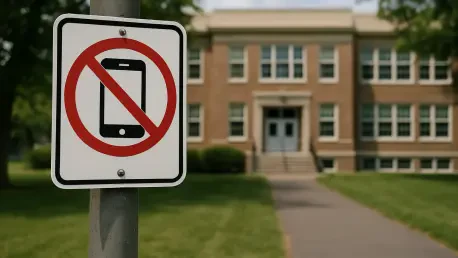

The hallways and classrooms of Salem-Keizer high schools, once illuminated by the blue glow of countless screens and filled with the subtle hum of notifications, have fallen quiet since the district implemented a sweeping and stringent mobile phone ban. Initiated this fall, the policy requires all students to secure their phones and earbuds in magnetically locking pouches from the first bell to the last, effectively creating a district-wide digital blackout for the duration of the school day. This bold move to reclaim the educational environment from constant distraction has been met with a near-unanimous chorus of approval from educators, who report a dramatic improvement in student focus and academic performance. However, this same policy has ignited a firestorm of criticism from the student body, who view the ban as an overreach that infringes on their autonomy, creates significant anxiety, and raises serious questions about safety and practical enforcement in the modern world.
The View From the Front of the Classroom
A Resounding Endorsement From Educators
For many veteran educators, the implementation of the phone ban has been nothing short of a classroom renaissance, representing a powerful and unequivocally positive shift in the learning atmosphere. The most compelling evidence comes from firsthand accounts of academic breakthroughs that teachers directly attribute to the new policy. Stephanie Lassetter, a math teacher at McNary High School with two decades of experience, witnessed a remarkable and unprecedented improvement in her algebra students’ performance on a notoriously difficult topic. Where she typically saw average grades in the C and D range, the class average surged to a high B. Lassetter is convinced the change is due to a sharp decline in digital distractions, observing that “kids are completing things” and that overall engagement has skyrocketed. This renewed focus has not only bolstered test scores but has also transformed the social fabric of the classroom, fostering a more interactive and collaborative environment where students are now communicating directly with one another.
This perception of success extends far beyond individual academic metrics, touching upon the very culture of the classroom and the school at large. Teachers across the district have reported a significant increase in student-to-student interaction, noting that the absence of phones has compelled students to engage in face-to-face conversation in a way they hadn’t before. Stephanie Lassetter remarked that the change is so profound that students now “know each other’s names,” a simple but powerful indicator of a more connected and present student body. This anecdotal evidence is so consistent and widespread that the district’s teacher union has reported that the feedback from its membership has been universally positive. This broad consensus among faculty members paints a picture of a policy that, from their perspective, has successfully eradicated a primary source of classroom disruption and apathy, allowing for a more focused and effective educational experience for all.
Administrative Relief and System-Wide Success
School and district administrators have strongly echoed the positive sentiments of their teaching staff, emphasizing the significant operational advantages and the creation of a more predictable learning environment. A critical component of the policy’s success, according to leadership, is its centralized enforcement system. Managed by administrators and dedicated campus safety staff, this approach has relieved individual teachers of what McNary’s principal, Scott Gragg, described as a “burdensome” and immensely time-consuming responsibility. Previously, educators often found themselves in a constant battle over phone usage, a struggle that drained energy and, more importantly, diverted precious minutes away from instruction. By shifting this enforcement duty away from the classroom, the new system allows teachers to dedicate their full attention to their primary role: educating students. This has resulted in more efficient use of class time and a more focused academic atmosphere.
From a district-wide perspective, leaders like high school director Larry Ramirez champion the policy for its consistency, which they believe is crucial for fostering an environment conducive to student success. The ban’s application throughout the entire school day, including lunch and passing periods, creates a clear and unwavering expectation for student behavior, eliminating the gray areas that often complicated previous, less stringent policies. While administrators readily acknowledge that they currently lack hard, quantitative data linking the ban to metrics such as attendance or graduation rates, they remain confident in its efficacy. For now, the overwhelming volume of positive anecdotal feedback from the educators on the front lines serves as their primary indicator of success. They view this chorus of approval as a powerful testament to the policy’s transformative impact on school culture and academic engagement, justifying the initiative as a major step forward for the district.
The Student Experience: A Story of Frustration and Flaws
Freedom, Anxiety, and Unfair Punishment
In stark contrast to the enthusiasm expressed by educators, the student response to the phone ban is characterized by a mix of deep-seated frustration, heightened anxiety, and sharp criticism. A primary source of this discontent is the feeling that the policy is an overreaching infringement on their personal freedom, treating a diverse high school population with a one-size-fits-all solution that feels more appropriate for younger children. Many students expressed feeling more “disconnected” and voiced a strong desire to have the ability to contact their parents or check in during breaks and lunch periods. They fundamentally challenge the premise of a blanket policy, arguing that it unfairly penalizes the entire student body for the actions of a few less-focused peers. Articulating this common sentiment, senior Macarthy Nelson argued, “We’re in high school now. Students need to learn to take accountability for their actions,” suggesting the ban robs them of a crucial opportunity to develop self-regulation skills essential for adulthood.
Beyond the philosophical objections to the policy, a significant and recurring concern among students is the impact of the ban on their sense of safety and emergency preparedness. The inability to quickly contact family or access information in a crisis has become a major source of anxiety. This fear was crystallized for sophomore Emma Cleveland during a recent fire drill, where she observed school employees appearing more concerned with enforcing the phone ban than with ensuring student well-being. This perception, whether accurate or not, has damaged student trust in the administration’s priorities during a potential emergency. The feeling that the enforcement of a rule could supersede their safety has left many students questioning the policy’s logic in critical situations. This undercurrent of fear has added a serious and weighty dimension to student opposition, transforming the debate from one of mere convenience to one of fundamental security and well-being.
A Flawed System in Practice
Students are also highly critical of the policy’s practical implementation, pointing to significant flaws in the enforcement strategy that they believe undermine its intended purpose. Many report that their peers easily circumvent the system by simply not placing their phones in the magnetically locking pouches, carrying the empty pouches as a form of symbolic compliance. This has led to widespread frustration over what students see as a flawed and superficial approach, one that focuses more on the theatrical act of carrying a pouch than on the actual sequestration of the device. This perceived ineffectiveness creates a sense of futility, as students who follow the rules watch others disregard them with little consequence. This discrepancy erodes the policy’s credibility and fuels resentment among those who feel the system is both poorly designed and inequitably enforced, creating a new layer of distraction and discontent within the student body.
The bureaucratic rigidity of the policy’s enforcement has also been a source of exasperation, as illustrated by personal anecdotes that highlight a lack of common sense in its application. Macarthy Nelson shared a particularly telling experience: having consciously decided to leave her phone in her car to avoid any potential violation, she was intercepted by staff who threatened her with detention for not having her pouch. She was then forced to retrieve her phone from her vehicle and lock it away, a process that not only contradicted the spirit of the rule but also ultimately made her late for class. This type of incident exemplifies the student critique that the policy can be illogical and counterproductive, punishing individuals who are actively trying to comply while failing to address those who willfully ignore it. Such experiences reinforce the student view of the ban as a flawed, inflexible system that often prioritizes rigid procedure over rational outcomes.
Navigating the Nuances and Unforeseen Consequences
The Complexity of Medical Accommodations
The inherent challenges of implementing a uniform policy across a diverse student population become starkly apparent when examining the experiences of the approximately 130 students who have received medical or disability-related exemptions. These students are issued a non-locking Velcro pouch to allow necessary access to their devices for health monitoring. However, the real-world application of this exception has proven deeply problematic. Angelo Arredondo Baca, guardian for his sister, a senior with diabetes who uses her phone to monitor blood glucose levels, provided a detailed account of her struggles. While obtaining the formal exemption was a straightforward process requiring only a doctor’s note, his sister has repeatedly faced confrontations from teachers and staff who are unaware of her medical status. This constant need to justify her phone use has caused her significant anxiety and has even led her to miss essential blood pressure checks, a health issue she never experienced before the ban was implemented.
Interestingly, the story of medical exemptions also reveals the multifaceted nature of the ban’s impact, where positive and negative consequences can coexist even for the same individual. Despite the daily anxiety and the health risks his sister has faced due to confrontations with staff, Arredondo Baca conceded that the policy has had a positive academic effect. He noted that his sister’s grades have improved since the ban was put in place and that she finds her classes to be more attentive and focused learning environments. This dual experience demonstrates a critical gap between policy and practice, where a well-intentioned accommodation fails to prevent negative real-world consequences, yet the policy’s core goal of enhancing academic focus is still achieved. It highlights the complex calculus the district faces, where the clear academic benefits must be weighed against the significant personal and emotional costs borne by some of its most vulnerable students.
Reshaping School Culture and Logistics
The district-wide absence of personal mobile devices has catalyzed observable and sometimes surprising changes in the social and technological landscape of the schools. Administrators and teachers have noted a distinct resurgence of analog social activities, a throwback to a pre-smartphone era. At McNary High School, for instance, students have been seen playing cards during lunch, engaging in direct, device-free social interaction. In a display of creative adaptation to the new rules, students have also found ways to communicate digitally by repurposing their school-issued Chromebooks, using shared documents as impromptu chat rooms. The policy has also inadvertently sparked a retro-tech revival, with some students bringing old iPods and even Walkmans to school as a way to listen to music without violating the phone ban, blending past and present technologies to navigate the new environment.
However, while students and staff have adapted in some ways, the ban has also created new and unforeseen logistical hurdles, underscoring just how deeply mobile technology was integrated into the daily operations of the schools. The once-ubiquitous QR codes used on posters to promote school events, share information, and facilitate sign-ups have become, in the words of one observer, “completely obsolete.” This has forced clubs, sports teams, and the administration to revert to older, less efficient methods of communication. The impact has been felt in the classroom as well. Teachers like Stephanie Lassetter have had to redesign assignments that previously incorporated the use of phone cameras for projects like data collection in science or documenting steps in a math problem. These necessary adjustments highlight the profound ripple effect of the policy, forcing a fundamental shift in how information is shared and how modern educational practices are conducted.
A Divisive Outcome With an Uncertain Future
The Salem-Keizer School District’s phone ban produced a starkly divided outcome, creating two parallel and conflicting narratives. For educators and administrators, the policy was a resounding success that revitalized the classroom by fostering unprecedented levels of student focus, engagement, and academic achievement. In their view, the benefits of a distraction-free environment were clear, immediate, and overwhelmingly positive. From the student perspective, however, the experience was fraught with anxiety, frustration, and a sense of disenfranchisement. They saw the ban as a flawed, overreaching measure that raised legitimate concerns about safety in emergencies, infringed upon their personal autonomy, and was enforced through a rigid and sometimes illogical system. The difficult and stressful experiences of students with medical exemptions further illuminated the challenges of applying a single, inflexible rule to a large and varied population. The district was thus left to navigate the complex task of reconciling these realities, balancing the undeniable academic gains against the significant costs to student well-being and trust.