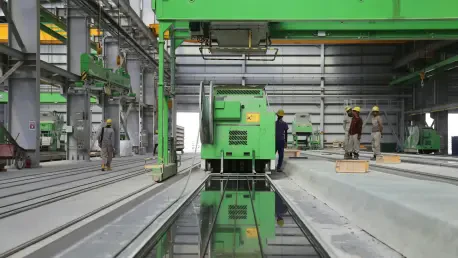

In the face of an escalating workforce deficit that casts a shadow over the state’s economic future, where an aging labor pool and rapid technological evolution have created a chasm between industry needs and available talent, Oklahoma State University has initiated a comprehensive, system-wide mission to fundamentally reshape the landscape of workforce development. This strategic response is not merely a series of new programs but a paradigm shift in the role of higher education, transforming the university into a dynamic engine for economic growth. The recent unveiling of the renovated, 12,300-square-foot 1300 Wing at the OSU-Tulsa campus stands as a powerful physical testament to this new era, a space meticulously designed for hands-on, applied learning and a symbol of a unified system dedicated to fostering opportunity and prosperity across Oklahoma. It represents a tangible commitment to bridging the critical gap that threatens to slow the state’s progress, ensuring that Oklahomans are prepared for the high-demand jobs of today and tomorrow.
A Strategy Forged Through Collaboration
Listening to Industry’s Needs
The cornerstone of Oklahoma State University’s transformative approach was a deliberate and foundational commitment to listening before acting. Recognizing that effective solutions could not be conceived within an academic silo, the university initiated an unprecedented listening tour, orchestrating a series of 17 workforce roundtables that brought together leadership from over 200 distinct organizations. This extensive engagement spanned all of Oklahoma’s key economic sectors, from Aerospace and Aviation to Energy and Information Technology, ensuring a granular and holistic understanding of the challenges employers faced. This process marked a fundamental departure from the traditional, linear model of education, establishing a new precedent for deep, collaborative partnership. The dialogue was direct and candid, revealing a widespread consensus among industry leaders: the existing talent pipeline was failing to produce graduates equipped with the immediate, practical skills required to navigate the modern workplace. The urgency of their feedback shaped every subsequent action, grounding the university’s strategy not in academic theory but in the tangible needs of the state’s economy.
From these intensive discussions, a clear and consistent mandate for educational reform emerged. Employers across the board articulated a pressing need for pathways to employment that were faster, more flexible, and more directly aligned with specific job functions than the conventional four-year degree. There was a universal call for a greater emphasis on hands-on, experiential learning opportunities that would allow students to apply theoretical knowledge in practical settings, making them more adaptable and productive from their first day on the job. Furthermore, a crucial and recurring theme was the profound deficit in “soft skills.” Industry partners stressed that technical proficiency alone was insufficient for success. They highlighted an acute shortage of candidates possessing the essential interpersonal attributes of effective communication, collaborative teamwork, reliability, critical thinking, and leadership. This feedback underscored that building a resilient workforce required a holistic approach, one that cultivated confident, capable, and professional leaders in addition to technically skilled workers, a challenge OSU embraced as central to its mission.
Building a Flexible Educational Ecosystem
In direct response to the industry’s call for agility and speed, Oklahoma State University has championed the development and expansion of stackable microcredentials. This innovative educational model provides a powerful alternative for individuals seeking to acquire specific, in-demand skills without committing to a lengthy degree program. Each microcredential functions as a focused, short-term learning module that validates proficiency in a particular competency, from data analytics to advanced manufacturing techniques. The “stackable” nature of this system is its most transformative feature, allowing learners to accumulate credentials over time, building a customized skill set that can eventually be applied toward a formal certificate or degree. This approach not only serves the needs of companies requiring a rapidly upskilled workforce but also empowers individuals by creating flexible, non-linear pathways to career advancement. It reflects a modern understanding of lifelong learning, where education is not a single event but a continuous process of adaptation and growth in response to a perpetually evolving economic landscape.
Complementing the targeted nature of microcredentials, the university has meticulously crafted a broader educational ecosystem designed for maximum accessibility and impact. This includes a significant revitalization and expansion of industry-recognized certificates and associate degree programs, particularly in the vital “middle-skill” fields that form the backbone of the state’s economy, such as construction technologies and industrial maintenance. Recognizing that traditional classroom schedules create barriers for many potential learners, OSU has made a substantial investment in broadening its delivery methods. The expansion of robust online programs, coupled with more flexible evening and weekend scheduling options, ensures that educational opportunities are accessible to working adults seeking to advance their careers, non-traditional students re-entering the workforce, and individuals in rural communities who may have previously been excluded from higher education. This multi-pronged strategy creates a comprehensive and inclusive network of learning pathways, ensuring that every Oklahoman has the opportunity to acquire the skills necessary for personal success and collective economic prosperity.
Tangible Impact Across Key Sectors
Powering Oklahoma’s Core Industries
A landmark partnership with OG&E exemplifies OSU’s commitment to embedding practical, hands-on experience directly into its curriculum for the state’s vital Energy and Power sector. Through a significant donation, OG&E has provided OSUIT with a state-of-the-art power plant simulator, a sophisticated tool that immerses students in a hyper-realistic, controlled environment. This technology allows learners to navigate a wide array of complex, real-world operational scenarios—from routine maintenance procedures to critical emergency responses—without any of the associated risks. As confirmed by OG&E’s Michael Eckart, this type of experiential training is invaluable, as it moves beyond rote memorization to cultivate the critical thinking and rapid decision-making skills essential for success in the high-stakes energy industry. Graduates who have trained on the simulator enter the workforce not as novices, but as competent professionals already familiar with the pressures and technical challenges of the job, significantly reducing their on-the-job training time and making them immediately valuable assets to their employers.
Simultaneously, OSU is actively shaping the future of Oklahoma’s industrial base by positioning the state as a national leader in next-generation manufacturing. This forward-looking vision is being realized through a pivotal collaboration between the university’s Hamm Institute for American Energy and Divergent Technologies Inc. The partnership is centered on leveraging Divergent’s revolutionary platform, which integrates AI-driven design, advanced additive manufacturing (3D printing), and sophisticated robotic assembly systems. The strategic goal is to integrate these cutting-edge technologies with Oklahoma’s established strengths in the energy and defense sectors, creating a powerful synergy that can scale advanced manufacturing capabilities statewide. This initiative is not an isolated project but is supported by a robust academic infrastructure of over 60 relevant degree programs and certificates across the OSU System. The success of this integrated approach is evident in the data, with these programs consistently boasting an impressive 90% job placement rate for graduates, demonstrating a clear and effective alignment between education and industry demand.
Meeting the Demand in High-Growth Fields
To fuel the continued growth of Oklahoma’s formidable $44 billion Aerospace and Aviation industry, OSU is delivering highly specialized and targeted training programs designed to meet the sector’s precise needs. The university has developed focused curricula in critical areas such as avionics technology and advanced composites manufacturing, ensuring a steady pipeline of technicians and engineers with the exact skills required by leading aerospace firms. Looking beyond current demands, OSU is also proactively developing innovative programs to prepare the workforce for the future of flight, most notably through its new Advanced Air Mobility microcredential. This comprehensive approach has earned praise from industry leaders like Bailey Siegfried of NORDAM, who validated the university’s strategy. He commended OSU’s dual focus on providing rigorous technical education while simultaneously cultivating the essential “human interaction skills” that are critical for developing the industry’s next generation of effective and collaborative leaders.
In the fast-paced world of Information Technology, where the demand for skilled professionals is seemingly insatiable, OSU is mounting a comprehensive response. The university has developed a portfolio of 14 distinct microcredentials and a full suite of degree programs in high-demand specializations such as cybersecurity, cloud computing, and data analytics. This multi-level approach addresses the tech talent shortage from all angles, providing rapid upskilling for existing professionals while also training a new generation of experts. The impact of this strategy is felt directly by major employers like Devon Energy. Trey Lowe, a representative from the company, commended OSU’s all-encompassing approach, noting that the university is directly addressing the specific, high-tech workforce gaps his company faces. From its community college certificate programs that produce skilled technicians to its advanced Ph.D. programs that drive innovation, OSU is providing the talent needed in critical areas like industrial automation and data analytics, proving itself an indispensable partner to the state’s technology sector.
Strengthening the Foundational Workforce
Recognizing that a robust economy is built on a diverse and skilled workforce, Oklahoma State University is making a concerted effort to address the significant demand for professionals in “middle-skill” jobs. These roles, which require more education than a high school diploma but not necessarily a four-year degree, are the essential backbone of the state’s Construction and Real Estate sectors. To fill this gap, the university now offers a comprehensive suite of 20 targeted microcredentials and numerous associate degrees in high-demand trades. Programs in fields such as HVAC (heating, ventilation, and air conditioning), electrical technologies, and modern construction management are creating clear and accessible pathways for Oklahomans to enter stable, well-paying careers. This strategic focus ensures that the foundational industries that build and maintain the state’s infrastructure have a steady supply of qualified talent, promoting both individual prosperity and statewide economic stability.
A prime example of this strategy in action is the deep, collaborative partnership forged between OSUIT and AAON, a leading manufacturer of HVAC systems. Instead of relying on a generic curriculum, the two organizations worked together to co-create a highly specialized HVAC training program tailored to the specific technologies and processes used by AAON. This bespoke approach ensures that students are trained on the exact equipment and systems they will encounter in the workplace, creating a direct and seamless talent pipeline for the company. Graduates of the program are not just qualified; they are perfectly aligned with the employer’s immediate needs, ready to contribute effectively from their first day. This partnership serves as a powerful and scalable model for the future of workforce development, demonstrating how intimate industry-education collaboration can yield a workforce that is not only skilled but also precision-engineered to drive a company’s success and innovation.
A Blueprint for Economic Prosperity
Ultimately, Oklahoma State University successfully transitioned from its traditional role as an academic institution into a dynamic and responsive engine for statewide economic and workforce development. This transformation was rooted in a deliberate strategy of deep and authentic industry partnership, which allowed the university to develop and deploy a diverse portfolio of educational solutions precisely aligned with the evolving needs of Oklahoma’s economy. By creating accessible pathways for upskilling, championing hands-on learning, and emphasizing the development of both technical expertise and essential professional skills, OSU built the comprehensive talent pipeline that was necessary to power the state’s key industries. The collaborative endorsement from regional leaders solidified the conclusion that when education, business, and government work in concert, the entire region benefited, ensuring a stronger and more resilient economic future had been secured.