
A groundbreaking collaboration is actively reshaping the landscape of secondary education by providing high school students with an unparalleled opportunity to engage in academic research and leadership development. The State Student Leadership Research Collaborative (SLRC), a dynamic partnership between The Ohio State University and a consortium of Ohio school districts, is designed to do more than just prepare students for higher education; its core mission is to empower them to become catalysts for positive change within their own schools and communities. By immersing participants in team-based projects that tackle complex, real-world issues, the program cultivates a unique blend of analytical rigor, collaborative spirit, and civic responsibility. This initiative moves beyond traditional classroom learning, offering a platform where young minds can explore their passions, develop tangible skills, and see firsthand the impact of their intellectual efforts. The program’s structure fosters a unique ecosystem where students are not merely passive recipients of information but are active creators of knowledge, working alongside peers and mentors to navigate the challenges of research and leadership in a supportive and intellectually stimulating environment.
Cultivating the Next Generation of Innovators
The transformative power of hands-on experience and mentorship lies at the heart of the SLRC’s success, bridging the gap between high school ambition and collegiate achievement. By offering students a platform to conduct meaningful research and lead projects, the program equips them with the practical skills and confidence needed to excel in higher education and beyond.
From High School Projects to University Success
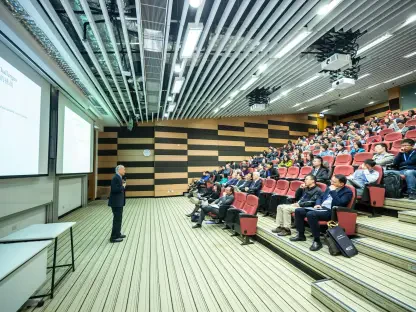
The recent gathering at the Greater Columbus Convention Center served as a powerful testament to the program’s lasting impact, bringing together current high school participants with college-level alumni of the collaborative. A highlight of the event was an insightful panel discussion where Ohio State University students, all former SLRC participants, shared compelling narratives of their personal and academic journeys. They articulated how the program was instrumental in their development, providing a foundation that significantly eased their transition into the demanding environment of a major university. London Michel, now an environmental science major, explained how the collaborative helped her cultivate a community-centric leadership style. She credited the program’s emphasis on teamwork with building the confidence necessary to navigate complex academic challenges. Similarly, Katie O’Shaughnessey, a marketing major, emphasized the program’s inherent flexibility, noting that it allows students to find dedicated mentorship and pursue their unique interests, whether in rigorous research, leadership training, or learning from seasoned educators.
The Power of Purpose-Driven Research
The experiences shared by the alumni panelists underscored the program’s ability to ignite a lasting passion for inquiry and service. Sridurga Karthik, a neuroscience major, recounted how her involvement in the SLRC inspired a profound desire to help other students unlock their full potential, a mission she continues to pursue in her university studies. The projects undertaken by these students were not mere academic exercises; they were deeply rooted in addressing tangible community needs. Their work spanned a diverse range of disciplines, from sophisticated scientific research exploring environmental issues to the development and implementation of comprehensive mental health surveys designed to better support the well-being of their peers. This focus on real-world application is a cornerstone of the SLRC philosophy. Students learn to identify pressing issues, formulate research questions, design methodologies, and ultimately, present solutions that can lead to meaningful change, transforming them from students into proactive problem-solvers equipped to make a difference.
Voices of Inspiration and Institutional Support
The program’s framework is strengthened by inspirational guidance from national figures and unwavering support from educational leaders. This combination of external motivation and internal commitment creates a robust ecosystem where student growth is prioritized and celebrated.
A Call to Action for Student Advocacy
The event was further elevated by a keynote address from Erin Gruwell, the acclaimed educator and author whose work with the Freedom Writers has inspired millions. Gruwell delivered a stirring message, encouraging the students to recognize and harness the power of their own voices as potent instruments for advocacy and societal change. She emphasized that authentic leadership is built upon a foundation of genuine and honest communication, urging the young leaders to share their stories and perspectives with conviction. Drawing from her own experiences, she challenged them to embrace the profound assignment of venturing into the world with the explicit goal of making it a better place. Her words resonated deeply with the SLRC’s mission, reinforcing the idea that every student possesses the potential to influence their environment and that their unique experiences provide them with invaluable insights that can drive progress and foster greater understanding within their communities.
A Partnership Built on Student Growth
The sentiment of pride and accomplishment was echoed by the program’s administrators, who witnessed the students’ remarkable development. Keith Bell, an SLRC instructional facilitator, articulated the immense satisfaction of observing participants evolve from their initial entry into the program into confident and capable young leaders. This growth was a direct result of the collaborative’s supportive structure. Mia Prewitt of Columbus City Schools highlighted the partnership with Ohio State as a wonderful and impactful opportunity, enabling students to implement tangible improvements within their own schools. The program ensured that these student-led initiatives were not undertaken in isolation; they were backed by a robust support system of peers and professional staff who provided guidance, resources, and encouragement. This strong institutional backing and shared vision between the university and the school districts had created a unique and effective model for student empowerment that fostered both individual achievement and collective community betterment.