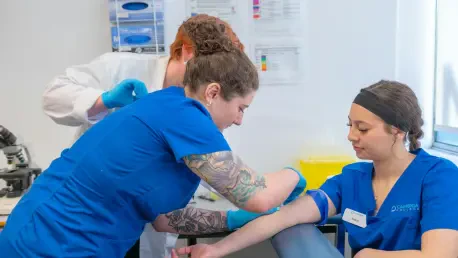

The escalating shortage of qualified healthcare professionals in the Gulf South has reached a critical juncture, prompting a significant federal investment of $2.85 million to bolster the nursing workforce through Loyola University New Orleans. This substantial funding, secured through the FY2026 federal appropriations process with the advocacy of U.S. Senator Bill Cassidy, M.D., represents a decisive step toward stabilizing a healthcare system under immense pressure. The allocation is specifically designed to overhaul the university’s College of Nursing and Health, ensuring that the next generation of medical providers is equipped with the tools necessary to handle increasingly complex patient needs. Rather than simply increasing enrollment numbers, the initiative focuses on the quality and depth of the educational experience. By integrating high-fidelity simulation technology into the curriculum, the program allows students to practice life-saving procedures in a controlled environment before transitioning to clinical rotations. This modernization effort addresses the immediate need for skilled labor while establishing a sustainable model for nursing education that can adapt to the rapid technological shifts characterizing the current medical landscape. Consequently, the grant serves as a catalyst for systemic improvement across the region’s health infrastructure.
Modernizing Healthcare Education: Simulation and Compassion
The expansion of the nursing program at Loyola University New Orleans is deeply rooted in a Jesuit mission that seeks to balance technical proficiency with a profound sense of compassionate patient care. Dean Michelle Collins has highlighted that the objective is to produce graduates who are not only technically skilled but also culturally competent and emotionally resilient. The new funding facilitates a comprehensive enhancement of student support services, which is vital for maintaining high retention rates in a rigorous academic field. By providing specialized tutoring, mental health resources, and career coaching, the university ensures that its students can navigate the academic and emotional demands of nursing school. Furthermore, the enrichment of clinical training opportunities allows for a more diverse range of experiences, preparing students to serve in both high-capacity urban hospitals and underserved rural clinics. This multifaceted approach ensures that the healthcare pipeline remains robust and equitable, reaching populations that have historically faced barriers to high-quality medical attention. The integration of advanced simulation labs further bridges the gap between theory and practice, allowing students to refine their diagnostic skills and bedside manner simultaneously. Through this strategic investment, the university solidifies its commitment to a holistic educational model that values the human element of medicine as much as the scientific.
To ensure the long-term success of this initiative, the university prioritized the creation of a technologically savvy and student-centric environment that directly addressed the evolving needs of the regional healthcare system. The strategic influx of capital allowed administrators to transform the nursing curriculum into a forward-looking model that emphasized leadership and improved health outcomes. Over forty years of educational excellence provided the foundation upon which these modern enhancements were built, ensuring that the institution remained a leader in the field. To maximize the impact of the federal grant, stakeholders established rigorous assessment protocols to monitor the effectiveness of the new simulation technology and its influence on clinical performance. Future efforts focused on expanding partnerships with local medical facilities to create seamless transitions from the classroom to the workforce. This proactive stance ensured that the investment did more than just upgrade facilities; it cultivated a steady stream of highly trained professionals capable of leading in a dynamic medical environment. By focusing on actionable mentorship programs and continuous curriculum refinement, the university prepared its graduates to tackle the systemic challenges of the Gulf South’s medical landscape. These steps solidified a pathway for sustainable growth and ensured that the regional workforce was prepared for the demands of the coming years.