
In a world where financial markets shift in seconds, our approach to teaching money management often remains stuck in the past. Camille Faivre, an education expert specializing in the implementation of advanced e-learning programs, is at the forefront of a movement to change that. She champions a radical departure from static textbooks, advocating for dynamic, real-time educational platforms that prepare students for the financial realities of today, not yesterday. In this conversation, we explore the deep-seated problems with our current methods, the transformative potential of live-data integration in the classroom, the pedagogical power of true-to-life simulations, and why this technological shift is fundamentally an issue of equity for the next generation.
Many high schools teach personal finance using textbooks that are several years old. What specific disconnects does this create when a student applies for their first credit card or car loan, and how might this impact their confidence in the financial system?
The disconnect is jarring and deeply demoralizing for a young person. Imagine a student who meticulously studied a textbook from 2022. They were taught that a reasonable mortgage rate is around 2 percent and learned about tax rules that were valid a few years ago. Then, they step out into the real world to apply for a car loan and are confronted with rates of 6 or 7 percent. The shock is palpable. It’s not just about the numbers being wrong; it feels like a betrayal. They start to question everything they learned, and their confidence in their own ability to navigate the financial world plummets. This isn’t just a gap in knowledge; it’s an emotional chasm that makes them feel unprepared and distrustful of the very systems they need to engage with for their economic future.
You propose a shift to a “Live-State Logic” model for financial education. Could you walk us through a specific scenario, like a change in IRS tax rules? How would that real-time data automatically update a student’s digital lesson on filing taxes for the first time?
Absolutely. This is where education becomes a living, breathing entity rather than a static artifact. Let’s take your example of the IRS. Suppose the IRS announces an increase in the standard deduction for the upcoming tax year. In a traditional classroom, that information might not make it into the curriculum for years. With a Live-State Logic platform, the change is captured almost instantly. Our educational software would act as a “Regulatory Bridge,” pulling that new data directly from the source. The module on “Filing Your First Tax Return” would then automatically update. The practice forms, the explanatory text, and the calculation examples would all reflect the new, higher standard deduction. A student working on that lesson would see the real, current numbers, understanding immediately how that single rule change affects their potential refund. It transforms the lesson from a historical exercise into a practical, real-world tool.
The idea of “True Simulation” suggests students must “get wet” to learn about money. Beyond just seeing numbers change, what are the key pedagogical benefits of letting a student manage a mock investment portfolio against live market conditions versus simply reading about risk?
The pedagogical benefits are immense because it’s the difference between memorizing a definition and gaining true understanding. You can read the word “volatility” in a book a hundred times, but you won’t truly grasp what it means until you feel that jolt in your stomach when your mock portfolio drops 5% in a single day due to live market news. That experience—the emotional and intellectual response to real-time events—is what cements learning. A True Simulation allows students to make decisions, see the immediate consequences, and learn from mistakes without losing real money. They can experiment with different strategies, feel the pressure of a downturn, and experience the satisfaction of a well-timed decision. It builds not just knowledge, but financial intuition, resilience, and a respect for risk that a textbook definition could never impart.
Some might argue that live financial data and simulations are too complex for the average high school student. What is the counterargument, and how does providing these advanced tools to all students address a fundamental issue of equity in financial education?
My counterargument is that we have a moral obligation to provide it, and to suggest it’s “too complex” is to underestimate our students. The fundamental issue is that privileged students already have access to this kind of live-state logic; it’s called having a parent who is a private wealth manager or hiring a CPA who navigates the changing rules for them. Those students get real-time advice and insights. Meanwhile, students from low-income backgrounds rely almost exclusively on what the school system provides. When we hand them an outdated textbook, we are knowingly putting them at a severe disadvantage. By integrating this technology into public education, we democratize financial intelligence. We give every student, regardless of their background, the same sophisticated tools to build their future, leveling a playing field that has been tilted for far too long.
Implementing dynamic, data-driven platforms seems like a significant investment for schools. What is the long-term return on investment for a district that moves away from static textbooks, and how does this better prepare students for career-connected learning after graduation?
The initial investment pales in comparison to the long-term returns, both for the students and the community. First, consider the wastefulness of the old model: approving, printing, and distributing thousands of textbooks that are obsolete by the time they reach the classroom. A subscription to a dynamic platform is often more cost-effective over time. More importantly, the ROI is measured in human capital. We are graduating students who are not just “book smart” but “life smart.” They enter the workforce understanding how to manage a budget against current inflation, how to evaluate a real loan offer, and how to start investing. This is the essence of career-connected learning. They are better employees, more successful entrepreneurs, and more stable, financially resilient citizens, which is an invaluable return for any school district.
What is your forecast for financial education in the next decade?
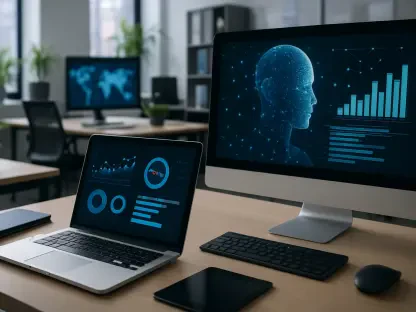
I foresee a complete departure from the static, textbook-based model. In the next decade, “live” financial education will become the standard, not the exception. The classroom will be a dynamic hub connected to real-world financial data, where learning is synonymous with doing. We will see the widespread adoption of AI-driven platforms that personalize learning paths and simulations based on a student’s goals and the current economic climate. The focus will shift from memorizing definitions to developing critical thinking and decision-making skills under realistic conditions. Ultimately, financial education will be viewed not as a single, isolated course, but as an essential, integrated skill set for modern citizenship, empowering a new generation to build wealth and security with confidence and clarity.