
The final weeks of 2025 closed a chapter on American higher education defined not by academic celebration but by an alarming drumbeat of presidential resignations, retirements, and abrupt leadership overhauls. A wave of high-profile transitions swept across institutions of all types, from public flagships to private liberal arts colleges, revealing a sector grappling with systemic instability at its highest levels. This exodus underscored a critical truth: the health of a university, its capacity for long-term planning, and its very academic integrity are deeply intertwined with the stability of its leadership. The convergence of immense financial, political, and internal pressures now raises a fundamental question about whether the role of a university president has become an increasingly untenable, if not impossible, job.
The Unprecedented Exodus: Setting the Stage for a Leadership Crisis in Academia
The sheer volume and often contentious nature of the leadership changes that marked the end of the year signaled more than just routine turnover. Sudden departures, mid-year appointments, and transitions born from crisis became the dominant narrative. This pattern suggests that the challenges facing university leaders are no longer isolated incidents but symptoms of a deeper, sector-wide malaise. Stable leadership is the bedrock upon which strategic vision is built, faculty and student trust is maintained, and institutional identity is preserved. When that bedrock fractures, it jeopardizes everything from enrollment and fundraising to the core educational mission.
This analysis delves into the powerful forces compelling this leadership churn. By examining the recent events at institutions like the University of Virginia, Clemson, Wilkes, and others, a clear picture emerges of a presidency besieged on all fronts. From crushing financial realities that force leaders into the role of corporate turnaround artists to escalating political battles that erode institutional autonomy, the modern university president must navigate a gauntlet of conflicting demands. Compounded by internal dissent from faculty, students, and even the governing boards meant to provide support, the position is being reshaped into one of crisis management rather than academic stewardship.
Navigating the Gauntlet: The Forces Fracturing University Leadership
When the Balance Sheet Dictates the Tenure: The Crushing Weight of Financial Imperatives
The modern university presidency has become inextricably linked to the role of chief financial officer, a shift driven by relentless budgetary pressures that now frequently dictate a leader’s success and longevity. Presidents are increasingly evaluated not just on academic excellence or student outcomes, but on their ability to close multimillion-dollar deficits, manage declining revenue streams, and make painful cuts. This financial imperative often forces leaders into a reactive posture, where strategic vision takes a backseat to the immediate need for fiscal survival.
This trend was starkly illustrated in late 2025. At Wilkes University, the president’s retirement announcement came just after the university managed to close a staggering $7 million budget gap, a crisis that had prompted student protests and exposed what insiders called a “failure in leadership.” Similarly, Clemson University’s president departed abruptly amid the implementation of severe austerity measures, including a $63 million budget cut and a freeze on all non-essential spending. At Valparaiso University, a new president was brought in to steer an institution with “shaky” finances, a speculative-grade bond rating, and a recent history of eliminating over two dozen academic programs to stay afloat. These cases demonstrate a direct causal link between financial crisis and leadership turnover.
This dynamic creates a profound and often irreconcilable conflict between the academic mission of a university and the brutal economic decisions required to sustain it. A president tasked with eliminating faculty positions and shuttering academic departments, as seen at Valparaiso, is simultaneously expected to foster a vibrant intellectual community. This inherent tension pits the leader against the very constituents they are meant to serve, making it nearly impossible to build the consensus and morale necessary for long-term institutional health.
Caught in the Political Crossfire: Statehouses, Federal Scrutiny, and the Erosion of Autonomy
Beyond the balance sheet, external political interference has emerged as a formidable force destabilizing university leadership and constraining presidential authority. Public university presidents, in particular, find themselves navigating an increasingly polarized landscape where decisions are scrutinized through a political lens by state legislators and federal agencies. This pressure forces leaders to weigh their actions not only against the interests of their campus but also against the potential for political retribution, from budget cuts to public condemnation.
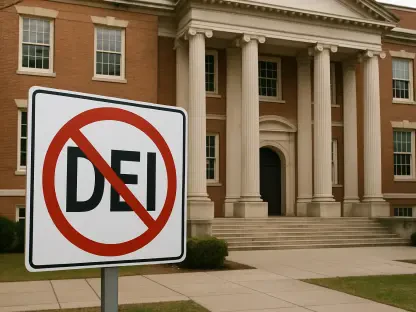
The events at the University of Virginia and Clemson University offer clear examples of this encroachment. At UVA, the governing board’s appointment of a new president directly defied a public request from the incoming governor, setting the stage for a potentially adversarial relationship with the new state administration. Clemson, meanwhile, faced pressure from the Trump administration that culminated in the elimination of its advisory commissions for underrepresented groups. These situations place presidents in a no-win scenario: either they bend to political will and risk alienating their campus communities, or they resist and risk endangering their institution’s funding and autonomy.
This dynamic fundamentally alters the nature of the presidency, shifting the role from an academic leader to a political operator. When presidents must spend a significant portion of their time managing relationships with statehouses or responding to federal investigations, as leaders at the University of Delaware and UVA have been forced to do, their focus is inevitably diverted from the core mission of education and research. This not only exhausts leaders but also erodes the public’s trust in higher education as an independent institution dedicated to the pursuit of knowledge.
A House Divided: The Breakdown of Trust Between Leaders, Faculty, and Governing Boards
Compounding the external pressures is a growing trend of internal dissent and governance failures that can turn a university against its own leadership. The traditional model of shared governance is fraying as faculty, students, and staff increasingly feel disconnected from the decision-making processes, leading to open conflict. This internal fracturing creates a volatile environment where a president’s every move is met with suspicion, making it exceptionally difficult to implement any meaningful strategic initiatives.
The demand for greater transparency and accountability from leadership was a powerful undercurrent in several recent transitions. At the University of Virginia, the faculty senate and student council passed formal votes of no confidence in the governing board over its handling of the previous president’s departure and the subsequent search. At Wilkes University, student protests erupted in response to the administration’s lack of transparency regarding a severe financial crisis. These actions are not isolated incidents but reflect a broader sentiment that university communities are demanding a greater voice in their institution’s future.
Paradoxically, the governing boards responsible for appointing and supporting presidents can often become a source of instability themselves. By making controversial decisions without adequate community input, as seen at UVA, boards can inflame tensions and undermine the very leader they have chosen. This breakdown of trust between the board, the president, and the campus community creates a dysfunctional governance structure where the president is left without the unified support needed to lead effectively, transforming the role into an isolated and precarious position.
The Rise of the Interim Savior: Is Stability Now Valued Over Vision?
In the face of such widespread volatility, a notable trend has emerged: the appointment of long-term interim presidents, often promoted from within an institution’s existing ranks. This strategy appears to be a direct response to the abrupt, crisis-driven departures that have become more common. Rather than launching a national search for a “visionary” outsider, boards are increasingly opting for the perceived safety and stability of an insider who already understands the institution’s culture and immediate challenges.
This shift is evident in the contrast between planned and reactive transitions. Mercyhurst University, for instance, executed a planned retirement, appointing a former administrator as an interim leader for a two-year term to ensure a smooth and thorough search for a permanent successor. In stark contrast, the appointments at Clemson and the University of Delaware were reactive. Both institutions elevated their provosts to the top job—one of whom was already planning to retire—in the immediate aftermath of a sudden departure. These moves prioritize immediate damage control and operational continuity over a bold new direction.
This growing reliance on the interim leader raises questions about the future of university leadership. It suggests that governing boards may be becoming more risk-averse, valuing stability over the transformative, and sometimes disruptive, vision that an external candidate might bring. While an internal appointee can certainly steady a sinking ship, this trend could signal a broader retreat from the ambitious, long-term strategic planning that has historically defined American higher education, favoring caretaker leadership in an era of perpetual crisis.
Redefining the Presidency: A Blueprint for Sustainable Academic Leadership
The cumulative evidence from the end of 2025 makes it clear that the traditional model of the university presidency is no longer sustainable. The role has morphed from that of a singular academic leader into a confluence of immense and often contradictory pressures. A president is expected to be a master fundraiser, a savvy CFO, a deft political operative, a beloved campus figure, and a bold academic visionary all at once. This “hero” model of leadership places an impossible burden on one individual and sets them up for failure.
A more sustainable path forward requires a strategic shift toward a distributed leadership model. Instead of concentrating all executive authority and public pressure on the president, institutions must empower a broader leadership team. Provosts, chief financial officers, and other key administrators should be given greater autonomy and visibility, allowing them to share the immense burden of managing the institution’s complex academic, financial, and operational arms. This approach not only leverages diverse expertise but also builds a more resilient leadership structure that is not dependent on a single individual.
Governing boards have a critical role to play in fostering this new model. They must begin by setting realistic, clearly defined expectations for a new president, acknowledging the immense challenges of the current landscape. Fostering a culture of radical transparency with the campus community is essential to rebuilding trust and mitigating internal dissent. Finally, boards must act as a crucial buffer, working proactively to insulate the presidency from undue political influence and partisan battles, thereby allowing the institution’s leader to focus on the core mission of advancing education and knowledge.
The Future of the University Rests on an Answer
The events that closed out 2025 were not an anomaly; they were a verdict. The convergence of crippling financial strain, the weaponization of higher education for political ends, and the deep fracturing of internal trust had pushed the American university presidency to a breaking point. The role, as traditionally conceived, was becoming functionally impossible to perform successfully over the long term. This reality poses a grave danger to the future of American higher education, an institution vital to the nation’s economic and social progress. If its most critical leadership position continues to be perceived as unsustainable, the pool of qualified and willing candidates will inevitably shrink, leaving universities vulnerable to instability and decline.
The ultimate responsibility for reversing this trend fell to the trustees and governing boards of these essential institutions. Before embarking on the next search for a charismatic leader to solve all their problems, they first had to ask a more fundamental question: had they created a job that was possible to succeed in? Answering that question honestly was the first and most critical step toward building a more sustainable future for academic leadership.