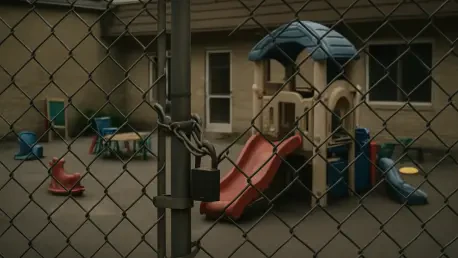

A dire financial situation is threatening to shutter essential before- and after-school child care programs for working families in Ohio County, as officials from Youth Services System Inc. (YSS) have sounded the alarm over an unsustainable funding model that has plunged their operations into a full-blown crisis. The organization, which provides critical support for students at several local elementary schools, has informed the Ohio County Board of Education that a recent, drastic change in state policy has decimated its revenue stream, leaving the future of these vital services in serious jeopardy. This abrupt shift has moved beyond a period of manageable financial strain, creating an immediate and severe shortfall that has already exhausted the program’s funding for the current school year. The potential closure represents a significant blow to the community, particularly to lower-income families who depend on this reliable care to maintain their employment and ensure their children are in a safe, supervised environment outside of school hours.
The Mechanics of a Financial Collapse
A Shift from Stability to Uncertainty
The previous funding structure, which had long supported the YSS child care programs, was built on a foundation of predictability and stability. Under the former state subsidy system, reimbursement was calculated based on the total number of students enrolled in a program. This enrollment-based model was critical for operational planning, as it guaranteed a consistent revenue stream that allowed YSS to reserve a spot for each child, irrespective of their daily attendance. For working parents with fluctuating schedules, this meant that a place for their child was always secure. This financial consistency enabled YSS to adequately budget for staffing, supplies, and facility costs, ensuring that high-quality care was always available at Bethlehem, Elm Grove, and Middle Creek elementary schools. It was a system that acknowledged the logistical realities of child care, where capacity must be maintained even if a child is absent, providing the financial backbone necessary to keep the programs running effectively and affordably for the families they served.
In a stark departure from this established practice, the West Virginia Department of Health implemented a new and profoundly disruptive policy that took effect on September 1. This mandate completely overhauled the reimbursement process, shifting from a stable enrollment-based model to a far more volatile system based strictly on a child’s daily attendance. Under these new regulations, YSS can no longer bill for the reserved spot but must instead document and invoice for a child’s physical presence in two-hour increments. YSS supervisor Sarah Gamble illustrated the devastating impact of this change, explaining that many enrolled children do not attend every single day. For instance, in a month with 22 billable days, a child might only attend for two of them due to illness or other family circumstances. While the old system allowed YSS to bill for all 22 days for which the spot was held, the new rules permit billing only for the two days the child was actually present, creating a massive and unpredictable revenue gap.
The Alarming Financial Ramifications
The real-world financial consequences of this policy shift were immediate and severe, pushing the organization past a tipping point. Gamble presented a concrete and staggering example from the month of September, which laid bare the extent of the crisis. Under the prior enrollment-based model, YSS would have received $7,377 in state subsidies for the services provided. However, under the new attendance-based rules, the organization was only able to bill for $1,091—a catastrophic reduction of over 85% in a single month. This drastic loss of income prompted YSS CFO Chris Sengewalt to deliver a blunt and sobering assessment to the school board, stating, “We’re no longer under a financial strain. We have a financial crisis.” The situation is so dire that the funding allocated for the entire school year has already been depleted, leaving the programs in an untenable position and forcing YSS to confront the imminent possibility of shutting down services that are a lifeline for many local families.
This funding crisis extends far beyond balance sheets, directly impacting the lives of dozens of children and their families who rely on the stability of these programs. The before- and after-school care at Bethlehem, Elm Grove, and Middle Creek elementary schools currently serves 49 enrolled students, with an additional 16 children on a waitlist, a clear indicator of the high demand and essential nature of the services provided. Critically, Gamble noted that 52% of the children in these YSS programs are eligible for the state subsidies that are now in jeopardy. This statistic highlights the program’s vital role as a social safety net, providing affordable and accessible care that enables parents, particularly those in lower-income brackets, to work or attend school. The potential closure of these programs would create a significant void in the community, forcing parents to scramble for alternative care, potentially compromise their employment, and disrupt the daily routines and support systems that are crucial for their children’s well-being.
Seeking Solutions Amidst Uncertainty
A Plea for Partnership and a Path Forward
In their urgent address to the Ohio County Board of Education, YSS officials did not merely present a problem; they came forward with a potential framework for a solution, pleading for a collaborative partnership to save the endangered programs. Gamble proposed a model based on a successful arrangement YSS currently has with Marshall County Schools. This approach involves the school district providing “scholarship funding” to help bridge the financial gap created by the new state policy. Under such a system, YSS would submit a monthly invoice to the school board to cover the operational deficit, which would stabilize the programs’ finances and, crucially, allow parent rates to remain low and affordable. This proposal demonstrates a proactive effort to find a sustainable, localized solution that bypasses the volatility of the new state-level reimbursement system. By seeking a direct partnership with the school district, YSS is aiming to build a more resilient funding structure that ensures these essential services can continue to support the community’s working families.
Recognizing the severity of the financial shortfall, YSS also presented a contingency plan to the board, showcasing a willingness to adapt while still providing maximum benefit to the community. Gamble suggested that if sustaining the full scope of both before- and after-school programs proves impossible, prioritizing the before-school care would be the most impactful option. This pragmatic approach would still offer a critical service, especially by supporting families on days with two-hour school delays, which often pose significant logistical challenges for working parents. The Ohio County Board of Education members responded to the presentation with palpable shock and concern. Taking immediate action, Superintendent Kim Miller proposed the formation of a dedicated task force. This group, which would include personnel from both YSS and the school district, was charged with investigating how other counties are navigating child care funding challenges and identifying viable solutions that could be implemented locally, signaling a commitment to a thorough and collaborative problem-solving process.
A Commitment to Collaborative Action
The Ohio County Board of Education did not table the urgent matter but instead took decisive action in response to the grim forecast presented by Youth Services System Inc. Board members voiced their deep concern over the potential loss of such critical community services and formally agreed to place the issue on the agenda for their next meeting, scheduled for January 12. The proposal from Superintendent Kim Miller to establish a joint task force was embraced as a constructive and immediate step forward. This initiative was designed to pool resources and expertise from both the school district and YSS to conduct vital research into the strategies and funding models that other counties have successfully employed. This collaborative effort underscored a shared commitment to finding a sustainable path that would prevent the closure of the programs and ensure that the working families of Ohio County continued to have access to the reliable child care they depended upon.