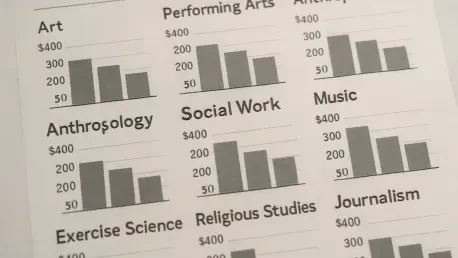

The landscape of public higher education in Indiana is undergoing a radical transformation following Governor Mike Braun’s decision to sign a mandate that forces institutions to eliminate academic programs with poor financial returns. This legislative move, finalized in March 2026, marks a decisive departure from the long-standing tradition of offering a broad spectrum of academic disciplines regardless of their immediate market value. By prioritizing economic viability, the state is signaling a shift toward a model where the primary purpose of a degree is to ensure a significant salary increase for the graduate. Starting in July 2026, every public college and university in the state will be required to scrutinize its catalog and identify programs that fail to meet strict income-based benchmarks. This policy is the latest in a series of efforts by state leaders to align higher education more closely with the specific needs of the local workforce and the broader economic goals of the region.
Economic Benchmarks: Defining the Value of a Degree
The survival of academic departments across Indiana now hinges on a specific set of financial metrics designed to compare the earnings of graduates against those with lesser educational credentials. For undergraduate programs, the legislation establishes a “low earning” threshold that is met if the median income of graduates, measured four years after they complete their studies, does not exceed the median wages of high school graduates in a comparable demographic. This creates a high-stakes environment where degrees in the arts, social sciences, or education must demonstrate a clear and immediate financial advantage over entering the workforce directly after high school. Proponents of this measure argue that it protects students from accumulating significant debt for degrees that do not offer a sufficient return on investment, thereby ensuring that the public funds allocated to these institutions are being used to foster upward mobility and economic stability.
Graduate programs face an even more rigorous evaluation process under the new law, as their alumni are expected to earn significantly more than individuals who only hold a bachelor’s degree in the same field. This tiered system of accountability is intended to address concerns regarding “degree inflation,” where students pursue advanced education without a corresponding increase in their lifetime earning potential. By anchoring the existence of these programs to four-year post-graduation income markers, the state has effectively mandated that every advanced degree must provide a demonstrable and immediate “earnings premium.” This approach forces university administrators to become more entrepreneurial, potentially leading to the restructuring of curricula to focus on high-demand skills that are currently valued by employers in the private sector. The focus is no longer just on the acquisition of knowledge, but on the measurable economic output of that knowledge.
Political Oversight: The Role of the Higher Education Commission
While the financial benchmarks provide a quantitative basis for program elimination, the legislation includes a mechanism for institutions to seek exceptions through a formal waiver process. However, this process is managed by the Indiana Higher Education Commission, a 14-member body whose members are all directly appointed by the governor. This administrative structure has drawn intense scrutiny from academic leaders who fear that the executive branch now wields unprecedented influence over university curricula. If a college believes a “low earning” program is essential to its mission or the state’s cultural heritage, it must convince this politically appointed body to grant a reprieve. This setup places the burden of proof squarely on the educational institutions, requiring them to justify the existence of any program that does not meet the state’s narrow definition of economic success through a rigorous and potentially partisan review.
The introduction of this waiver system adds a significant layer of political and administrative oversight to the management of public universities, which traditionally enjoyed a high degree of autonomy. Critics point out that the commission will now serve as the final arbiter of which programs are deemed “essential” enough to warrant an exception, potentially leading to the preservation of programs that align with the current administration’s priorities while others are left to wither. This shift in power dynamics could influence how universities plan for the future, as they may prioritize the development of new programs that are more likely to receive favorable reviews from the commission. Furthermore, the lack of independent or faculty-led oversight in the waiver process raises questions about the long-term protection of academic freedom and the ability of institutions to offer diverse perspectives that may not have immediate commercial applications.
Institutional Impact: Navigating a Dual-Threat Environment
The scale of the potential cuts is substantial, with preliminary analyses suggesting that major institutions like Indiana University, Ball State University, and the University of Southern Indiana will need to make difficult choices regarding their current offerings. This legislation does not exist in a vacuum; it follows a separate law from 2025 that targeted programs with low enrollment numbers, a move that already resulted in the cutting or merging of over 400 degrees across the state. Now, universities must navigate a dual-threat environment where a program must not only attract a sufficient number of students but also ensure those students enter high-paying career paths immediately after graduation. This compounding pressure is particularly acute for regional campuses and community colleges, such as Ivy Tech, which often serve diverse populations and offer specialized vocational training that may not always lead to high starting salaries.
As these institutions begin the process of auditing their catalogs to comply with the July deadline, there is a growing concern about the narrowing of the intellectual landscape within the state. Specialized or niche academic departments that provide unique research opportunities or fulfill specific regional needs are at the highest risk of being dismantled. For example, a department that focuses on local history or specialized environmental studies might be highly valued by the community but fail the state’s income tests. The necessity of maintaining high student interest while simultaneously ensuring high-wage outcomes creates a paradoxical challenge for administrators who must balance institutional identity with state mandates. This environment may lead to a homogenization of higher education in Indiana, where universities compete to offer the same lucrative programs in business, technology, and engineering at the expense of variety.
Professional Concerns: The Risk to Public Service Roles
The reliance on a simple salary-based metric has sparked widespread concern among faculty and students who argue that the law ignores the intrinsic value of public service and the essential roles that many low-earning graduates fill. A frequently cited example involves programs in parks, recreation, and natural resources, which prepare students for vital positions within the Indiana Department of Natural Resources. While these roles are critical for the state’s infrastructure and environmental health, the state-set wages for these positions are often notoriously low. Consequently, a program could be eliminated precisely because the state itself does not pay these essential workers a high enough wage to meet the new legislative benchmarks. This creates a circular logic where the state’s own hiring practices could lead to the destruction of the very pipelines that provide its professional workforce.
Furthermore, students in fields like anthropology and other social sciences have expressed fear that their career paths are being unfairly characterized as low-value because their earnings often take longer to peak. Unlike careers in software engineering or finance, where starting salaries are high, many humanities and social science graduates spend their first few years in entry-level roles or internships that provide foundational experience before they transition into higher-paying leadership positions. By evaluating a program’s worth just four years after graduation, the state may be cutting off disciplines that produce well-rounded, critical thinkers who eventually contribute significantly to the economy in non-linear ways. The fear is that this policy will disincentivize students from pursuing careers in social work, early childhood education, and cultural preservation, leading to a shortage of professionals in fields that are vital for a healthy society.
Legislative Process: Transparency and the Omnibus Bill
The manner in which this mandate was passed has also become a point of contention among lawmakers and public policy advocates who value transparency in the legislative process. Reports indicate that the “low earning” clause was added to a massive omnibus higher education bill that covered a wide range of topics, including university accreditation and administrative procedures. Because the bill was so large and complex, some state legislators admitted they were unaware the specific language regarding program cuts was even included until the voting process was nearly complete. Much of the public and legislative debate during the session was focused on a high-profile proposal to require parental consent for teenagers to use social media, which acted as a distraction while the significant changes to college degree requirements moved through the statehouse with relatively little scrutiny or public testimony.
This perceived lack of transparency has led to accusations that the state pushed through major educational reforms without a full and open debate on the long-term consequences for the Indiana workforce. Critics argue that such a fundamental shift in how the state values education deserved its own dedicated legislative hearing where experts, students, and university presidents could voice their concerns. Instead, the provision was woven into a broader legislative package, making it difficult for opponents to challenge it without jeopardizing other necessary updates to the state’s education laws. This strategy has left many in the academic community feeling sidelined, as the new requirements were presented as a fait accompli rather than the result of a collaborative dialogue between the government and the institutions it oversees. The fallout from this process continues to fuel debates about the proper role of the legislature in managing the internal affairs of public universities.
Future Strategies: Adapting to a Market-Driven Model
The academic community responded to these new mandates by initiating comprehensive internal reviews to identify which departments were most at risk of falling below the earnings floor. Administrators focused on creating stronger pipelines between their liberal arts programs and the corporate sector, attempting to demonstrate how skills like critical thinking and qualitative analysis could translate into high-paying management roles. Many universities also sought to bundle traditional degrees with technical certifications to boost the immediate employability and starting salaries of their graduates. These strategic pivots represented a proactive effort to preserve the diversity of their academic offerings while satisfying the state’s new demand for measurable financial returns. By integrating market-driven elements into traditional curricula, institutions hoped to protect their specialized departments from being permanently dismantled under the new law.
Faculty members and career services departments collaborated more closely than ever before to track alumni success and provide more robust data to the Higher Education Commission during the waiver application process. They emphasized the long-term career trajectories of their graduates, arguing that a four-year window was an insufficient metric for assessing the true value of an education. Meanwhile, state leaders remained firm in their stance that these changes were necessary to ensure the state’s competitive edge and to protect students from low-value debt. The transition toward a market-centered education system forced a broader conversation about the state’s responsibility to fund programs that serve the public good but do not generate high individual wealth. This ongoing tension continues to shape the strategic decisions of university boards as they look toward a future defined by rigorous economic accountability.