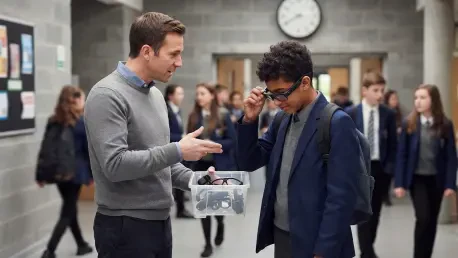

School principals face a period of significant uncertainty as they await department guidance on how to weigh medical exemptions for integrated hearing technology. This follows the signing of Ministerial Order No. 1515, which establishes a framework for managing smart glasses in all Victorian schools. Beginning January 28, 2027, students across government and independent sectors must ensure these devices are powered off and stored during school hours. The mandate represents an extension of the phone rule, aiming to mitigate distractions and privacy risks before wearable hardware becomes standard. While the government emphasizes consistency, the broad reach of the order suggests a shift in how educational spaces accommodate personal electronics. Principals now grapple with the logistics of enforcing a policy that treats eyewear with the same scrutiny as mobile handsets. This move underscores a commitment to maintaining a focused learning environment amidst technological change.
Expanding the Definition: What Counts as Smart?
The scope of the new regulation hinges on a broad definition of what constitutes a smart device. According to the legal text, smart glasses include any wearable eyewear designed as spectacles that possesses the capability to process, store, or transmit digital information. This specific wording is critical because it moves the focus away from recording capabilities and toward the internal computing power of the frames. Unlike laws in other jurisdictions that primarily target cameras, the Victorian mandate encompasses audio-only devices and minimalist heads-up displays used for digital assistance. By targeting the processing of information rather than just its collection, the government created a restrictive standard that captures almost every form of advanced wearable technology. This comprehensive approach ensures that the policy remains effective as technology evolves, but it also creates a complex enforcement landscape. The inclusive language means even basic frames are now legally equivalent to a smartphone.
Comparing Hardware: Audio versus Video Capabilities
Building on this technological foundation, the policy clarifies that the lack of a camera does not grant a device an exemption from storage. High-end audio frames that look identical to traditional sunglasses are subject to the same strict protocols as those with high-definition video capabilities. This decision highlights a concern regarding the subtle ways students might access data or receive notifications during assessments. By removing the distinction between functional tiers, the order simplifies the rules for teachers who may not be able to identify specific hardware at a glance. However, this lack of nuance means that relatively harmless assistive tools are treated with the same severity as recording equipment. This shift toward a computation-based prohibition sets a significant precedent for how other educational authorities define wearable tech in the future. It forces a realization that any device with an integrated circuit board may soon face similar restrictions in public environments.
Practical Challenges: The Burden on Prescription Users
Treating smart glasses as equivalent to phones introduces profound challenges for students who utilize them for vision correction. Unlike a smartphone, which serves as a secondary tool, smart glasses often house prescription lenses that are essential for a student’s basic navigation and learning. Clause 8 of the Ministerial Order requires these devices to be powered down and placed in secure storage, preventing a student from wearing them even if the digital features are disabled. This all-or-nothing approach means that a student with integrated smart frames cannot simply use them as standard eyewear during school hours. Consequently, families are now faced with the necessity of maintaining two separate pairs of glasses: one for the digital world and a traditional pair specifically for the classroom. This requirement places a logistical burden on households that have already invested in multifunctional frames. It creates a situation where a medical necessity is sidelined by the device’s secondary features.
Financial Equity: Accessibility and Hidden Costs
Beyond the logistical inconvenience, the storage-only requirement raises questions about financial equity and accessibility. For many families, the cost of prescription lenses is already a major expenditure, and the added pressure of purchasing a second pair to comply with school rules may prove prohibitive. Earlier discussions in mid-2026 suggested that items like smartwatches might be allowed if set to a silent mode, but the final version of Order No. 1515 does not extend this leniency to eyewear. This elevation of smart glasses to the status of a banned device suggests that the government prioritizes the removal of distractions over the convenience of multi-use hardware. As schools move toward a more rigid enforcement phase in early 2027, the financial divide between students who can afford multiple sets of eyewear and those who cannot may become more pronounced. This necessitates the development of support programs to assist families in transitioning to the new standards.
Community Impact: Zero-Tolerance Zones for Adults
In government schools, the new policy transforms the campus into a restricted zone that remains active twenty-four hours a day. This zero-tolerance approach extends the smart-glass prohibition to all adults, including staff members, parents, and contractors who enter school grounds for any reason. Whether attending a Saturday sports meet or a weekday parent-teacher interview, visitors must comply with the same standards as the student body. The regulation even applies to community groups that lease facilities during the holidays, placing the responsibility of enforcement on external organizers. By turning public school assets into smart-glass-free environments, the government is making a statement about the sanctity of these spaces. This broad application ensures that the privacy of students is protected from accidental recording by any individual present on the property. It marks a departure from traditional school hours, establishing a permanent boundary against wearable digital technology.
Enforcement Realities: Interaction and Reporting Protocols
The practical enforcement of this adult ban introduces social complexity for school administrators and gatekeeping staff. Educators are now tasked with monitoring not just their students, but also parents and guests during high-traffic events such as graduation ceremonies. If a visitor is spotted wearing smart glasses, staff are empowered to ask the individual to remove the device or leave the premises. Any suspicion of unauthorized recording requires the school to initiate a formal report to the department’s incident center, adding an administrative layer to daily operations. This shift fundamentally alters the interaction between schools and their communities, as the focus on digital security takes precedence over guest protocols. Schools must invest time in communicating these expectations clearly to prevent misunderstandings at the gate. By doing so, they ensure that every visitor is aware of the hardware limits. The role of the teacher now includes being a frontline enforcer of technological privacy in the community.
Strategic Policy Evolution: Actionable Outcomes
The implementation of Ministerial Order No. 1515 signaled a major shift in educational policy as leaders moved to standardize the management of wearable technology. Authorities recognized that the blurring lines between medical devices and digital tools required a definitive legal response to protect the privacy of classrooms. Educators who successfully navigated this transition focused on early communication, providing families with clear timelines and technical definitions well before the 2027 deadline. Schools that established technology-free zones for parents and guests during weekend events found that clear signage and digital literacy workshops helped reduce friction at the gates. The process demonstrated the importance of aligning school policies with emerging consumer trends, ensuring that the legal framework kept pace with the hardware available to the public. Finalized guidelines offered a structured path for principals to approve integrated assistive technology when no reasonable alternative existed, ensuring the core mission of learning continued.