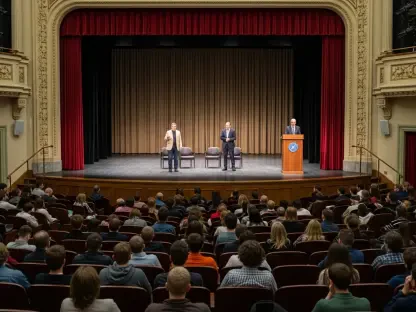

The sandstone walls of the University of Wyoming’s historic buildings currently stand as a silent witness to a friction that is increasingly common in American higher education: the collision between academic tradition and legislative fiscal control. While the university celebrates a rare streak of climbing enrollment numbers that defy national downward trends, the institution simultaneously faces a rigid state mandate to contract its academic footprint. This confounding paradox places the administration in a delicate position, forced to reconcile a growing student body with a legislative order to trim “low-performing” programs and administrative layers. The core of the debate centers on whether these mandates will truly streamline the university for a modern era or inadvertently dismantle the comprehensive character that makes it Wyoming’s sole four-year public institution.
Can a Flourishing University Survive a Legislative Tightening?
The current atmosphere in Laramie is defined by a strange duality where success in the classroom is met with skepticism in the state capital. Lawmakers have demanded an exhaustive review of the university’s portfolio, signaling a departure from the days of hands-off funding toward a more interventionist approach. As the university navigates this scrutiny, the tension between maintaining a broad-based educational mission and satisfying fiscal hawks has become the defining challenge for leadership.
Critics of the mandates argue that cutting programs based solely on immediate metrics risks devaluing the university’s long-term role as a cultural and intellectual hub. However, proponents of the legislative tightening insist that a public institution must remain lean and responsive to the economic realities of the state. This pressure has forced a fundamental reevaluation of what it means to be a “flourishing” university in a state where the political landscape is shifting rapidly toward utility and accountability.
The High Stakes of State-Funded Higher Education
The University of Wyoming’s heavy reliance on state appropriations, which reached $262 million for the 2025 fiscal year, makes it uniquely vulnerable to the whims of the legislature. In a state with only one major university, the institution acts as a significant state asset, which naturally draws intense political interest whenever budget cycles occur. As operational costs continue to outpace traditional revenue streams despite the growing student population, the state has moved from providing passive support to asserting active management over the university’s internal affairs.
This shift mirrors a broader national trend where state governments are increasingly asserting control over public university curricula and staffing. When the state provides such a massive portion of the operating budget, lawmakers often feel a heightened sense of ownership, leading to directives that go beyond financial oversight and into the realm of academic governance. This dynamic creates a high-stakes environment where the university must constantly prove its value to a legislative body that may have different priorities than the faculty or administration.
Auditing Academics and Staffing for Maximum Efficiency
The legislative directive requires a top-to-bottom restructuring plan, with a focus on identifying degree programs for potential elimination based strictly on enrollment figures and graduation rates. This move toward a utilitarian model marks a significant departure from traditional academic evaluations, which often weigh the intrinsic value of a subject alongside its cost. By prioritizing immediate workforce outcomes, the state is effectively nudging the university away from a broad liberal arts foundation and toward a more vocational, market-driven approach to higher learning.
Beyond the classroom, the mandate forces an intense scrutiny of the workforce to identify and eliminate redundant administrative roles. This process also includes continued pressure to restrict diversity, equity, and inclusion initiatives, which have become a flashpoint for political disagreement. As the university identifies efficiencies, the challenge remains to cut enough to satisfy the legislature without hollowing out the essential services that support a growing and diverse student body.
Ideological Tensions and the Battle for Wyoming’s Values
The fiscal pressure currently exerted on the university is inseparable from the ideological rift between the administration and archconservative lawmakers, particularly the Freedom Caucus. While early proposals suggested drastic cuts of over $60 million, the eventual compromise resulted in more surgical requirements, such as a $5 million immediate savings goal and the threat of withheld funds. This political maneuvering suggests that the budget is being used not just as a financial tool, but as a lever to force a “cultural alignment” with what some lawmakers define as traditional Wyoming values.
Governor Mark Gordon’s intervention to veto certain funding restrictions provided the university with some breathing room, yet the underlying requirement for reform remains a central pillar of the restructuring mandate. The debate over values often pits the university’s mission of open inquiry and modern academic standards against a more localized vision of education. Navigating this divide requires a sophisticated balancing act that addresses legislative concerns without compromising the academic integrity that attracts students to the campus in the first place.
Strategies for Balancing Growth with Fiscal Accountability
To navigate this transition successfully, the university implemented a transparent framework for its mandated reviews that relied on data-driven benchmarks. This process involved establishing internal metrics for program success that accounted for more than just simple headcounts, ensuring that the unique contributions of niche programs were documented. By proactively identifying efficiencies in administrative overhead and leaning into high-growth areas like minerals initiatives and athletics, the university demonstrated its commitment to the state’s economic priorities while protecting its core educational mission.
The administration also made significant strides in including faculty and student voices in the reorganization process, which helped maintain morale during the period of uncertainty. This collaborative approach allowed the university to fulfill its fiscal obligations to the state without sacrificing the institutional integrity that defined its history. Ultimately, the university evolved into a more resilient institution that managed to balance the demands of fiscal accountability with the necessity of providing a robust, diverse education for the next generation of Wyoming leaders.