
The way a school system approaches the professional growth of its educators serves as a direct and undeniable reflection of the value it places on them, yet a profound disconnect persists between the engaging, student-centered learning demanded for children and the passive, one-size-fits-all development so often provided to their teachers. This chasm is not merely an issue of ineffective training; it is a systemic problem that fosters cynicism, wastes invaluable resources, and undermines the very expertise it claims to support. A fundamental shift is necessary, moving away from compliance-driven mandates and toward authentic professional learning that honors the intelligence, experience, and humanity of educators. This transformation is critical because investing in teachers is the most direct and impactful investment in the success of students. The current model sends a clear, if unspoken, message that the professional growth of those closest to students is disposable, a reality that must be confronted and changed.
The Pervasive Flaws in Traditional Training
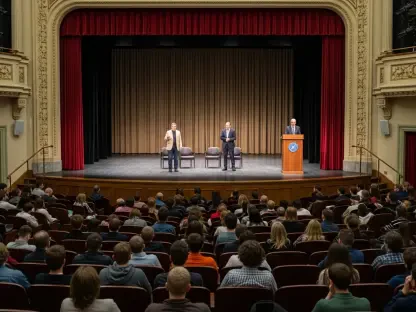
Imagine a mandatory, two-and-a-half-hour session on trauma-informed teaching held in a school cafeteria, where the physical discomfort is matched only by the complete absence of effective pedagogy. The facilitator reads verbatim from a slide deck, offering minimal context and no opportunity for discussion or application, culminating in the hollow declaration, “Now you are all trauma-informed teachers!” This scenario encapsulates the core failings of much of modern professional development, or PD. It is overwhelmingly passive, lecture-heavy, and driven by compliance rather than genuine learning. This approach flagrantly ignores established principles of adult learning, leading to physical restlessness and profound mental disengagement among its participants. The most damaging consequence, however, is the deep-seated cynicism it cultivates. Dedicated educators, who invest significant time after school and on designated professional days, are left with a sense of resignation, feeling their commitment has been squandered on a superficial, check-the-box exercise.
At the heart of this issue lies a glaring and indefensible contradiction between the pedagogical standards set for student instruction and those deemed acceptable for teacher training. If students were subjected to the same undifferentiated, non-interactive, and lecture-based instruction that is common in teacher PD, it would be met with swift condemnation from parents and administrators alike. Educators, particularly those in fields requiring deep engagement, consistently design lessons built on differentiation, real-world relevance, and active participation to meet students where they are. The prevailing model of teacher training, however, fundamentally rejects this philosophy. This double standard poses a critical question: why do educational systems accept for their professional staff what they would never accept for their students? The answer reveals a paradigm where PD is something done to teachers, not a collaborative process created by, for, and with them, thereby undermining the very expertise the system purports to value.
Envisioning Authentic Professional Learning
A more effective and respectful approach is not a hypothetical ideal but a tangible reality in models like the “Edcamp” or “unconference” format, which completely inverts the traditional top-down structure. In this model, teachers themselves build the agenda on the spot, proposing topics and sessions based on their immediate professional needs and curiosities. There are no pre-ordained experts lecturing from a stage; instead, educators move freely between peer-led conversations, sharing practical knowledge, and solving problems collaboratively in small, focused groups. The facilitator’s role shifts from a dispenser of information to a convener of dialogue, often sitting in a circle to engage in real-time exploration and debate. The most significant takeaway from such experiences is not any single piece of content but the palpable energy of engaged, active learning. It demonstrates that meaningful PD requires a foundation of trust—trust in teachers’ intelligence, expertise, and creativity—a stark and welcome contrast to the compliance-based model that dominates the landscape.
Another powerful example of transformative professional learning can be found in immersive programs like the Rhode Island Writing Project, which is built on the foundational principle of “teachers teaching teachers.” This type of summer institute creates a genuine community of practice where educators write together, provide substantive and constructive feedback on each other’s work, and share classroom stories that honor the complex intersection of their personal and professional lives. Such an experience can be so profoundly impactful that it effectively “ruins” participants in the best possible way, making it impossible for them to passively tolerate ineffective, slide-based training thereafter. However, these powerful experiences remain unfortunate outliers. The prevailing reality for the majority of educators is a relentless cycle of disconnected PD that feels more like administrative paperwork than authentic pedagogy. This approach—overly efficient, disconnected from classroom reality, and impersonal—ultimately breeds cynicism and fosters self-preservation tactics among even the most dedicated teachers.
A Systemic Imbalance and a Path Forward
The transition from a classroom teacher to a district administrator often exposes a stark and systemic inequity in the allocation of professional learning resources. In administrative roles, individuals frequently receive high-quality, sustained, and energizing learning opportunities, such as multi-day workshops, intensive coaching institutes, and reflective conferences. These experiences stand in sharp contrast to the one-off, disconnected sessions typically provided to the teachers they oversee. This disparity leads to a troubling and unavoidable conclusion: the higher one’s position in the educational hierarchy, the more robust the development opportunities offered; conversely, the closer one is to students, the less one gets. This structural imbalance is not accidental but reflects deeply ingrained priorities within the system. It creates a mandate for educational leaders to dismantle this hierarchy and design professional learning that genuinely respects the time, expertise, and humanity of classroom teachers, ensuring that those who directly impact students receive the highest quality support.
The principles that defined strong professional learning were never a mystery; they consistently mirrored the tenets of good teaching. Reports, such as those from the Annenberg Institute, affirmed that while systemic supports like instructional coaching and common planning time were valuable, their effectiveness hinged on the quality of the learning experiences they facilitated. The path forward involved a commitment to teacher-led inquiry cycles that addressed real problems of practice, providing educators with choice and voice to ensure relevance. It also required building in adequate time for application and reflection, alongside creating job-embedded opportunities for learning in context. The ultimate finding from this examination was that the way a system teaches its teachers is the most direct and visible measure of their value. Progress depended on the profession modeling the same deep, authentic, and respectful learning for its educators that it demanded for its students, recognizing that this was the most vital investment in student success.