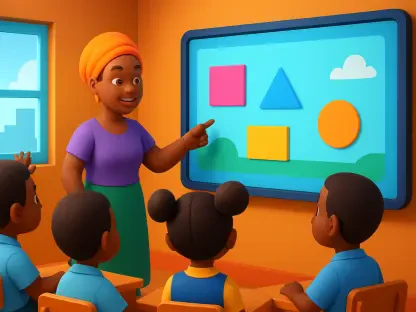

By transforming foundational phonemic recognition into interactive games, teachers ensure that students remain active participants in their own cognitive development. This shift at Mineral Springs Elementary represents a major departure from the traditional classroom model, where the boundary between play and academic rigor was often sharply defined. In Richmond County, educators have successfully dismantled this dichotomy by integrating intentional joy into every facet of the instructional day. This is not a passive environment where children are merely entertained; instead, every academic objective is meticulously reimagined as a hands-on activity or a collaborative game. Teachers recognize that for five-year-old learners, engagement serves as the essential gateway to cognitive retention. By turning lessons into high-energy, interactive experiences, the school ensures that children are not just receiving information but are actively constructing their own understanding of the world. This approach acknowledges the developmental reality that children learn best through movement and tactile interaction, making the classroom a dynamic space where learning feels natural and purposeful.
The integration of physical movement with academic goals allows educators to leverage fine motor development to reinforce cognitive pathways. When students engage with materials like Play-Doh to form letters or use hammers and dice in literacy stations, they are doing more than just playing; they are building the neural connections necessary for reading and writing. This synergy ensures that the rigorous standards of kindergarten literacy are met without sacrificing the developmental needs of the child. By focusing on tactile experiences, teachers at Mineral Springs create a learning environment where the abstract concepts of language become concrete and manageable. This intentionality in design means that every resource in the classroom serves a specific pedagogical purpose, ensuring that the energy of the students is directed toward meaningful academic growth. The result is a classroom culture where students are eager to participate, knowing that their contributions are valued and that their learning journey is filled with discovery and success.
Kinesthetic Literacy: Bridging Movement and Language
The curriculum at Mineral Springs utilizes sophisticated frameworks to turn language acquisition into a physical activity. A primary example is the Heggerty phonemic awareness program, which moves away from traditional lecture-based lessons in favor of highly interactive sessions. Students are encouraged to use their entire bodies to navigate the complexities of rhyme, syllables, and various letter sounds. This “kinesthetic literacy” allows children to physically feel the structure of language, which is particularly effective for young learners who may struggle with abstract phonetic concepts. By clapping out syllables or using hand signals to identify beginning and ending sounds, students gain a deeper, more intuitive understanding of how words are constructed. This method transforms the often-tedious task of sound recognition into a rhythmic and engaging experience that resonates with the natural energy of a five-year-old. The focus remains on making the mechanics of language visible and tangible, providing a solid foundation for more advanced reading skills in the future.
The effectiveness of this movement-based approach is supported by the alignment between pre-K and kindergarten expectations within the district. By introducing phonological awareness concepts early and maintaining a consistent methodology, the school ensures that students enter the primary grades with a robust understanding of verbal structures. Small-group instruction and interactive literacy stations further reinforce these skills, providing a tailored environment where teachers can address the specific needs of each student. This structured yet flexible approach ensures that no child is left behind as they navigate the transition from recognizing sounds to reading full words. The use of data to track progress in these stations allows educators to adjust their strategies in real-time, ensuring that the instruction remains relevant and challenging. As students master the physical aspects of language, they develop the confidence needed to tackle more complex literacy tasks, ultimately leading to higher levels of reading proficiency and academic achievement across the board.
The Power of Discourse: Developing Oral Foundations
Before a child can master the intricacies of reading or writing, they must first become proficient in the nuances of oral language. Educators at Mineral Springs prioritize this development by introducing structured “turn-and-talk” exercises from the very beginning of the school year. These activities are designed to teach children the essential mechanics of human interaction, including active listening, response formulation, and turn-taking. Initially, these conversations may focus on simple topics like favorite toys or food, but the underlying objective is profound. By practicing these skills daily, students learn how to articulate their thoughts clearly and engage in meaningful dialogue with their peers. This emphasis on oral proficiency serves as a critical precursor to reading comprehension, as children who can express complex ideas verbally are better equipped to understand them when they encounter them in text. The classroom becomes a laboratory for communication, where every interaction is an opportunity for linguistic growth.
This focus on oral language is especially vital for multilingual learners who are navigating the challenges of acquiring a new language while simultaneously learning academic content. Teachers provide necessary scaffolds, such as sentence frames and visual aids, to give these students the confidence to participate in classroom discourse. By creating a supportive and inclusive environment, the school accelerates English language acquisition and ensures that all students have a voice in the learning process. The ability to engage in conversation is viewed not just as a social skill, but as a fundamental academic tool that paves the way for written expression. As students become more comfortable sharing their perspectives, they develop a sense of agency and belonging that is essential for long-term success. The commitment to fostering a culture of dialogue ensures that literacy is approached as a social and communicative act, rather than a solitary academic exercise, making the transition to more advanced grades smoother and more effective for every child.
Simulation as Scaffolding: The Role of Dramatic Play
Dramatic play serves as a sophisticated form of cognitive scaffolding at Mineral Springs, where various stations are designed to simulate real-world environments. Stations such as a grocery store, a flower shop, or an auto mechanic clinic are not mere breaks from the curriculum but are intentional spaces for applying academic concepts. In the grocery store station, for example, students must use mathematical skills to exchange money and literacy skills to read labels and signs. They also practice social negotiation and customer service, learning how to navigate complex human interactions in a safe and structured setting. These simulations allow children to see the practical application of what they are learning in their formal lessons, making the curriculum more relevant and engaging. By embedding literacy and numeracy within these playful contexts, educators ensure that students are developing a holistic understanding of how these skills function in the world beyond the classroom.
These play-based experiences are also essential for building the background knowledge necessary for future reading comprehension. When children encounter themes related to medicine, commerce, or mechanics in books later in their education, they possess a lived experience to which they can anchor the text. This “experiential anchor” makes it easier for them to grasp new vocabulary and understand complex narratives. Furthermore, these stations foster executive functioning and social-emotional skills, as students must collaborate, solve problems, and manage their time without constant teacher intervention. The ability to work together toward a common goal—whether it is fixing a toy car or organizing a flower delivery—prepares children for the collaborative nature of the modern world. By treating dramatic play as a serious instructional tool, Mineral Springs is providing its students with a rich tapestry of experiences that support both their cognitive and social development, ensuring they are well-rounded and prepared for the challenges of primary school.
Fostering Agency: Building Independent Learners
A defining trend in the modern kindergarten classroom is the high degree of responsibility and agency afforded to young students. Teachers at Mineral Springs have shifted away from doing tasks for the children, choosing instead to teach them how to manage their own resources and environment. From a very young age, students are trained to independently retrieve and stow away their iPads, binders, and art supplies. They are also taught to master “adult” tools like staplers and hole punches, which fosters a sense of competence and self-reliance. This focus on independence is not just about classroom management; it is a fundamental part of the school’s educational philosophy. When children are empowered to take care of their own needs, they develop a sense of ownership over their learning environment. This autonomy translates into a greater willingness to take risks and explore new ideas, as students feel confident in their ability to navigate the physical and intellectual challenges of the school day.
Student agency is further reinforced through the use of innovative data-tracking tools that allow children to monitor their own academic progress. For instance, the use of “monster data books” enables students to track their achievements in letter recognition and word count. By coloring in their own progress charts, children participate in setting their next academic goals, transforming assessment from an external judgment into a personal achievement. This transparency allows students to explain their own growth during parent-teacher conferences, providing them with a sense of pride and accomplishment. By involving children in the data-tracking process, educators are instilling an early understanding of the value of persistence and goal setting. This approach ensures that students are not just passive recipients of grades but are active managers of their own educational journey. The result is a generation of learners who are self-motivated, organized, and deeply invested in their own success, carrying these vital skills with them as they move through the higher grades.
Data with a Human Face: Modernizing Assessment
In response to the limitations of traditional standardized testing for young children, the district is piloting the Finch early literacy assessment, a tool designed to capture a more nuanced picture of student potential. Unlike traditional metrics that may return a “zero” for students entering from disadvantaged backgrounds, the Finch assessment identifies strengths in areas like rhyme, phonological memory, and object identification. This gamified approach presents the assessment as a visual journey toward a treasure chest, which significantly reduces test anxiety and encourages children to perform at their best. By focusing on what a child can do rather than what they cannot, the district is moving toward a strength-based understanding of early literacy. This shift is crucial for providing teachers with actionable data that can be used to tailor instruction to the specific needs of each child, ensuring that every student receives the support they need to thrive from the very beginning of their academic career.
One of the most innovative features of the Finch platform is its ability to capture audio recordings of the child’s voice during the assessment. This allows teachers to review a student’s verbal attempts later, providing a deeper understanding of their phonological development that a simple score could never convey. Despite the integration of this new technology, the “human element” remains central to the process, as teachers sit with the child during the assessment to provide emotional support and encouragement. This blend of high-tech data collection and high-touch teaching reflects the school’s overall philosophy of nurturing the whole child. The goal is to use technology as a supportive tool that enhances the teacher’s ability to provide individualized instruction, rather than as a replacement for human connection. As the district refines its use of these modern assessment tools, the focus remains on ensuring that every child’s unique path to literacy is recognized, valued, and supported through evidence-based practices and compassionate instruction.
Sustaining Progress: Strategies for Long-term Literacy Success
The implementation of purposeful play in Richmond County established a new standard for early childhood education that balanced academic rigor with developmental sensitivity. Educators moved away from isolated skill drills, choosing instead to create environments where literacy and language were woven into the very fabric of daily interaction. This transition required teachers to evolve from traditional lecturers into sophisticated facilitators who trusted the capabilities of their students. By prioritizing oral communication and student agency, the district successfully bridged the gap between early childhood and primary schooling, ensuring that every child felt capable of navigating complex academic tasks. Moving forward, the success of this model suggested that future literacy frameworks should prioritize strength-based assessments and the integration of background knowledge through experiential learning. Schools must continue to invest in professional development that empowers teachers to utilize technology as a supportive tool rather than a replacement for human connection.
To maintain the momentum of these achievements, schools should focus on creating a seamless continuum of instruction that carries the principles of purposeful play into the higher elementary grades. This involves expanding the use of interactive stations and kinesthetic learning beyond kindergarten, ensuring that the transition to more formal schooling does not stifle the natural curiosity and engagement of young learners. Additionally, the integration of student-led data tracking should be scaled, allowing children to remain the primary narrators of their own academic progress. By fostering a sense of ownership and competence early on, educators prepared students to handle the increasing complexity of later curricula with resilience and confidence. The ultimate takeaway from the Mineral Springs experience was that when rigor is paired with joy, the results are both measurable and transformative. Providing children with a literate, communicative, and confident mind remained the most serious work an educator could undertake, and the strategies developed here offered a clear roadmap for achieving that goal in any educational setting.