
The fundamental trajectory of a child’s cognitive and social development is often determined long before they ever step foot into a formal primary school classroom. In Paraguay, this understanding has transitioned from a theoretical concept into a tangible national priority through the launch of the Comprehensive Early Childhood Care Centre in Capiatá. As the inaugural facility of the “Seeds of the Future” program, this center serves as a blueprint for a nationwide network designed to support children during their most formative years. This initiative represents a departure from traditional childcare models by integrating health, education, and legal protections into a single, accessible location. By addressing the critical developmental window from birth to nearly four years of age, the state is making a long-term investment in human capital that aims to break cycles of poverty and provide every citizen with a fair start in life, regardless of their socio-economic background.
A Strategic Shift Toward Institutionalized Support
The expansion of the “Seeds of the Future” initiative marks a significant evolution in how the Paraguayan government approaches social welfare and public health. This program is not merely a collection of temporary social projects but a permanent state policy intended to endure across various political transitions and administrations. By the end of 2026, the government intends to have 50 such centers fully operational across the country, creating a robust infrastructure for early childhood development. President Santiago Peña and First Lady Leticia Ocampos have emphasized that these facilities are symbols of national potential, designed to challenge historical standards of care that often left the youngest citizens behind. The collaborative effort involves municipal, departmental, and community leaders, ensuring that the centers are deeply rooted in the local social fabric. This institutionalized framework guarantees that the services provided remain consistent, reliable, and adequately funded.
Moving beyond the physical construction of buildings, the program establishes a high technical standard for pediatric care and early education that was previously unavailable to many families. Each center is designed with a specific architecture that promotes safety, stimulation, and comfort for children in different age brackets. This comprehensive approach is intended to provide a universal baseline of quality that elevates the national standard for childcare services. By centralizing these resources, the state reduces the burden on parents who previously had to navigate multiple disconnected agencies to secure health check-ups, vaccinations, and educational support. The strategic rollout across diverse regions ensures that the benefits of this modernization are not confined to the capital city but are distributed to areas where the need for institutional support is greatest. This widespread presence strengthens the social safety net and fosters a sense of national unity through a shared commitment to the well-being of the next generation.
Integrated Services for Holistic Development
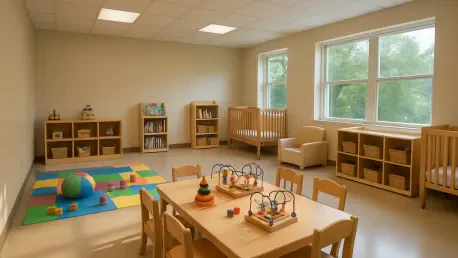
The facility in Capiatá serves as a functional model for how integrated service delivery can revolutionize early childhood experiences by combining multiple essential functions under one roof. Unlike traditional daycare centers, these comprehensive facilities include specialized rooms for age-appropriate activities, a dedicated breastfeeding area, and a common space for parental support and guidance. A standout feature of this model is the inclusion of a Civil Registry office directly on-site, which allows parents to secure official documentation for their children without the usual bureaucratic hurdles. This focus on legal identity is a crucial step in ensuring that every child is recognized by the state and can access future benefits and protections. Furthermore, the presence of a “ludoteca” or specialized playroom emphasizes the importance of play as a fundamental tool for cognitive and emotional growth. By providing these resources in a single location, the centers create a supportive ecosystem for both the child and the family unit.
Nutrition and health are similarly integrated into the daily operations of the centers, with full-service kitchens and medical consulting rooms providing a foundation for physical growth. Professional staff provide pediatric check-ups, vaccinations, and psycho-pedagogical support, ensuring that developmental delays or health issues are identified and addressed early. The nutritional programs are tailored to the specific needs of growing toddlers, providing balanced meals that many families might struggle to afford independently. This focus on health is complemented by educational initiatives, such as the introduction of trilingual book collections that reflect the linguistic diversity of Paraguay. These books help foster early literacy and cultural pride, preparing children for the transition to formal schooling with a strong vocabulary and a love for learning. By addressing the child’s physical, mental, and social needs simultaneously, the program creates a multi-dimensional support system that empowers families and fosters a healthier, more educated citizenry.
Targeted Outreach and Future Sustainability
To maximize the impact of the “Seeds of the Future” program, the government has implemented rigorous technical criteria to identify and prioritize the most vulnerable segments of the population. Outreach efforts specifically target children of adolescent mothers, working parents in low-income brackets, and single-parent households located in the vicinity of the new centers. This equity-focused strategy ensures that the limited resources are directed toward those who stand to benefit the most from high-quality institutional care. Beyond the walls of the center, the program incorporates a home-visit component where specialists work directly with families to improve domestic nutrition and parenting practices. These visits serve to bridge the gap between institutional support and the home environment, reinforcing the lessons learned at the center and providing parents with the tools they need to succeed. This dual approach of facility-based care and direct community engagement creates a comprehensive safety net that leaves no child behind in the quest for developmental parity.
Looking ahead, the focus shifted toward ensuring the long-term viability and scalability of these early childhood interventions throughout the remainder of the decade. Policymakers recognized that the initial success of the Capiatá pilot needed to be matched by a sustainable funding model and a continuous pipeline of trained early childhood professionals. The government encouraged partnerships with international developmental organizations to refine educational curricula and incorporate global best practices into the local context. These collaborations helped establish a framework for ongoing monitoring and evaluation, allowing the program to adapt to the specific needs of different communities as it expanded. By treating early childhood care as a strategic economic investment rather than a simple social cost, the administration fostered a national consensus on the importance of these services. This proactive stance ensured that the progress made in 2026 became the foundation for a permanent transformation of the social landscape, providing children with the stability and resources necessary to thrive.