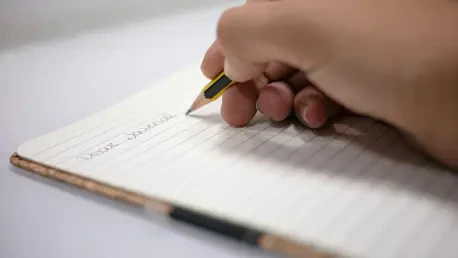

In an elementary school classroom, a simple, bi-weekly ritual is transforming the way second-graders approach the fundamental task of writing, proving that the cultivation of thankfulness can be a powerful catalyst for academic development. At Southeast Kelloggsville Elementary, teacher Ashley McKeeby has developed an innovative program where students compose thank-you notes for school staff, an exercise that seamlessly integrates social-emotional learning with core literacy skills. This initiative moves beyond traditional writing prompts, grounding the practice in a real-world context that resonates deeply with young learners. By focusing on genuine appreciation, students are not only improving their spelling and sentence structure but are also building a stronger, more connected school community, demonstrating that the most effective educational tools are often rooted in human connection and mutual respect. This approach provides a compelling model for how empathy and gratitude can serve as foundational pillars for academic achievement.
An Innovative Path to Better Writing
From Correction to Connection
The program’s origins reveal a keen pedagogical insight that evolved from a moment of classroom management into a cornerstone of positive reinforcement and academic growth. The concept was born seven years ago when, after an instance of class misbehavior, students were assigned to write letters of apology. During this exercise, a notable shift occurred: the students displayed an unusually high level of engagement and took immense pride in their work, striving for neatness and accuracy in a way that typical assignments often failed to inspire. Recognizing the power of writing with a real purpose and audience, the teacher reframed the activity. The focus pivoted from a reactive, corrective measure to a proactive, positive one centered on appreciation. By transitioning to thank-you notes, the dynamic of the writing lesson changed completely. Students began to see writing not as an obligatory task or a form of punishment, but as a meaningful vehicle for expressing positive emotions and connecting with others, which dramatically increased their motivation and investment in the quality of their work.
Building Foundational Skills
A key component of this initiative is its targeted approach to developing essential literacy skills, particularly spelling, in a supportive and low-stakes environment. Rather than penalizing students for errors, the system encourages them to take risks and build confidence. When a student, like second-grader Remington Cover, encounters a word they are unsure how to spell—for instance, navigating the common confusion between “your” and “you’re”—they are prompted to make their best phonetic attempt on a sticky note. This note is then brought to the teacher for a quick, one-on-one review. This method provides immediate, personalized feedback without interrupting the creative flow of the writing process. It fosters phonetic awareness and empowers students to become more independent problem-solvers. This technique transforms potential moments of frustration into valuable learning opportunities, helping to cultivate a classroom of stronger, more resilient spellers who are not afraid to tackle challenging words and expand their vocabulary through practical application.
Fostering a Culture of Appreciation
Connecting Students to Their Community
The program methodically cultivates a deep sense of community by systematically introducing students to the wide array of individuals who contribute to their daily school life. The selection process itself is an engaging event; every Tuesday and Thursday, the class gathers to watch a virtual spinner, aptly named the “Wheel of Thank-yous,” randomly land on a staff member. This ensures that recognition extends beyond classroom teachers to include everyone, from the principal and administrative staff to playground aides, bus drivers, and food service workers. Before the writing begins, a crucial discussion takes place about the selected individual’s job and the specific ways their work supports the school. This dialogue helps students understand and value the often-unseen efforts that create a safe and functional learning environment. For many students, this is the first time they consciously consider the roles of these vital staff members, transforming familiar faces into appreciated members of a shared community and strengthening the interpersonal bonds that form the fabric of the school.
The Gratitude-Writing Connection in Practice
A typical thank-you note session unfolds as a structured yet highly personal creative exercise that merges guided instruction with individual expression. The process begins with the genuine excitement that erupts when the virtual spinner selects a recipient, especially a well-liked figure such as special education teacher Grace Troyer. This personal connection immediately enhances student enthusiasm for the task, as articulated by student Zamora Carter. Following the selection, a collaborative brainstorming session is facilitated where students suggest words related to gratitude and the recipient’s role, with terms like “friends,” “happy,” and “thankful” being written on the board. This shared vocabulary serves as a scaffold, providing accessible starting points for the young writers. The students then dedicate approximately 20 minutes to diligently crafting their notes. This is not merely a writing assignment; it is a multi-modal form of expression where each student combines a written message with a personal drawing, allowing them to convey their appreciation through both words and art in a deeply meaningful way.
A Ripple Effect of Recognition and Skill
The initiative’s success was measured not only in academic progress but also in the palpable enhancement of the school’s social fabric. Students consistently demonstrated a remarkable level of thoughtfulness, often incorporating specific, personal details into their messages that showed they were observant and empathetic. For example, when writing to a recently married teacher, multiple students, including Josie Hamming and Remington Cover, thoughtfully mentioned her wedding, acknowledging a significant event in her life. This level of personalization revealed a genuine connection that transcended a simple classroom assignment. For the staff who received these notes, the impact was profound. The letters served as a powerful morale booster, with one teacher expressing how the notes “really brightened my day.” She was particularly moved by the individualized content and the students’ consideration in including her own special education students in their messages. This feedback affirmed that the program had successfully created a virtuous cycle, where the act of expressing gratitude not only improved student writing but also fostered a more positive, interconnected, and valued school culture for everyone involved.