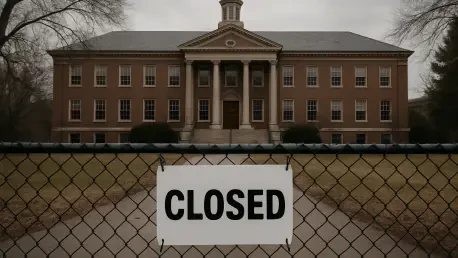

Once hailed as a phoenix rising from the ashes of a near-collapse, Hampshire College now finds itself trapped in a familiar cycle of financial distress, raising profound questions about the viability of its experimental educational model in an unforgiving higher education market. The small, private Massachusetts institution, celebrated for its miraculous turnaround after almost closing its doors in 2019, is again staring into a financial abyss. A recent, deeply concerning audit reveals a college burdened by debt, shrinking assets, and unmet enrollment targets, forcing it into a desperate race against a ticking clock to secure its very existence.
The Comeback Kid Stumbles
The narrative surrounding Hampshire College just a few years ago was one of resilience and reinvention. After a 2019 crisis that saw it stop admitting a full first-year class, a remarkable fundraising campaign and a bold curriculum overhaul appeared to pull the institution back from the brink. This success story made Hampshire a symbol of hope for other small liberal arts colleges struggling to find their footing. It seemed to prove that with innovation and community support, even the most precarious institutions could survive.
However, that optimism has been eroded by a harsh economic reality. The challenges plaguing private higher education—demographic shifts, rising operational costs, and intense competition for a shrinking pool of students—have proven relentless. For Hampshire, the celebrated turnaround now appears to have been a temporary reprieve rather than a permanent solution. The central question posed by its initial crisis has returned with a vengeance: can a college dedicated to a non-traditional, student-driven curriculum sustain itself financially in an era that increasingly prioritizes clear-cut career pathways and institutional stability?
Setting the Stage for Renewed Peril
The alarm bells are ringing louder than ever, primarily due to an official warning from independent auditors. For the third consecutive year, the college’s financial statements include a “going concern” notice, an accounting term that signals substantial doubt about an entity’s ability to continue operations for the next year. This is not a casual observation but a formal red flag indicating that without significant intervention, the college may not be able to meet its financial obligations.
This warning is rooted in a financial picture that has grown increasingly bleak. According to the fiscal year audit ending June 30, Hampshire breached terms on a bond group last June, a technical failure that gives creditors the right to demand immediate repayment. This single event reclassified over $20 million of its debt from long-term to short-term, placing immense pressure on its immediate cash flow. This precarious situation is compounded by a bondholder who has signaled a desire to exercise a “put option,” a move that would force the college to buy back securities it cannot afford, potentially triggering a catastrophic default.
Anatomy of a Financial Crisis
The college’s balance sheet reveals the depth of the crisis. In the last fiscal year, Hampshire’s total net assets plummeted by 13.9%, falling to $37.9 million, while it ran an operating deficit of $3.7 million. The total debt load stands at a formidable $24.9 million, a staggering figure for an institution of its size. The reclassification of this debt has created what experts call a “looming debt wall,” an immediate financial hurdle that threatens to overwhelm the college.
Further compounding these financial woes was a critical setback in student enrollment. After two years of promising growth that saw the student body climb by nearly 70% to 844 students by fall 2024, the most recent incoming class fell significantly short of targets. The college enrolled approximately 150 new students, missing its goal by 50—a substantial shortfall that directly impacts tuition revenue, the lifeblood of the institution. The human cost of these interconnected challenges has already been felt, with the college forced to reduce its staff by 9% in 2024 to cut expenses.
The Auditor’s Sobering Verdict
The language within the fiscal year audit is stark and unambiguous, leaving no room for optimistic interpretation. The auditors explicitly state that the college’s ability to continue as a “going concern” is directly dependent on its success in securing new financing to restructure its overwhelming debt. The report underscores the gravity of the situation, noting recurring decreases in net assets and negative cash flow from operations as evidence of deep-seated financial instability.
The persistence of this problem is what makes the current situation so dire. A single “going concern” warning can be a wake-up call; a third consecutive notice suggests a chronic, unresolved structural crisis. It indicates that previous efforts to stabilize the college’s finances have not been sufficient to address the underlying issues. The recurring warning serves as an official testament that Hampshire is not merely facing a difficult year but is caught in a sustained financial emergency that threatens its long-term survival.
A Race Against Time
With lenders granting a temporary extension for refinancing until September, the college administration is now engaged in a multi-front battle for survival. The single most critical priority is to successfully refinance its $24.9 million in bond debt before the deadline arrives. This task is monumental, as it requires convincing new investors to take a significant risk on an institution with a troubled financial history.
Simultaneously, the college is pursuing an aggressive, multi-pronged strategy to regain its financial footing. This plan includes implementing ambitious new strategies to boost student enrollment and reverse last year’s disappointing trend. Officials are also tasked with identifying and executing further expense reductions across the institution, a difficult process that may involve more painful cuts. As a final measure, the college is exploring the potential sale of some of its valuable real estate holdings to generate a much-needed infusion of capital to stabilize operations and reassure potential lenders.
Ultimately, the fate of Hampshire College rested not on its innovative spirit but on its ability to solve a complex financial equation against a rapidly approaching deadline. The journey highlighted the immense pressures facing non-traditional institutions in modern higher education. The college’s struggle underscored a difficult truth: that even the most cherished educational models needed a sustainable financial foundation to survive. Its story became a cautionary tale of a comeback that faltered, leaving a community to fight once more for its future.