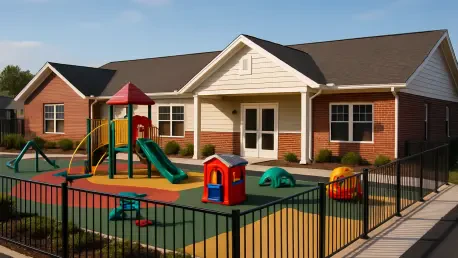

Across the rolling hills of North Georgia and the bustling urban corridors of Atlanta, a silent crisis has been eroding the foundations of early childhood education as aging facilities struggle to remain operational under the weight of mounting repair costs. The introduction of Senate Bill 554 represents a pivotal bipartisan response to this challenge, seeking to establish the Georgia Child Care Facilities Program to provide much-needed state funding for the construction and modernization of these vital spaces. While much of the public discourse regarding education centers on curriculum and teacher compensation, this legislative initiative acknowledges that the physical environment is an equal partner in a child’s developmental journey. By focusing on the structural vessel of learning, the bill aims to ensure that the physical safety of a building never comes at the expense of a child’s cognitive growth or a provider’s ability to deliver high-quality instruction during those critical early years of life.
The Financial Impact of Aging Infrastructure
Providers throughout the state frequently report that their operational budgets are being cannibalized by emergency repairs, forcing them to choose between fixing a leaking roof and purchasing new literacy materials. Many of these centers were built decades ago and were never designed to meet the rigorous energy efficiency or safety standards required in the current educational climate. When a thirty-year-old HVAC system fails or a commercial kitchen appliance stops functioning, the cost of replacement often exceeds the thin profit margins that many small businesses in this sector maintain. This reactive cycle of spending prevents long-term planning and stifles the ability of directors to invest in the latest educational technologies or competitive wages for their staff. Consequently, the primary mission of early childhood education—fostering a rich learning environment—is sidelined by the immediate and overwhelming necessity of maintaining basic physical habitability for students.
Beyond the immediate financial drain of repairs, the state of a facility plays a significant role in the recruitment and retention of qualified early childhood educators who often seek environments that reflect their professional dedication. A dilapidated building with peeling floor tiles or outdated security hardware can demoralize staff and lead to higher turnover rates, which further destabilizes the learning experience for young children. When teachers are forced to work in spaces that lack adequate lighting, ventilation, or modern classroom layouts, their pedagogical effectiveness is naturally diminished regardless of their training or passion. Senate Bill 554 addresses this by providing a pathway for centers to upgrade their physical assets without passing those costs directly onto the families they serve. This structural support allows administrators to redirect their existing revenue toward professional development, ensuring that the internal quality of education matches the external safety of the building.
Child Care as a Pillar of Economic Stability
The economic ripples of a failing child care infrastructure extend far beyond the walls of individual centers, impacting the overall productivity of Georgia’s workforce and the stability of its regional markets. It is estimated that child care challenges, ranging from facility closures to a lack of available slots, result in a staggering loss of approximately $2.52 billion in annual economic activity across the state. When parents cannot find reliable or safe care for their children because local facilities are at capacity or in disrepair, they are often forced to reduce their working hours or exit the labor market entirely. This exodus of talent creates a ripple effect that touches every industry, from manufacturing to healthcare, as employers struggle to find and keep the reliable staff necessary for growth. By treating child care facilities as essential workforce infrastructure, the state acknowledges that economic development is fundamentally tied to the availability of high-quality early learning centers.
Furthermore, the fiscal health of the state is directly linked to the tax revenue generated by a fully participating workforce, which is currently being suppressed by the lack of adequate child care capacity. Current data indicates that the state loses over $131 million in potential tax revenue each year due to the systemic barriers preventing parents from accessing stable child care solutions. This financial reality highlights why Senate Bill 554 is viewed by many as a strategic economic investment rather than a traditional social service subsidy. By providing the capital necessary for facility expansion and modernization, the state can unlock significant economic potential that is currently being held back by a shortage of physical space. Supporting these centers allows local businesses to thrive, as employees are no longer distracted by the uncertainty of their child’s daily care arrangements. This stability fosters a more resilient economy that can better withstand market fluctuations while supporting the growth of the next generation.
Accessibility and Specialized Educational Needs
Modern early childhood education requires a specialized physical layout that can accommodate the diverse needs of students, particularly those with developmental delays or sensory processing disorders. Many existing facilities in Georgia were constructed before the widespread implementation of inclusive education practices and lack the necessary space for dedicated therapy rooms or sensory-integrated classrooms. Consequently, therapists working with children who have special needs are often forced to conduct their sessions in highly distracting environments, such as building lobbies or repurposed closets, due to a lack of private, appropriate rooms. This lack of specialized infrastructure not only hinders the progress of individual students but also places an immense emotional and logistical burden on the providers who are striving to offer inclusive care. Senate Bill 554 aims to provide the capital required to modify these buildings, ensuring that every child has access to a tailored learning environment.
The challenge of maintaining infrastructure is even more pronounced in rural communities like Eastman or Waynesville, where child care providers operate under a unique set of economic constraints known as the tuition paradox. In these areas, the cost of facility maintenance often exceeds what local families can afford to pay, yet providers cannot raise tuition rates without making their services inaccessible to the very community they serve. Inflation and changes in state subsidy programs have further compressed these already narrow profit margins, leaving owners with zero surplus for necessary renovations or expansions. Without the intervention of state-level capital grants provided by the new program, many of these rural facilities would eventually be forced to close their doors, leaving vast child care deserts in their wake. By targeting these underserved regions, the bill ensures that rural families have access to the same high-quality, modern facilities found in urban centers, supporting regional equity and long-term community health.
Strategic Outcomes for Regional Development
Expanding the physical capacity of child care centers is a critical prerequisite for the successful growth of statewide initiatives like the Georgia Pre-K program, which currently faces significant bottlenecks due to space limitations. Many reputable providers have reported that they possess the qualified staff and the desire to host additional Pre-K classes but are physically unable to do so because they lack the required square footage for new classrooms. This physical constraint prevents thousands of children from accessing state-funded early education, regardless of the quality of the teaching staff available. By funding the construction of new wings and the renovation of existing storage spaces into functional classrooms, Senate Bill 554 provides the literal foundation upon which the state can expand its educational reach. This approach ensures that the “vessel” of education is large enough and sturdy enough to hold the ambitious goals that Georgia has set for its youngest students as they prepare for the future.
The passage of this legislation established a framework for long-term sustainability that extended beyond simple building repairs to include strategic community development goals. State leaders recognized that investing in child care infrastructure acted as a catalyst for local property value increases and attracted new residents to small towns seeking robust support systems for young families. To build upon this momentum, stakeholders recommended that local municipalities integrate child care facility planning into their broader zoning and development strategies to ensure continued growth. These actions ensured that the physical environment remained a priority in the educational hierarchy, allowing providers to focus on pedagogical excellence rather than structural crises. By prioritizing these capital investments, Georgia secured a more stable economic environment where both children and businesses could flourish in modern, safe, and efficient spaces. This proactive shift in policy marked a transition toward viewing early childhood centers as permanent, essential components of the public infrastructure.