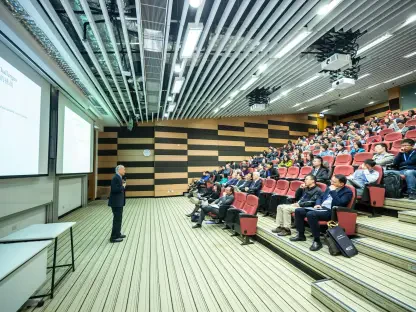

The transformation of a ubiquitous productivity tool into a competitive arena has reached a fever pitch as collegiate athletes swap traditional jerseys for spreadsheets in televised tournaments. What once served as the silent engine of corporate back offices is now the centerpiece of high-octane esports events where participants solve complex mathematical riddles under intense time pressure. These championships, frequently broadcast on major networks like ESPN, feature a staggering $100,000 prize pool, drawing thousands of spectators who watch live as competitors manipulate data with surgical precision. This phenomenon highlights a significant cultural shift among younger generations who see software mastery not merely as a workplace requirement but as a legitimate discipline for demonstrating intellectual prowess. By blending the technical demands of data science with the adrenaline of professional gaming, these events have successfully redefined the boundaries of digital competition.
The Strategic Integration of Spreadsheet Mastery into Professional Recruitment
Beyond the spectacle of the arena, the rise of competitive spreadsheet gaming serves as a powerful bridge between academic environments and the competitive modern job market. Recruiters from top-tier financial institutions and consulting firms have begun to recognize the competitive Excel distinction as a significant indicator of a candidate’s ability to perform under duress. For instance, Nate Insko, a prominent student at the University of Tennessee, Knoxville, effectively utilized his background in these high-stakes tournaments to secure a coveted investment banking role at Harris Williams. During the interview process, his participation in global finals served as a primary talking point, outshining standard academic credentials for scouts from firms like Boston Consulting Group and Wells Fargo. This specific type of extracurricular achievement signals a level of analytical thinking and problem-solving that is difficult to gauge through traditional testing methods, providing a concrete differentiator for students entering a saturated employment landscape.
The technical rigor required for these competitions demanded that students construct elaborate formulas for diverse applications, ranging from stock portfolio risk assessments to complex data modeling for simulated gaming systems. This mastery of software logic fostered a new campus culture where technical proficiency achieved a level of social prestige formerly reserved for varsity sports. At the University of Tennessee, Knoxville, the Excel team secured a world championship in Las Vegas, outperforming over 8,000 students from 70 different international schools to cement their status as elite competitors. Organizations looking to attract top talent prioritized candidates who demonstrated this unique blend of speed and accuracy, as it reflected a readiness to tackle the sophisticated challenges of the modern economy. Educational institutions increasingly integrated gamified technical training into their curricula, recognizing that competitive frameworks accelerated the acquisition of high-level digital skills. This evolution ensured that the next generation of analysts entered the workforce with a proven capacity for innovation and collaborative crisis management in data-heavy environments.