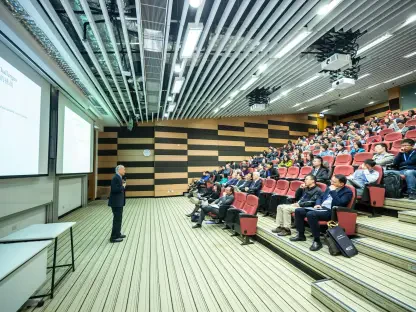

Imagine a university classroom where students draft essays with the help of generative artificial intelligence (GenAI), where professors use algorithms to tailor lessons, and where the very notion of knowledge creation is being redefined in real time. This isn’t a distant vision but a reality unfolding across campuses today, signaling a seismic shift in higher education. As highlighted by experts at Cornell, GenAI isn’t just another tool; it’s the latest chapter in a long saga of digital disruptions that have reshaped learning—from calculators to the internet. Yet, the speed and scope of AI’s impact are unmatched, leaving institutions scrambling to keep pace. The challenge lies in moving beyond reactive fixes to a strategic, long-term vision that harnesses AI’s potential while safeguarding educational missions. This exploration dives into why expanding the timeline for AI integration is critical, offering a roadmap for universities to lead rather than follow in this technological revolution.
The stakes couldn’t be higher as GenAI rewires the academic landscape, influencing how students think, how research is conducted, and how trust in institutions is maintained. Its ability to generate content, analyze data, and mimic human reasoning raises profound questions about the future of skills and societal norms. While the promise of personalized learning and efficiency is enticing, the uncertainties—ranging from ethical dilemmas to workforce implications—loom large. Universities must build resilience to weather these unknowns, prioritizing adaptability over short-term solutions. A proactive stance means looking ahead, anticipating shifts over the coming years, and embedding strategies that ensure technology serves the public good. This isn’t just about keeping up; it’s about setting the course for AI’s role in education with deliberate, thoughtful planning.
Tracing Technology’s Impact on Academia
From Calculators to GenAI: A Continuum of Disruption
Stepping back to understand GenAI’s place in higher education reveals a familiar pattern of technological upheaval that has long tested academic systems. Think of the calculator’s debut, which shifted the focus from manual computation to conceptual understanding, or the internet’s arrival, which exploded access to information while challenging notions of credibility. Social media further altered communication and trust dynamics within campuses. GenAI stands as the most intense wave yet, capable of creating content and insights at a scale previously unimaginable. Recognizing this as part of a continuum rather than an isolated event helps universities avoid hasty reactions. Instead, it encourages a perspective that learns from past adaptations, focusing on strategies that endure beyond the initial shock of new tools, ensuring education evolves in step with technology’s relentless march.
Moreover, this historical lens highlights a recurring theme: each technological advance redefines what it means to learn and teach. While past innovations forced incremental changes, GenAI’s ability to mimic human creativity and reasoning demands a deeper rethink of academic integrity and skill-building. Universities can draw on lessons from earlier disruptions to inform today’s decisions, such as balancing technological adoption with critical oversight. The internet taught the value of digital literacy; social media underscored the need for emotional intelligence in online spaces. Applying these insights, institutions can frame GenAI as a partner in education rather than a threat, crafting policies and curricula that integrate its strengths while addressing risks. This long-view approach positions higher education to not just survive but thrive amid constant change.
Building Resilience for Uncertain Futures
The unpredictable ripple effects of AI on job markets, learning models, and societal values present a daunting challenge for universities striving to prepare for what’s next. Unlike previous technologies with somewhat clearer trajectories, GenAI’s full impact remains murky, with potential to both enhance and disrupt traditional academic roles. Building resilience within campus communities becomes paramount—equipping students, faculty, and administrators with the mindset and tools to adapt as scenarios unfold. This means fostering a culture of flexibility, where experimentation with AI tools is encouraged alongside critical evaluation of their effects. It’s about creating a buffer against uncertainty, ensuring that when shifts occur, whether in employment demands or pedagogical needs, the university isn’t caught off guard but is ready to pivot with confidence.
Beyond cultural shifts, resilience also demands structural changes within higher education systems to handle AI’s unknowns. This includes investing in ongoing training for faculty to stay abreast of evolving technologies and establishing interdisciplinary teams to monitor AI’s societal impact. Such measures help institutions anticipate changes rather than react to them after the fact. Furthermore, resilience ties into mental preparedness—acknowledging that rapid tech integration can overwhelm stakeholders. Universities must provide support systems to ease transitions, whether through counseling for tech-induced stress or forums for ethical debates about AI use. By embedding these layers of adaptability, higher education can face an uncertain future not with fear, but with a proactive stance ready to shape outcomes rather than be shaped by them.
Redefining Education for a Digital Generation
Digital Natives with New Challenges
Today’s students, often dubbed digital natives, enter university life with a unique blend of strengths and struggles forged by a hyper-connected world. Their fluency in navigating online platforms and accessing vast information pools is unparalleled, yet this constant digital immersion brings significant downsides. Heightened anxiety, reduced attention spans, and uncertainty about career paths in an AI-driven economy weigh heavily on them. Social and political identities shaped by virtual interactions add another layer of complexity, often distancing them from traditional learning environments. Universities face the task of meeting these students where they are, adapting to a reality where technology isn’t just a tool but a fundamental shaper of thought and behavior. Ignoring these shifts risks alienating a generation already grappling with unprecedented pressures.
In response, higher education must pivot to address these evolving dynamics with tailored support that goes beyond academic instruction. This involves recognizing that mental health challenges tied to digital overload are as critical as classroom performance. Institutions need to offer robust resources, such as counseling services attuned to tech-related stress, and create spaces for dialogue about online influences on identity. Additionally, career guidance must evolve to reflect AI’s impact on future job landscapes, helping students envision roles that blend human creativity with machine efficiency. By acknowledging the full scope of challenges digital natives face, universities can craft environments that nurture rather than overwhelm, ensuring these students are not just surviving but thriving in a world where technology and personal growth are deeply intertwined.
Rethinking Education for a Digital Age
Adapting to the needs of a digitally shaped student body requires a bold reimagining of educational models that have often lagged behind technological progress. Integrating digital literacy into core curricula stands as a starting point, equipping students to critically assess AI-generated content and navigate online spaces with discernment. Beyond technical skills, there’s a need to foster abilities that complement rather than compete with AI—think creativity, empathy, and complex problem-solving. Universities must also retool teaching methods, perhaps using AI for personalized learning while preserving the irreplaceable value of human interaction in education. This dual focus ensures students are prepared for a future where technology is ubiquitous, but human insight remains essential.
Furthermore, rethinking education extends to systemic changes that support both students and educators in this digital age. Faculty development programs should emphasize how to leverage AI tools without undermining academic rigor, ensuring technology enhances rather than dictates learning. Campus policies must address ethical concerns like data privacy in AI-driven systems, protecting vulnerable students from unintended consequences. Meanwhile, fostering interdisciplinary courses that explore technology’s societal impact can help students contextualize their digital experiences within broader ethical and cultural frameworks. By aligning education with the realities of a tech-saturated society, universities can bridge the gap between traditional learning and the demands of a rapidly evolving world, empowering students to lead in an AI-influenced future.
Steering AI with Ethical Purpose
Prioritizing Public Good Over Profit
Universities occupy a rare and powerful position in the AI landscape, unbound by the profit motives that often drive corporate innovation. This freedom allows higher education to focus on the public good, championing AI development that addresses societal gaps rather than just market demands. While industries might prioritize scalable, revenue-generating tools, universities can tackle underserved issues—think accessibility for marginalized communities or mitigating bias in algorithms. This mission-driven approach offers a counterbalance to commercial incentives, ensuring technology serves the many, not just the few. By stepping into this role, institutions become moral compasses, guiding AI’s growth with a commitment to equity and broader benefit that sets a vital precedent.
Additionally, this emphasis on public interest positions universities as trusted voices in a tech landscape often clouded by skepticism. They can advocate for AI solutions that enhance societal trust, such as transparent systems for academic use or tools that prioritize user well-being over engagement metrics. This leadership is especially critical as GenAI touches sensitive areas like academic integrity and public discourse, where ethical missteps can erode confidence in institutions. Collaborating with policymakers and communities, universities can ensure AI reflects shared values, not just shareholder interests. Through such efforts, higher education not only shapes technology but also reinforces its own relevance as a steward of societal progress, proving that innovation need not come at the expense of ethics.
Crafting Ethical Frameworks and Tools
Turning the commitment to public good into action, universities must craft AI tools and policies grounded in ethical principles that address real-world concerns. This means designing systems that actively combat bias, protect privacy, and ensure accessibility for diverse users—issues often sidelined in rush-to-market tech. For instance, AI used in grading or admissions must be rigorously tested to prevent unfair outcomes, while data handling practices should safeguard student information against misuse. Such frameworks aren’t just safeguards; they’re statements of intent, signaling that technology in academia will uphold fairness and trust. Universities leading this charge can set benchmarks for responsible innovation, influencing how AI is developed and deployed far beyond campus borders.
Equally important is the process of embedding these ethical considerations into the fabric of AI research and application within higher education. Interdisciplinary teams, drawing from fields like ethics, sociology, and computer science, can collaborate to anticipate and address potential harms before they manifest. Public engagement initiatives can further ensure that AI tools reflect community needs, not just academic or industry priorities. By modeling this meticulous, value-driven approach, universities demonstrate that technology can be a force for equity rather than division. This leadership not only protects stakeholders but also builds a legacy of integrity, inspiring other sectors to follow suit in prioritizing ethics over expediency as AI continues to evolve.
Harnessing Diverse Perspectives for AI Progress
Cross-Pollination of Ideas at Cornell
At institutions like Cornell, the power of interdisciplinary collaboration shines as a cornerstone for navigating AI’s complexities in higher education. Bringing together experts from science, humanities, and the arts creates a melting pot of ideas, where technical innovation meets cultural critique and ethical reflection. This cross-pollination ensures that AI isn’t developed in a vacuum but is shaped by diverse human experiences, balancing efficiency with empathy. For example, while engineers might focus on algorithm performance, humanists can question its societal ripple effects, leading to more nuanced solutions. This holistic approach allows universities to tackle AI’s challenges from every angle, crafting tools and strategies that resonate with both academic goals and broader societal needs.
This blend of perspectives also sparks creativity, fostering innovations that might never emerge in siloed environments. Consider how combining data science with philosophy could yield AI systems that prioritize ethical decision-making, or how artistic input might inspire more intuitive interfaces for educational tools. At Cornell, such synergy isn’t just theoretical—it’s a lived strength, evident in collaborative projects that span departments. This diversity of thought ensures that AI integration in education doesn’t just solve problems but reimagines possibilities, aligning technology with the multifaceted nature of learning and human interaction. By championing this approach, universities can lead the way in showing that AI’s potential is richest when viewed through a wide, inclusive lens.
Innovating Through Teaching, Research, and Outreach
Interdisciplinary strength extends its impact through the core pillars of university life—teaching, research, and public outreach—offering multiple avenues to shape AI’s role in education. In the classroom, courses that blend technology with societal analysis can equip students to grapple with AI’s implications, fostering critical thinkers who understand both its power and its pitfalls. Research, meanwhile, provides a sandbox for testing ethical AI applications, from bias-free algorithms to tools that enhance learning equity. These academic efforts create a feedback loop, where insights from teaching inform research priorities, ensuring that AI development remains grounded in real-world educational needs rather than abstract theory.
Beyond campus walls, public outreach amplifies this impact, making universities active participants in broader conversations about AI’s future. Engaging with communities, policymakers, and industries through forums, workshops, and accessible resources helps demystify AI, addressing public concerns while highlighting its benefits. This dialogue ensures that academic innovations don’t remain insular but influence societal norms and policies for responsible tech use. Institutions like Cornell, with their interdisciplinary muscle, are uniquely positioned to bridge this gap, turning campus breakthroughs into public good. By weaving AI innovation through teaching, research, and outreach, universities can steer technology toward a future that upholds educational values and community trust.
Shaping Tomorrow’s Tech Landscape
Reflecting on the strides made, it’s clear that universities took bold steps to integrate generative AI with a long-term vision, balancing immediate needs with future uncertainties. Historical patterns of technological disruption were analyzed to inform strategies, ensuring that past lessons guided responses to GenAI’s challenges. Efforts to support digital natives reshaped curricula, embedding mental health resources and digital literacy into the academic fabric. Ethical leadership emerged as a hallmark, with institutions prioritizing public good over profit, crafting frameworks that tackled bias and privacy head-on. Interdisciplinary collaboration at places like Cornell proved transformative, blending diverse perspectives to innovate responsibly. Looking ahead, the next phase demands sustained commitment—universities must deepen public engagement, advocate for equitable AI policies, and continuously adapt educational models to evolving tech landscapes. This proactive path ensures higher education remains a beacon of trust and progress in an AI-driven world.