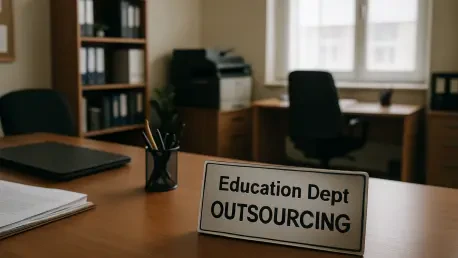

As we delve into the contentious landscape of education policy, I’m thrilled to sit down with Camille Faivre, a seasoned expert in education management. With a sharp focus on navigating the post-pandemic challenges faced by institutions, Camille has dedicated her career to enhancing open and e-learning programs. Her insights are particularly vital today as the U.S. Department of Education faces legal battles over its outsourcing plans, raising questions about the future of K-12 and higher education. In this conversation, we explore the implications of shifting billions in funding to other federal agencies, the balance between federal and state control, and the potential impact on vulnerable student populations.
What’s your perspective on the recent lawsuit challenging the U.S. Department of Education’s plan to shift $28 billion in K-12 funding to the Labor Department, and why is this seen as so harmful to students and educators?
I think this lawsuit highlights a deep concern about the erosion of specialized support that the Education Department provides. Moving $28 billion in funding for critical programs like those for low-income districts, homeless youth, and afterschool activities to the Labor Department risks diluting the focus on education-specific needs. I’ve worked with school districts that rely on these funds to provide meals, tutoring, and safe spaces after hours—imagine a small rural district suddenly grappling with bureaucratic red tape because the agency managing their funds isn’t equipped to understand their unique challenges. It’s not just numbers on a spreadsheet; it’s the anxiety of principals wondering if they can keep programs running, or teachers dipping into their own pockets for supplies. This shift could disrupt the entire ecosystem of a school district, from delayed budgets to misaligned priorities, leaving educators and students in a precarious limbo.
How do you see the interagency agreement involving $3.1 billion in postsecondary grants with the Labor Department affecting higher education institutions over time, and what challenges might they face?
This $3.1 billion shift for postsecondary grants is a significant pivot, and I’m concerned about the long-term ripple effects on colleges and universities. Higher education institutions often depend on these grants to fund programs that support underrepresented students or innovative teaching methods, and moving oversight to an agency like the Labor Department could mean a disconnect in understanding the academic mission. I recall working with a community college that used federal grants to expand access to online learning for working adults—any delay or mismanagement in funding could have derailed that initiative, leaving hundreds without access to education. The challenge here is adaptability; colleges might face inconsistent communication, shifting guidelines, or even reduced funding due to differing agency priorities. Over time, this could erode trust in federal support and force institutions to seek alternative, often less stable, funding sources, which is a heavy burden in an already strained sector.
There’s been criticism about disruptions from staff cuts and funding delays at the Education Department, particularly with state CTE programs. Can you paint a picture of how these delays impact schools and students on the ground?
Funding delays and staff reductions at the Education Department create a domino effect that hits schools hard, especially in career and technical education (CTE) programs. These programs are lifelines for students who aren’t on a traditional college track, offering hands-on training for trades and industries. I’ve seen firsthand how a delay in grant processing can stall a CTE program—think of a high school welding class unable to purchase safety equipment or update outdated machinery because the funds are tied up in bureaucratic knots. Teachers are left scrambling to makeshift solutions, and students lose out on critical skills training, sometimes derailing their career paths. I remember the frustration in a principal’s voice when he described waiting months for approval, watching his students grow disengaged. These delays don’t just affect budgets; they chip away at morale and opportunity, leaving both educators and students feeling abandoned by a system that’s supposed to support them.
With the push to downsize the Education Department and increase state autonomy, how do you view the balance between federal oversight and state control, and what might this look like in practice?
The debate over federal oversight versus state control is a tightrope walk. On one hand, federal oversight ensures a baseline of equity—think of mandates that protect funding for underserved communities or enforce civil rights in schools. On the other, state autonomy can allow for tailored solutions; for instance, a state like Texas might prioritize vocational training based on local industry needs, whereas Massachusetts might focus on STEM innovation. In practice, more state power could mean a state education board reallocating federal funds with less red tape—step one might be setting local priorities, step two could involve community input, and step three might be direct distribution to districts. I’ve seen this work well in smaller states where local leaders know their needs intimately, but the downside is glaring—without federal guardrails, disparities can widen, as some states might underfund critical areas like special education. Historically, we’ve seen uneven outcomes when states have full control, and it’s a gamble whether every child gets a fair shot.
The lawsuit now includes advocacy groups highlighting the impact of outsourcing on vulnerable populations like students with disabilities. Can you share your insights on how these changes might affect them and the support systems they rely on?
When we talk about outsourcing and its impact on vulnerable groups like students with disabilities, my heart sinks because these are the kids who need the most consistent, specialized support. The Education Department has historically been a cornerstone for ensuring programs under laws like IDEA are funded and implemented properly, and shifting responsibilities risks fragmenting that safety net. I once consulted with a district where a delay in federal guidance led to a lapse in hiring aides for students with physical disabilities—parents were in tears describing how their child struggled to navigate school without help, and teachers were overwhelmed trying to fill the gap. If agencies like the Labor Department take over without deep expertise in special education, we could see long-term erosion of tailored services, from assistive technology to individualized education plans. These changes might mean families have to fight harder for basic rights, and I worry that the emotional toll—on top of logistical barriers—could isolate these students even further.
What is your forecast for the future of education policy amidst these shifts and legal battles?
Looking ahead, I foresee a turbulent period for education policy as these legal battles and administrative shifts play out. There’s potential for a fractured system where states gain more power but struggle with inconsistent resources or expertise to handle complex needs like special education or equity initiatives. I’m concerned we’ll see a widening gap between well-resourced and under-resourced districts, with students and educators caught in the crossfire of political agendas. Yet, I also believe this moment could spark innovation—schools and communities might band together to create grassroots solutions if federal support wanes. I remember the resilience of educators during the pandemic, cobbling together virtual classrooms with sheer grit, and I think that spirit could emerge again. Ultimately, my hope is that whatever structure emerges prioritizes the classroom over the boardroom, but it’s going to take a unified push from advocates, parents, and policymakers to keep students at the center of these decisions.