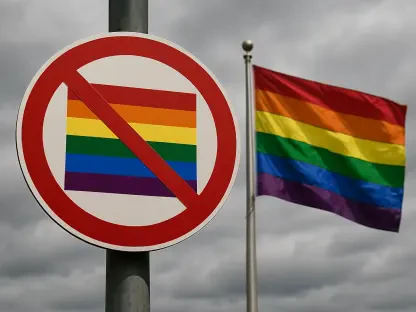

The foundational principle of American higher education has long rested on the belief that professors must be free to pursue the truth wherever it leads, even if those paths diverge from the prevailing political or social winds of the day. Yet, a modern conflict is unfolding across campus quads and faculty lounges, as institutional mandates increasingly require educators to pledge allegiance to specific ideological frameworks. This shift raises a profound constitutional question: can a public college legally require a professor to mirror state-sanctioned ideologies in their personal scholarship and teaching? This question is at the heart of a brewing legal firestorm that pits institutional diversity initiatives against the foundational rights of the First Amendment.
As higher education systems increasingly integrate diversity, equity, inclusion, and accessibility (DEIA) into performance metrics, the line between administrative policy and unconstitutional “orthodoxy” has become dangerously blurred. The stakes extend far beyond the walls of a single department; they touch upon the very nature of free thought in a democratic society. If a state can compel a mathematician or a historian to adopt a specific sociological lens as a condition of employment, the traditional concept of academic freedom may soon become an artifact of the past.
The High Stakes: Compelled Speech in the Modern Classroom
The tension between institutional goals and individual liberties has reached a boiling point as colleges move from encouraging diversity to mandating specific viewpoints. When an administration requires faculty members to demonstrate “anti-racist” competencies in their curriculum, it is no longer merely managing a workplace; it is directing the content of intellectual discourse. Critics argue that these requirements function as a modern-day loyalty oath, forcing scholars to choose between their genuine academic conclusions and the “official” version of social progress.
Furthermore, the implementation of these standards often lacks clear definitions, leaving faculty in a state of perpetual uncertainty regarding what speech might trigger a negative evaluation. This ambiguity creates a “chilling effect,” where professors self-censor to avoid administrative scrutiny or professional derailment. The result is a homogenized intellectual environment where the pursuit of consensus replaces the rigorous debate that once defined the university experience.
From Policy to Penalty: The Rise of Ideological Standards in California
The shift began in early 2023 when the California Community College system adopted sweeping regulations that tied faculty evaluations to “anti-racist” principles and DEIA competencies. This wasn’t merely a suggestion; it was a mandate that forced educators to choose between their personal convictions and their professional survival. For many, these rules represented a fundamental shift in the role of the state in the classroom, transforming the lecture hall from a space of open inquiry into a platform for mandated viewpoints.
These regulations were not isolated incidents but part of a broader trend toward institutionalizing specific social theories as administrative prerequisites. By embedding these ideologies into the fabric of tenure and promotion, the system created a mechanism where dissent became a career-ending risk. Faculty members found themselves navigating a landscape where their merit was judged not by their mastery of a subject, but by their willingness to perform ideological labor for the state.
The Legal Turning Point: Analyzing the Injunction in Johnson v. California Community Colleges
A recent federal court ruling has provided a significant shield for faculty members who refuse to adopt government-mandated speech. Judge Kirk Sherriff’s temporary injunction in favor of history professor Daymon Johnson establishes a critical boundary: while colleges can oversee administrative training, they cannot dictate the ideological content of classroom instruction or private scholarship. This decision highlights a “credible fear” of professional retaliation, validating the concern that DEIA mandates can serve as a mechanism for silencing dissenting intellectual voices.
The court specifically recognized that the First Amendment does not stop at the campus gate, nor does it allow the state to use the threat of termination to mold the minds of its employees. While the ruling allowed for certain administrative requirements—such as training for those serving on hiring committees—it drew a firm line at the lectern. By protecting Professor Johnson’s right to teach history according to his own scholarship, the court reinforced the idea that the state cannot be the arbiter of academic truth.
Defending Intellectual Diversity: The Renegade Institute for Liberty
The struggle for academic freedom is often spearheaded by faculty coalitions, such as the Renegade Institute for Liberty, which champion free markets and intellectual diversity. These groups provide a firsthand look at the tension between institutional pressure and the constitutional right to dissent. Legal advocates, including organizations like the Foundation for Individual Rights and Expression (FIRE), emphasize that while institutions may promote specific frameworks, the First Amendment strictly prohibits them from forcing individual scholars to act as mouthpieces for those frameworks.
Members of these coalitions often face social ostracization and administrative hurdles for their refusal to conform to the prevailing campus culture. However, their persistence has been instrumental in bringing these issues to the courtroom, where constitutional protections can be reaffirmed. Their work serves as a reminder that a truly inclusive academic environment must include space for those who question the very mandates designed to promote inclusion.
Practical Strategies: Faculty Navigating Institutional Mandates
Educators facing similar ideological requirements must understand the legal distinctions between their various professional roles to protect their rights effectively. A practical framework for navigating these mandates involves distinguishing between administrative duties—such as serving on screening committees where training may be required—and the protected sphere of “classroom instruction and scholarship.” Faculty should document all instances where performance evaluations are tied to ideological conformity and seek legal counsel when institutional “competencies” begin to infringe upon private speech or academic inquiry.
Moving forward, the focus shifted toward establishing clearer institutional policies that decoupled professional competency from political alignment. Legal experts suggested that faculty senates take a more active role in defining academic freedom to prevent administrative overreach. By asserting their rights early and consistently, educators ensured that the university remained a marketplace of ideas rather than a monolithic megaphone for state-sanctioned thought. The resolution of these cases provided a roadmap for balancing administrative objectives with the non-negotiable protections of the Constitution.